
Beyond Single Labels: A Fuzzy Semantic Approach to Chinese Lyrics Classification
Fuzzy Semantic Agent Based on Ontology Model for Chinese Lyrics Classification
This paper introduces a Fuzzy Semantic Agent for classifying Chinese lyrics into three emotional categories: Inspiration, Love, and Family. The system combines domain-specific Ontologies, Word2Vec embeddings, and TSK-based fuzzy inference with a Multilayer Perceptron (MLP) neural network to handle semantic nuances.
TL;DR
Music is rarely "just one thing." A song about a mother might be categorized as "Family," but it deeply resonates with "Love" as well. This paper presents a Fuzzy Semantic Agent that uses a combination of Ontology models, Word2Vec, and Neural Networks to classify Chinese lyrics with high precision, moving beyond rigid single-label classification to embrace the "fuzzy" reality of human emotion.
Background Positioning: This work bridges the gap between traditional Knowledge Engineering (Ontologies) and modern Connectionism (Deep Learning), specifically targeting the niche but complex domain of Chinese NLP.
The Problem: The Rigidity of Music Genres
Most music platforms classify songs into monolithic blocks: "Inspirational," "Romantic," or "Sad." However, human sentiment is a spectrum. The authors identify two main hurdles:
- Semantic Ambiguity: Words like "Mother" (母親) represent both family ties and selfless love.
- Linguistic Complexity: Chinese lyrics rely heavily on context and specific word combinations (e.g., "Sweat" / 揮汗 in an inspirational context vs. a physical context).
Methodology: Fusing Logic with Learning
The workflow of the Fuzzy Semantic Agent is divided into three major phases:
1. The Preprocessing & Ontology Layer
The system uses the Jieba library for Chinese word segmentation and Word2Vec (trained on a massive corpus of 75,000 songs) to calculate term weights. The Ontology acts as the "brain," defining how concepts like "Father" or "Dream" relate to broader categories.
2. Fuzzy Inference (The Logic)
Using a Takagi-Sugeno-Kang (TSK) based fuzzy inference mechanism, the system assigns membership degrees to songs. Instead of saying a song is 100% "Love," it might say it is 0.8 Love and 0.4 Family.
3. Neural Network Refinement (The Optimizer)
The core innovation is the use of a Multilayer Perceptron (MLP). By feeding the fuzzy features into an MLP, the system learns the subtle patterns that a human expert uses to classify songs, effectively "tuning" the fuzzy rules.
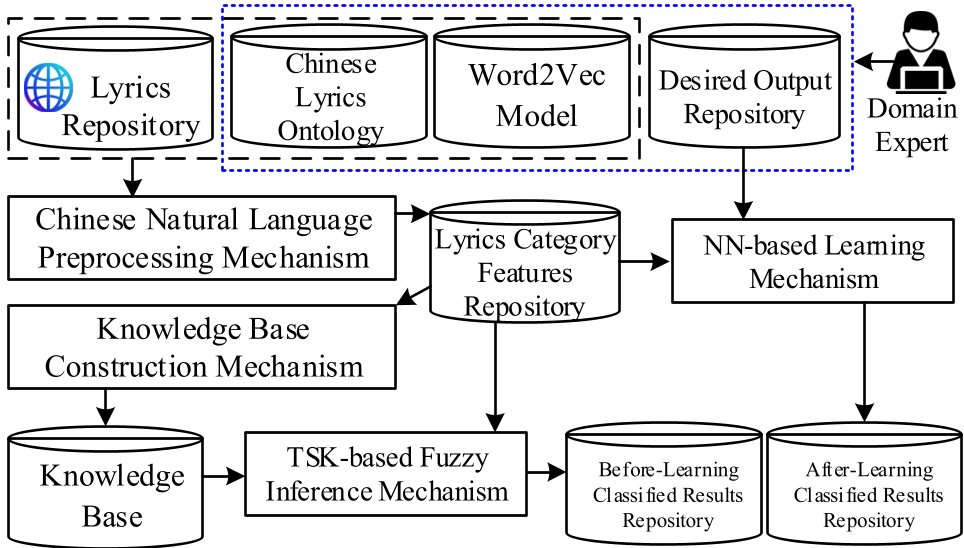 Figure 1: The overarching system structure showing the flow from raw lyrics to the final NN-based classification.
Experimental Insights: Why 24 Nodes?
The authors conducted extensive ablation studies on the neural network's architecture. They tested various hidden layer sizes (5, 11, 24, 50, 100).
- The Sweet Spot: The 3-24-8 architecture (3 inputs for the 3 categories, 24 hidden nodes, 8 output classes) provided the best balance of convergence and accuracy.
- The "Learning" Effect: Before the MLP was applied, Accuracy was a modest 63.5%. After backpropagation training, accuracy surged to 97.92%.
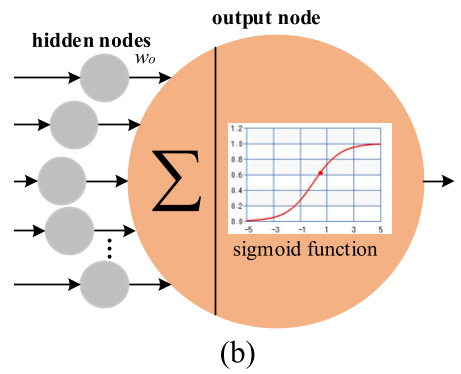 Figure 2: Accuracy improvements comparing pre-learning (Fuzzy only) vs. post-learning (Fuzzy + NN).
Critical Analysis & Conclusion
While the results are impressive, the paper acknowledges a few limitations:
- Data Scale: The ontology was built using 120 selected songs. While the Word2Vec model was robust (75k songs), the expert-labeled set is relatively small.
- Ambiguity Handling: Some songs still defy classification when they cross too many semantic boundaries simultaneously.
The Takeaway: The future of "Intelligent Agents" in music lies in their ability to understand subtext. By combining the interpretability of Fuzzy Ontologies with the raw power of Neural Networks, we move closer to AI that "feels" the music the same way we do. This approach has massive potential for personalized music therapy and emotional AI assistants.