
Decoding Affect: A Fuzzy Similarity Approach to Emotional Image Classification
Fuzzy Similarity-Based Emotional Classification of Color Images
This paper introduces a case-based reasoning (CBR) framework for the emotional classification of color images using fuzzy similarity measures and MPEG-7 visual descriptors. By storing prototypical images as representative cases and calculating weighted similarities across three emotional axes—"warm-cool," "static-dynamic," and "heavy-light"—the system achieves an average human-validated accuracy of over 80%.
TL;DR
Researchers have developed a system that "feels" images by comparing them to a library of emotional prototypes. By using MPEG-7 visual descriptors and Fuzzy Similarity-based weighting, the system classifies images into emotional categories like "Warm vs. Cool" with over 80% agreement with human subjects, effectively bridging the gap between low-level pixels and high-level human sentiment.
Background: The Subjectivity Challenge
How do you teach a machine to understand that a bright red sunset feels "warm" while a blue-tinted forest feels "cool"? The problem is that emotional response is not just about a single color; it is a complex interplay of spatial distribution, texture, and intensity. Prior work often relied on simple linear mappings that failed to capture the nuanced, often ambiguous nature of human feelings.
The Case-Based Reasoning (CBR) Insight
Instead of building a rigid mathematical formula, the authors adopt a Case-Based Reasoning approach.
- Prototypes: The system "learns" by storing 5 prototypical images for each emotion (e.g., 5 very "static" images and 5 very "dynamic" images).
- Fuzzy Similarity: When a new image is input, it doesn't look for an exact match. It calculates how "similar" the new image is to the stored prototypes using fuzzy logic, which thrives on the "shades of gray" inherent in human emotion.
Methodology: Weighting the Descriptors
Not all features are created equal. To determine which visual cues matter most for a specific emotion, the authors used two sophisticated methods:
- Rough Approximation: This determines which descriptors (like the Edge Histogram) are absolutely necessary to categorize an image without ambiguity.
- Inter- and Intra-Similarity: Similar to the Fisher Linear Discriminant, this measures which features keep "warm" images close to each other while pushing "cool" images far away.
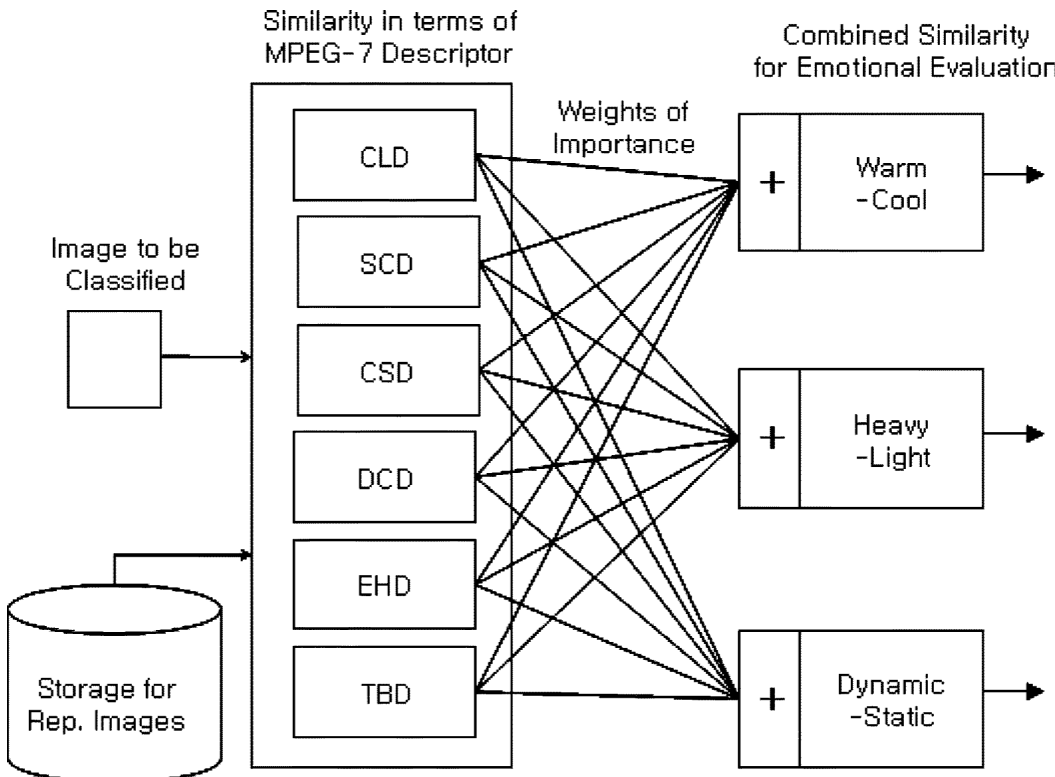 Figure 1: The Emotional Classification Pipeline, showing the path from MPEG-7 feature extraction to final emotion labeling.
The MPEG-7 Advantage
The study leverages the MPEG-7 standard, specifically:
- Color Layout (CLD) and Dominant Color (DCD) for "temperature" (Warm/Cool).
- Edge Histogram (EHD) for "activity" (Static/Dynamic).
The math behind these vectors is complex, but the intuition is simple: the system weighs these descriptors differently depending on the question. For "Heavy vs. Light," it might ignore texture entirely and focus solely on color structure.
Experiments & Human Validity
To test the system, the authors didn't just look at numbers; they asked 7 human subjects to validate the machine's "feelings."
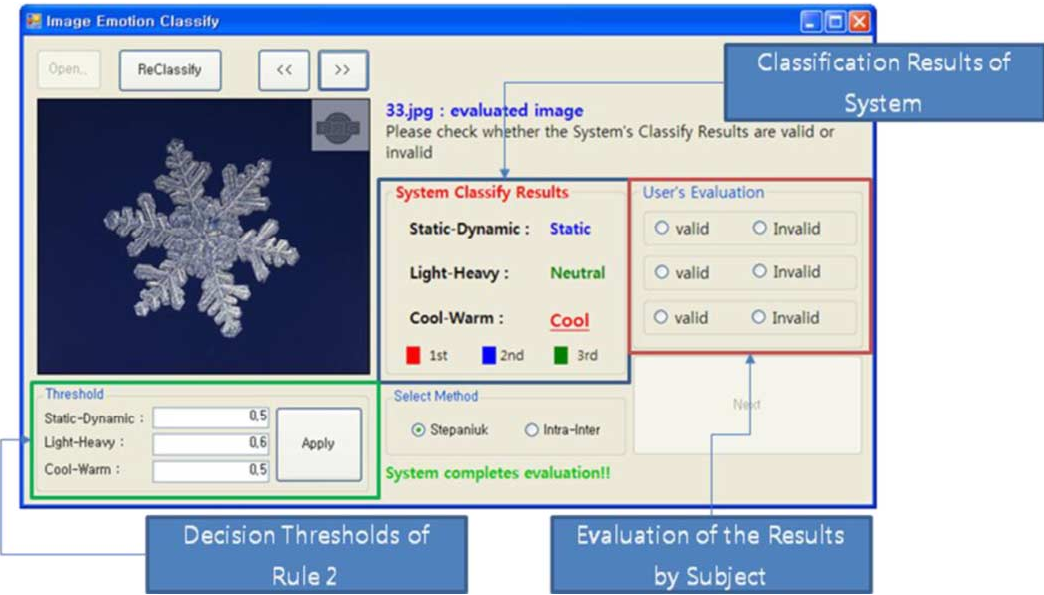 Figure 2: Sample images and their classification results. The system successfully identified emotions across diverse scenes—from sports to abstract art.
Key Results:
- Light-Heavy: Achieved the highest validity (88.3%). This suggests that humans have a very consistent visual interpretation of "visual weight" based on color.
- Static-Dynamic: Achieved the lowest validity (approx 74%). This is logical—determining if an image is "dynamic" often requires semantic understanding (e.g., knowing that a blurred runner is moving), which low-level pixels can't fully capture.
Critical Insight & Future Outlook
The beauty of this system lies in its scalability. In a content-based image retrieval (CBIR) system, you could search for "a peaceful, light image" rather than just "a beach photo."
Limitations: The current model is bipolar (Warm vs. Cool). Future iterations need to handle unipolar scales (e.g., "How happy is this image?" rather than "Is it happy or sad?"). Additionally, as the database of prototypical "cases" grows, the computational cost of comparison increases—necessitating smarter indexing techniques.
Conclusion
This research proves that "standardized" visual descriptors, when filtered through the lens of fuzzy similarity and case-based reasoning, can approximate human emotional intelligence. It moves us one step closer to machines that don't just see, but feel the visual world.