
Scalable Spam Detection: Leveraging Fuzzy String Matching and MapReduce for Twitter
Fuzzy String Matching Algorithm for Spam Detection in Twitter
2019-01-01
Summary
Problem
Method
Results
Takeaways
Abstract
This paper introduces a decentralized unsupervised spam detection framework for Twitter using fuzzy string matching and the MapReduce platform. By moving beyond exact matching, the method successfully identifies obfuscated spam content that typically evades traditional filters.
## TL;DR
Twitter's open nature makes it a prime target for spammers who use URL shorteners and character obfuscation to bypass security. This paper presents an **unsupervised, distributed framework** that uses **fuzzy string matching** to detect altered spam messages. By leveraging **MapReduce**, the system scales to handle the massive volume of microblogging data without requiring expensive labeled datasets.
## The Battle Against Obfuscation
Most spam filters today fall into two categories:
1. **Supervised Models**: Highly accurate but require thousands of manually labeled examples and constant updates.
2. **Exact Matching**: Fast but fragile; if a spammer changes "Free Books" to "Fr3e Bo0ks," the filter fails.
The authors argue that spammers exploit the "trust factor" of social networks. Because Twitter limits messages to 140 characters, detection tools have very little context to work with. The core insight of this paper is that since spam content usually revolves around specific categories (financial scams, adult content, etc.), we can use **approximate (fuzzy) matching** to catch variants of known spam keywords without needing a human to label every new tweet.
## Methodology: Distributed Fuzzy Filtering
The proposed architecture is split into two primary phases, optimized for the **Hadoop/MapReduce** ecosystem to ensure horizontal scalability.
### 1. Feature Extraction & Mapping
The **Mapper** acts as a first-line filter. It scans incoming tweets for:
* **Presence of URLs**: Most spams aim to redirect users to malicious sites.
* **Message Length**: Spams often maximize character usage to include multiple "hot topics" or hashtags.
* **Status Features**: Categorizing the tweet based on engagement markers.
### 2. The Reducer & Fuzzy Matching Logic
This is where the heavy lifting occurs. The Reducer implements a fuzzy string matching algorithm that compares tokens from the tweet against a curated dictionary of spam keywords (e.g., "Downloads," "Gambling," "Loans").
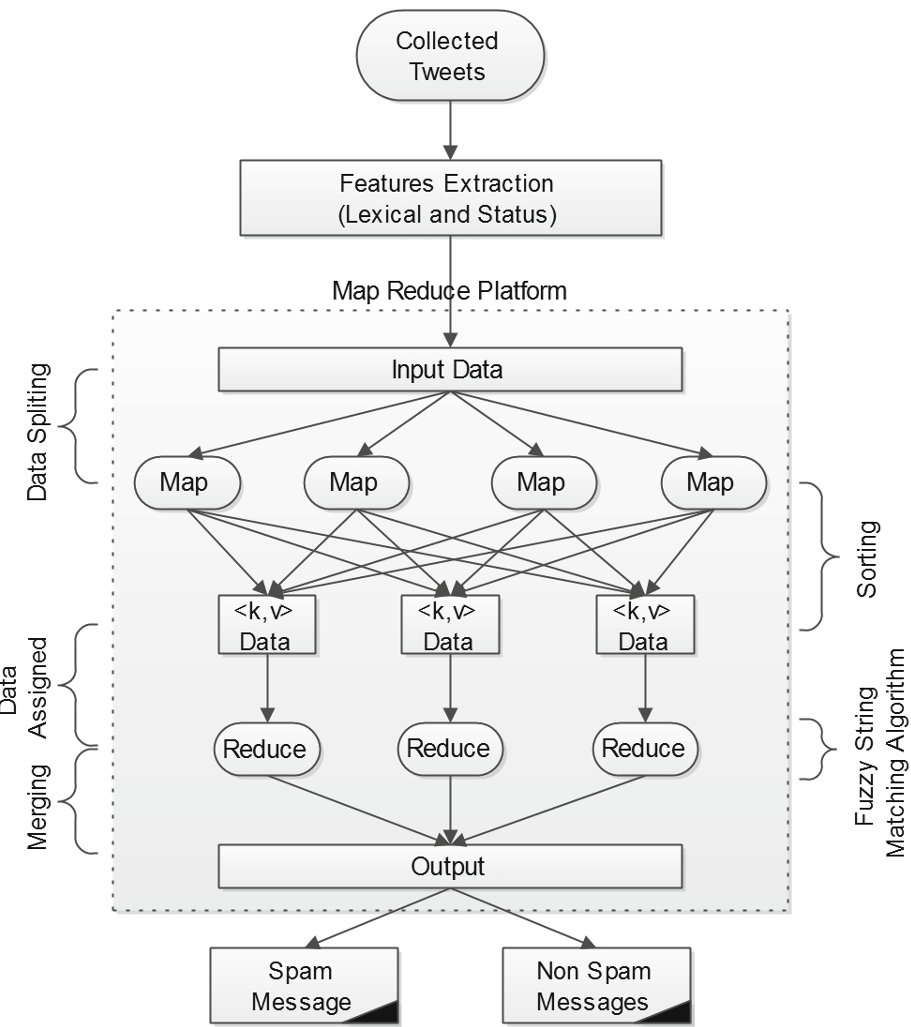
Unlike exact matching, the fuzzy logic calculates a **similarity score**. If a token is 70% or 80% similar to a known spam word, it triggers a "Spam" classification.
## Experimental Insights
The authors tested their approach on a dataset of 36,000 tweets, specifically injecting "altered spams" (1-3 character changes) to test the robustness of the fuzzy logic.
### Similarity Threshold Trade-off
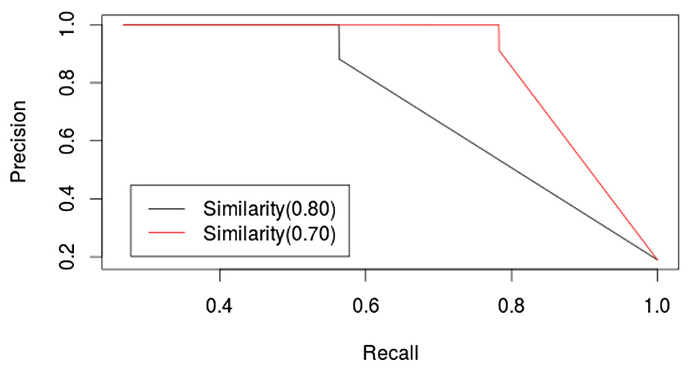
* **0.80 Similarity**: High precision but missed many obfuscated messages (90.6% accuracy).
* **0.70 Similarity**: Caught significantly more altered spams, including those with 2-character changes, raising accuracy to **94.3%**.
### Scalability and Bottlenecks
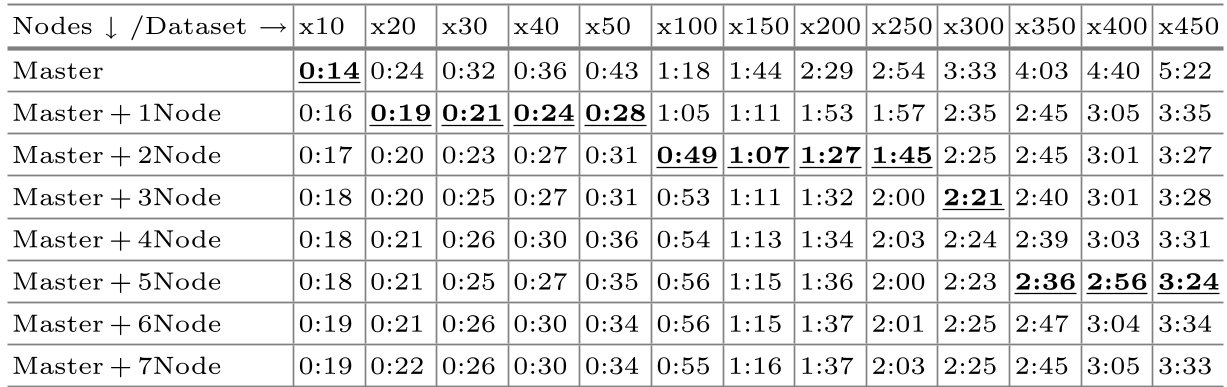
The MapReduce implementation proved vital. As the dataset size increased (from 10x to 450x), the processing time grew linearly. Interestingly, the research identified an **optimal node count**: adding more slave nodes reduces time up to a point, after which the communication overhead of managing more machines actually begins to slow down the process.
## Critical Analysis & Future Directions
While the use of MapReduce is a significant step toward handling "Big Data," the current method relies on a **static dictionary**. As the authors note, future iterations should incorporate machine learning to dynamically update the spam keyword list.
**Limitations**:
* **Language Dependency**: Currently optimized only for English.
* **3-Character Alterations**: The similarity threshold of 0.70 still struggles with heavily obfuscated strings (3+ changes) without significantly increasing False Positives.
* **Architecture**: MapReduce is batch-oriented; for real-time "active" blocking, a stream-processing framework (like Spark or Flink) would be more appropriate.
## Conclusion
This work demonstrates that you don't always need complex, "black-box" AI to solve security problems. By combining a classic linguistic approach (fuzzy matching) with modern distributed systems (MapReduce), we can create resilient, transparent, and scalable tools to protect social media ecosystems.