
Decoding Human Connection: An Evolutionary Approach to Social Relationship Matching
GA-based close relationship matching under social network environment
This paper introduces an improved Genetic Algorithm (GA) framework tailored for matching close interpersonal relationships within social networks. By quantifying psychological determinants—specifically intimacy, passion, and commitment—into feature vectors, the authors utilize a specialized fitness function to identify high-affinity pairs from complex social datasets.
TL;DR
Can we quantify "love" or "friendship" through algorithms? This paper argues we can. By combining Sternberg’s Triarchic Theory of Love with an Improved Genetic Algorithm (GA), the researchers have developed a system that identifies close relationships within social networks by treating personality traits and emotional scales as evolvable feature vectors.
The Gap: Why Mathematics Struggles with Emotion
Most social network analysis is retrospective—it looks at who you already know. However, predicting the potential for a "close relationship" requires a forward-looking model. The challenge is two-fold:
- Quantification: How do you turn abstract concepts like "intimacy" or "passion" into numbers?
- Complexity: In a network of 182 individuals, there are over 16,000 possible pairs. Finding the "optimal" matches is a needle-in-a-haystack problem for traditional search logic.
Methodology: The Psychology-AI Synthesis
The authors ground their technical work in the Triarchic Theory of Love, which identifies three scales: Intimacy, Passion, and Commitment. They further narrow down the variables crucial for digital social networks to three: Proximity, Similarity, and Familiarity.
1. The Mathematical Distance of Attraction
The core of the method lies in the Feature Correlation Degree (FCD). The authors posit that attraction is inversely proportional to the square of the distance between two people's trait vectors:
By summing these degrees across all dimensions, the algorithm generates a "Correlation Degree" (CD) that serves as the Fitness Function for the Genetic Algorithm.
2. The Improved Genetic Algorithm
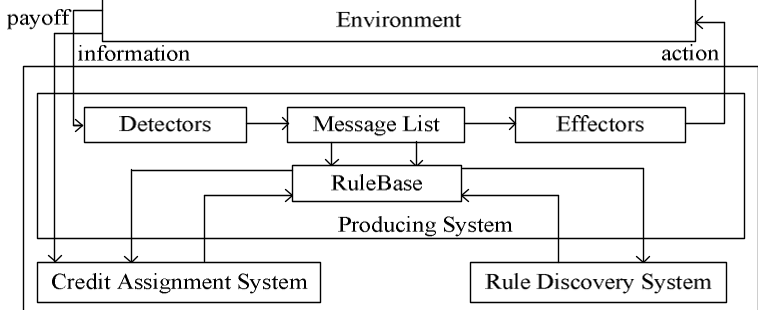
To manage the search space, the paper employs a Learning Classifier System (LCS) architecture.
- Self-Adaptive Operators: Unlike standard GAs with fixed mutation rates, this model scales the probability of mutation and crossover based on the gap between current fitness and maximum fitness. This ensures that the population maintains diversity early on while converging precisely in later stages.
Experimental Insights
The researchers tested their model using a combination of the UCI Planning Relax dataset (for personality traits) and randomly generated historical relationship data.
Key Findings:
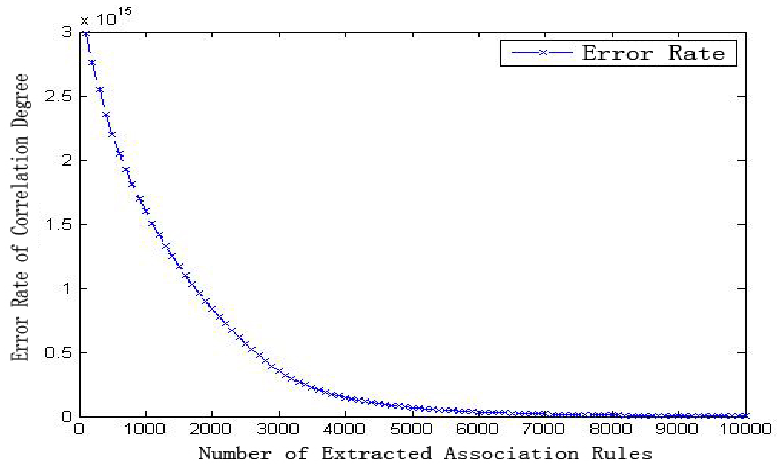
- Monotonic Convergence: As proven in Theorem 1, as the algorithm extracts more association rules, the Error Rate of Correlation Degree (ECD) decreases.
- Stability: The "Fluctuation Rate" stabilizes as more rules are processed, meaning the algorithm becomes more reliable and less random as the "understanding" of the social network deepens.
The results (shown in Table II of the paper) highlight specific pairs with high historical synergy and personality alignment, demonstrating that the GA can effectively rank potential "soulmates" or "close friends" based on multidimensional traits.
Critical Perspective
Strengths
The paper provides a rigorous mathematical proof (Theorems 1 & 2) that the GA will eventually find all relationship mapping rules in a finite domain. This elevates the work from a simple heuristic to a mathematically grounded framework.
Limitations
The primary hurdle remains data acquisition. While the algorithm works on quantified vectors, the "quantification" of human personality is still an open challenge. The paper uses the UCI repository as a proxy, but real-world application would require highly accurate, self-reported, or behaviorally-mined data.
Conclusion
This work marks a significant step toward "Algorithmic Sociology." By treating interpersonal attraction as an optimization problem, the authors provide a blueprint for how future social platforms might move beyond simple "people you may know" suggestions toward meaningful "people you should know" predictions.
Future Work: The next frontier involves refining the quantification process—how can we use LLMs or behavioral tracking to feed more accurate feature vectors into this GA framework?