
Smart Insoles: Predicting Stroke Through IoT-Driven Gait Analysis
Gait Monitoring System for Stroke Prediction of Aging Adults
This paper presents an IoT-based Gait Monitoring System designed for stroke onset prediction in the elderly by utilizing wearable insole sensors. The system employs multiple machine learning classifiers to distinguish between stroke patients and healthy individuals, achieving a peak Area Under Curve (AUC) of 0.984 using the C5.0 (C4.5 variant) algorithm.
TL;DR
Researchers have developed a proactive gait monitoring system that uses IoT-enabled smart insoles to detect stroke symptoms in real-time. By analyzing foot pressure and acceleration through a C5.0 machine learning model, the system achieves a remarkable 0.984 AUC, providing a potential lifeline for elderly individuals at risk of sudden stroke onset.
Background: The Invisible Early Warning Signs
Stroke remains a primary cause of mortality and long-term disability, particularly for those over 60. One of the most significant challenges is that stroke often causes a sudden loss of muscle coordination and "unbalanced" gait patterns. If a patient is alone, they may be unable to call for help. This paper positions itself at the intersection of IoT healthcare and Preventative Medicine, shifting the focus from post-stroke rehabilitation to immediate onset detection.
Problem & Motivation: Why Current Monitoring Fails
Most gait analysis is performed in controlled laboratory environments using expensive motion capture systems. For the elderly, the transition from a "healthy" gait to a "stroke" gait is often subtle and happens during daily activities (walking, sitting, standing). Traditional wearables like simple pedometers lack the granularity—specifically Ground Reaction Force (GRF) and localized foot pressure—needed to distinguish between general frailty and a neurological event like a stroke.
Methodology: High-Fidelity Data Extraction
The proposed system utilizes the Dynafoot2 Insole, a specialized wearable that fits inside standard shoes.
1. Data Acquisition
The study gathered data from 271 subjects (63 stroke patients and 208 healthy elderly adults). The sensors captured three primary streams:
- Foot Pressure: Localized force distribution across the sole.
- Acceleration: 3-axis movement of the foot during a stride.
- Ground Reaction Force (GRF): The force exerted by the ground on the foot.
2. The Classification Pipeline
Using Matlab and IBM SPSS Modeler, the team extracted features and compared several algorithms:
- C5.0/C4.5: A decision-tree based approach.
- SVM (Support Vector Machines): Effective for high-dimensional feature spaces.
- Logistic Regression & CART: Baseline statistical and tree models.
 Figure 1: Conceptual overview of the IoT Gait Monitoring System and the Insole Hardware.
Experiments & Results: Precision in Prediction
The results confirm that stroke symptoms manifest clearly in gait dynamics if measured with sufficient sensitivity.
- Top Performer: The C5.0 model achieved an AUC of 0.984 in the validation phase, indicating nearly perfect separation between stroke and healthy gait patterns.
- Consistency: Across training, testing, and validation, the performance remained stable (AUC > 0.98), suggesting the model has high generalization capabilities and low risk of overfitting.
- Comparison: SVM also performed strongly (AUC 0.978), while simpler models like CART (AUC 0.869) failed to capture the complexity of the sensor data.
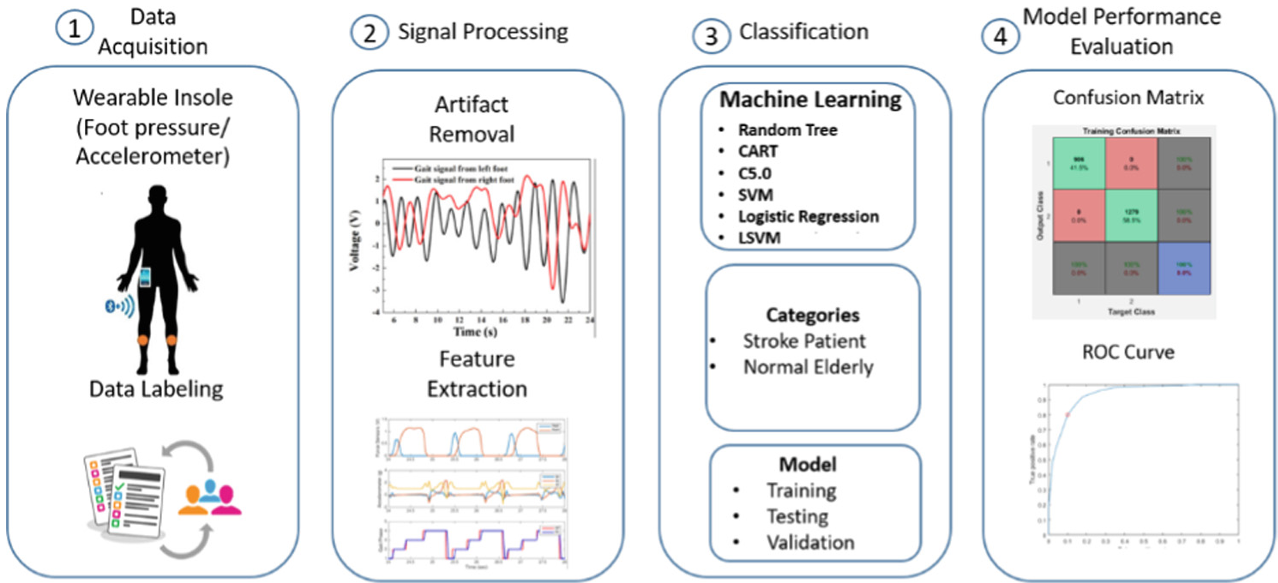 Figure 2: Performance metrics showing the AUC and Gini coefficients for the various ML models.
Critical Analysis & Conclusion
The merit of this work lies in its practicality. By embedding the sensors into an insole, the monitoring becomes "invisible" to the user, ensuring higher compliance among elderly patients.
Takeaways:
- High Sensitivity: The integration of GRP and foot pressure is the "secret sauce" that allows the ML models to achieve such high accuracy.
- Real-Time Potential: The use of lightweight classifiers like C5.0 makes it feasible to run these models on edge devices or smartphones via an IoT cloud engine.
Limitations & Future Work: While the results are impressive, the study focuses on classification (Stroke vs. Healthy). The next frontier—as noted by the authors—is improving reliability through multi-modal fusion (adding EEG for brain activity and EMG for muscle activation). Furthermore, longitudinal studies are needed to determine if the system can detect "pre-stroke" symptoms before a total collapse occurs.
Ultimately, this work paves the way for a world where your shoes might save your life before you even realize you're in danger.