
Game-Based Health Interventions: Engineering Affective and Social Integration for Behavior Change
Game-Based Interactive Media in Behavioral Medicine: Creating Serious Affective-Cognitive-Environmental-Social Integration Experiences
This paper proposes a framework for using game-based interactive media to drive large-scale health behavior change in preventive medicine. By introducing the "Cyber-Ecological Model" and integrating it with the "Health Action Model" (HAM), the authors argue for creating affective-cognitive-environmental-social (ACES) experiences that utilize digital technologies to make healthy living more accessible and empowering.
TL;DR
Modern health systems are struggling with an obesity epidemic and lifestyle-related diseases that traditional education-based interventions cannot solve. This paper advocates for a shift toward Digital Supportive Environments. By merging ecological psychology with game mechanics, the authors propose a framework that uses digital layers to rewrite social norms, boost self-efficacy, and provide affective rewards—making the "healthy choice" not just easy, but fun.
The Missing Dimension: Why Traditional Models Fail
Most health promotion efforts address the Belief System—the rational, cognitive side of the brain. They assume that if you tell someone "junk food is bad," they will stop eating it. However, four leading behavior change theories only predict about 20-30% of the actual variance in weight loss outcomes.
The authors identify two massive gaps:
- The Hidden Hierarchy: Social and environmental influences often override individual intent.
- The Digital Blind Spot: We live in a "Cyber-Ecological" world where our digital identity (avatars, social media loops) is just as influential as our physical surroundings.
Methodology: The Cyber-Ecological Framework
The core of this work is the integration of the Health Action Model (HAM) with the Cyber-Ecological Model.
1. The Integrated Model
The authors map game design elements directly onto psychological constructs. Instead of just "gamifying" tasks with points, they look at deep-seated psychological needs like Self-Esteem, Sense of Community, and Existential Control.
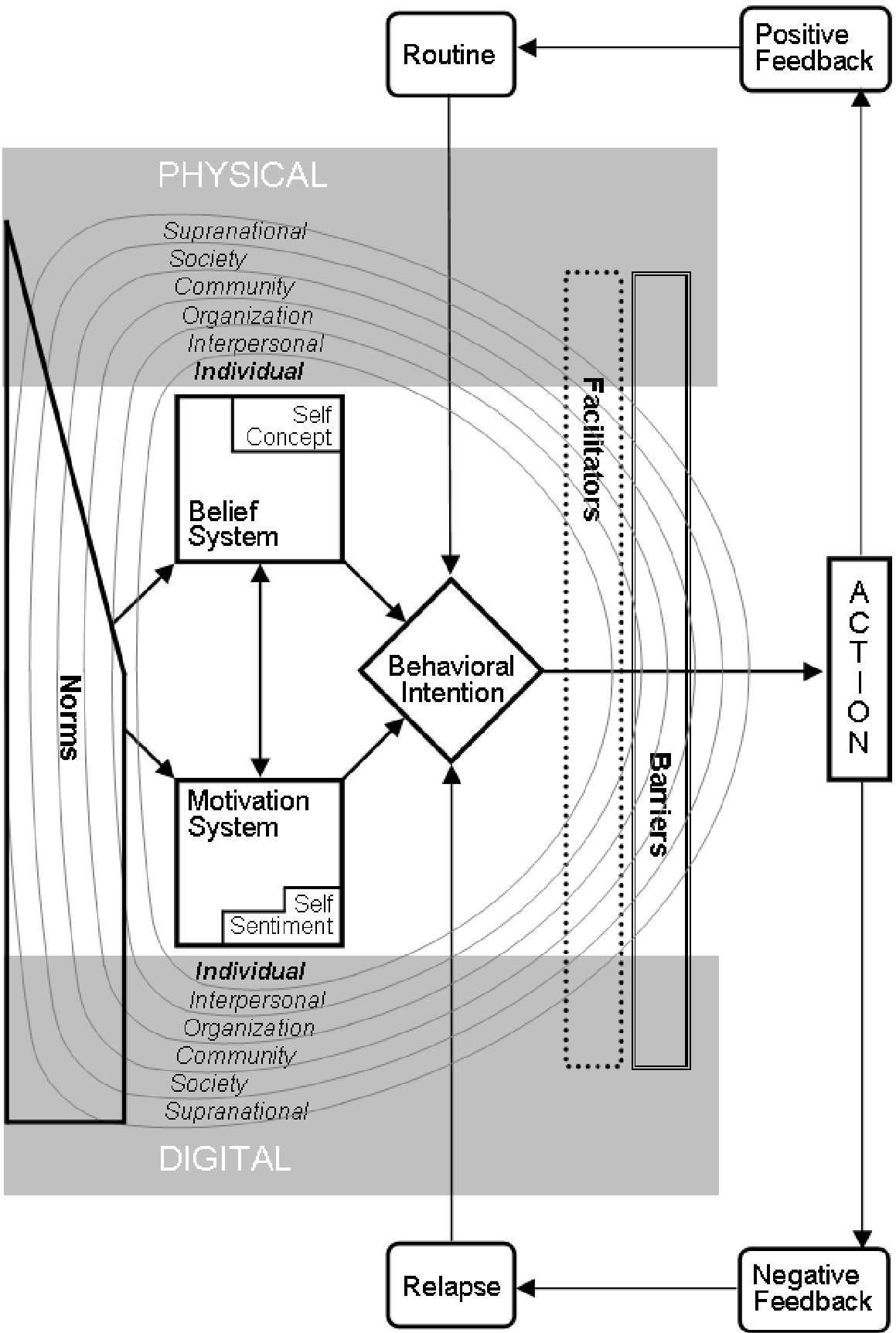 Figure 1: The Health Action Model (HAM) overlaid with digital/physical spheres of influence, illustrating the path from belief to action.
2. Designing the "Serious Experience"
The paper breaks down the design into specific actionable components:
- Belief System (Cognitive): Using "fine-graded challenges" to build Self-Efficacy (the belief that one can succeed).
- Motivation System (Affective): Utilizing in-game "Health Economies" where player gratification is linked to real-world actions.
- Norms (Social): Introducing digital role models and peer support that transcend physical distance.
Insights from the Design Principles
The authors propose a systematic list of intervention objectives paired with design features. This moves beyond simple badges toward structural game mechanics.
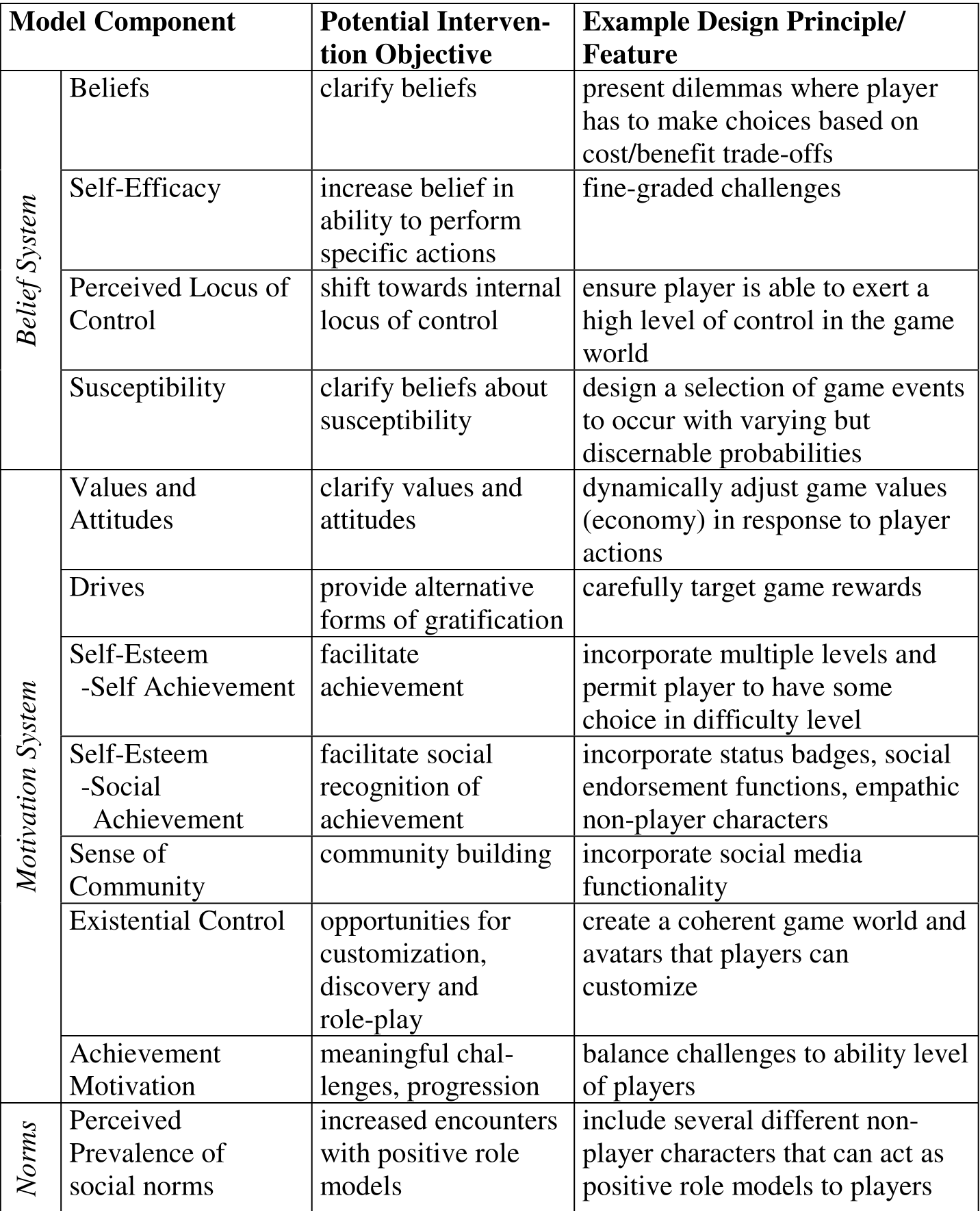 Table 1: Mapping psychological model components to specific game design features.
Key Design Takeaways:
- Internal Locus of Control: Players must feel they are the "engine" of change in the game world to translate that feeling to their real health.
- Affective Buffering: Games provide "food for thought" and emotional safety, allowing players to struggle with lifestyle changes in a context where failure (losing a game life) is expected and iterative rather than devastating.
Critical Analysis: A Digital Layer over Reality
The authors admit a significant limitation: a digital environment cannot replace a lack of physical infrastructure (e.g., if there are no parks, a game can't make you run in one safely). However, they argue that digital media can act as a mobilizing force.
By assigning "alternate reality" meanings to real-world objects, games like Nike+ or early AR titles prove that the digital world can re-contextualize a hostile physical environment into a supportive one.
Conclusion
This paper serves as an architectural blueprint for the next generation of "Games for Health." By moving away from "Chocolate-Covered Broccoli" (boring health advice with a thin layer of points) and toward Serious Integration Experiences, we can build digital ecosystems that genuinely empower individuals. The future of behavioral medicine isn't just a clinic; it's a networked, affective, and social game world.