
Elevating Crowdsourcing Quality: A Game-Theoretic Approach to Human Intelligence Tasks
A Game-Theoretic Approach to Quality Improvement in Crowdsourcing Tasks
This paper introduces a novel game-theoretic framework for quality improvement in multi-choice crowdsourcing tasks. By leveraging Nash equilibrium principles and a "Changing Mind" mechanism, it motivates workers to provide high-quality contributions through collaborative gameplay and dynamic rewards.
TL;DR
Obtaining high-quality data from the crowd is notoriously difficult. This paper introduces a collaborative game-theoretic framework that uses Fuzzy Logic and a "Changing Mind" mechanism to nudge anonymous workers toward high-quality, high-agreement answers. Unlike traditional systems that discard disagreements, this method uses them as a signal to provide feedback, boosting completion rates by up to 3x compared to the classic ESP game.
The Core Challenge: The Fragility of Consensus
In Human Intelligence Tasks (HITs), requesters often face a trade-off: speed vs. quality. Existing methods like "Majority Voting" or the "ESP Game" rely on agreement as a proxy for truth. However, if two players disagree in a rigid system, the task is often marked as "failed," wasting resources. Furthermore, these systems rarely account for the specific suitability (expertise and reputation) of the participants in real-time.
Methodology: Beyond Simple Agreement
The authors propose a two-stage process that treats every task as a collaborative game between two players.
1. The Suitability Engine (Fuzzy Logic)
Instead of treating all workers equally, the system calculates a Suitability Score (). This score is a product of:
- Reputation Match: Does the worker meet the task's minimum trust threshold?
- Expertise Match: Does the worker possess the specific skills required?
- Confidence Level: How sure is the worker of their own answer?
These variables are processed through a Fuzzy Inference System (FIS) to handle the inherent uncertainty in human self-reporting.
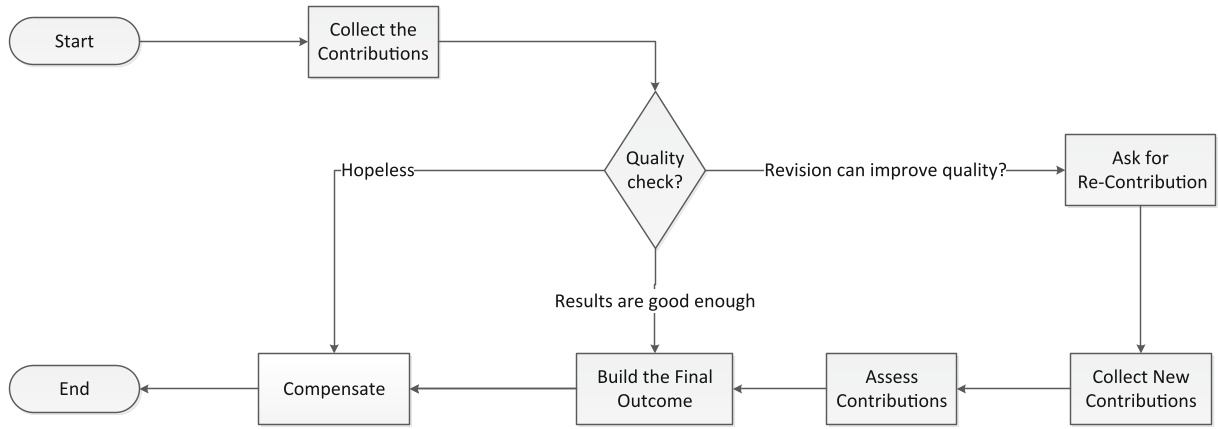 Figure 1: The architecture of the proposed HI (Human Intelligence) Game.
2. The "Changing Mind" Mechanism (The Breakthrough)
The most innovative aspect is the Online Shepherding. If the initial quality score () falls into a "gray zone" (neither perfect nor unsalvageably low), the system provides feedback to the players.
- It calculates the Maximum Reward (if they reach agreement) and Minimum Reward (if they persist in a stalemate).
- By revealing these potential earnings, the game incentivizes players to reconsider their choices. Since they cannot communicate, the "Nash Equilibrium" logic suggests they will gravitate towards the most "objectively correct" answer, assuming the other player is doing the same.
Experimental Results
The framework was tested using the Advogato trust network and StackOverflow expertise data.
Error Rate Comparison
As the number of choices () increases, most systems' error rates spike. The proposed model displays a significantly flatter error curve, meaning it remains robust even as tasks become more complex.
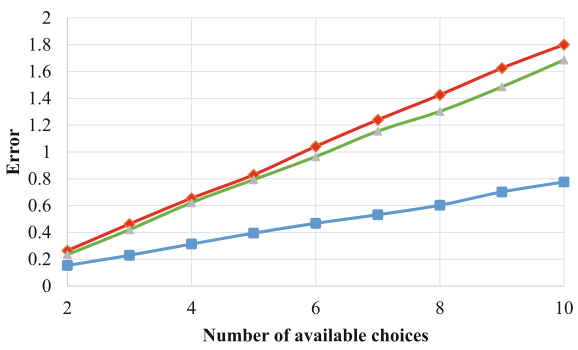 Figure 2: Comparison of (a) Outcome Quality and (b) Error Rate across different crowdsourcing strategies.
Completion Success
The "Changing Mind" step is a game-changer for throughput. While the ESP game sees its success rate plummet to nearly 20% when faced with 10 options, this approach maintains a success rate of 60%, effectively salvaging tasks that would otherwise be lost to disagreement.
Critical Insight & Conclusion
Takeaway
The genius of this paper lies in its rejection of "static" crowdsourcing. By treating quality control as a dynamic, two-way conversation (Feedback Revision), researchers can extract high-quality truth from even mediocre workers.
Limitations
- Fuzzy Rules: The system depends heavily on the predefined Fuzzy Rules (Table 1). In highly niche domains, these rules might need significant manual tuning.
- Computation: Calculating real-time suitability and reward variances for thousands of micro-tasks adds a degree of computational overhead compared to simple voting.
Future Outlook
As we move into the era of RLHF for LLMs, where human preference is the gold standard for AI training, game-theoretic frameworks like this will be essential to ensure that "human preference" isn't just "human noise."