
Game Theory in the Shadows: How Colluders Bargain in Multimedia Social Networks
Game-theoretic strategies and equilibriums in multimedia fingerprinting social networks
This paper explores the human behavior dynamics within multimedia fingerprinting social networks using game theory. It introduces a bargaining model to analyze how self-interested colluders reach agreements on risk and reward distribution, specifically considering time-sensitive market values and complex interactions with fingerprint detectors.
TL;DR
Multimedia fingerprinting is a cat-and-mouse game where content owners embed unique "labels" to trace illegal redistribution. Attackers (colluders) counter this by mixing their copies to wash out these labels. This paper reveals that collusion isn't just about signal processing—it's a social negotiation. By modeling colluders as rational players in a bargaining game, the authors demonstrate how agreements on risk and reward are reached, especially when the "pirate" value of the content is rapidly decaying.
Background & Motivation: The Conflict of Interest
In a multimedia social network, users share content but often have conflicting goals. When it comes to multiuser collusion, the common assumption that everyone takes the same risk is idealistic.
If User A contributes a high-definition (HD) copy and User B contributes a low-definition (LD) copy, should they share the profit equally? Should they share the risk of being caught equally? If they can't agree, the collusion fails before it even starts. The researchers identify a critical research gap: the lack of a "fairness" model that accounts for the human behavior behind the attack.
Methodology: The Bargaining Process
The paper introduces a game-theoretic framework focusing on the Scalable Video Coding (SVC) system. In SVC, a video consists of a Base Layer and Enhancement Layers. Colluders are categorized by the quality of the copies they hold.
1. The Power of Bargaining
The authors propose that the bargaining process is a non-cooperative game. They analyze four primary fairness criteria:
- Absolute Fairness: Everyone gets the same utility (Payoff = Reward - Risk-based Loss).
- Max-Min Fairness: Maximizes the utility of the "worst-off" player.
- Max-Sum Fairness: Maximizes the total profit of the group.
- Nash-Bargaining: A proportional fairness model where the "bargaining power" (often determined by the number of people in a subgroup) dictates the outcome.
2. Time-Sensitive Rewards
Crucially, the paper recognizes that a pirate movie’s value is highest when it’s still in theaters. They incorporate an exponential decay factor () into the utility function. If colluders spend too long arguing over their shares, the product becomes worthless.
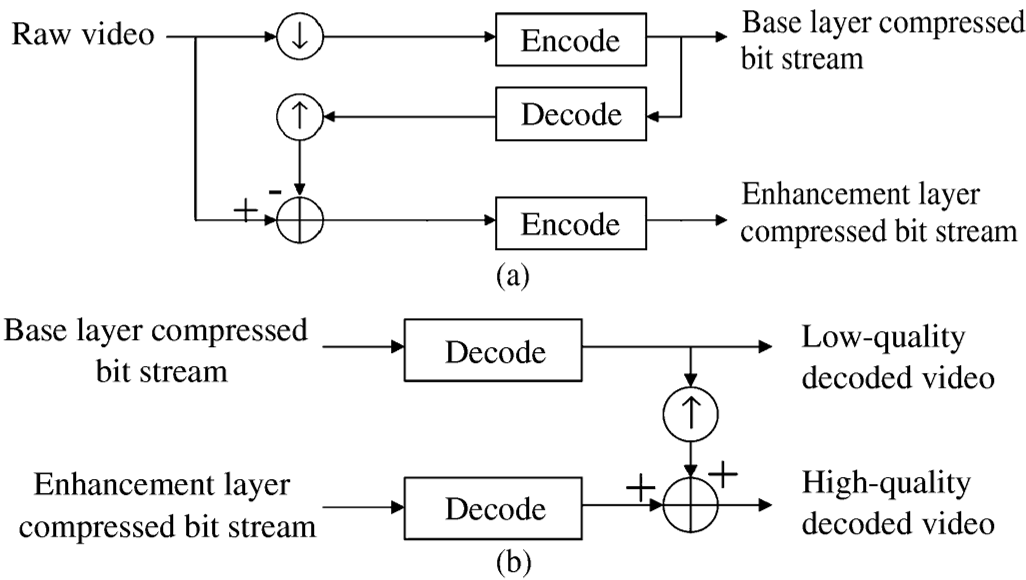 Figure 1: Illustration of the multiuser collusion strategy in a two-layer scalable video system, where subgroups must coordinate their mixing parameters () to achieve their bargained goals.
Experimental Analysis: Equilibrium vs. Fairness
The simulations revealed fascinating aspects of "attacker psychology":
- Cheat-Proofing: In Absolute Fairness and Max-Sum models, players have an incentive to lie about their "personal loss" (how much they fear being caught). However, Nash-Bargaining is remarkably "cheat-proof"—the final solution is independent of the private loss values reported by individuals.
- The First-Mover Advantage: In time-sensitive scenarios, the group with the HD copies usually acts as the "leader," offering a deal that the LD group is forced to accept quickly to avoid losing the market value of the pirated copy.
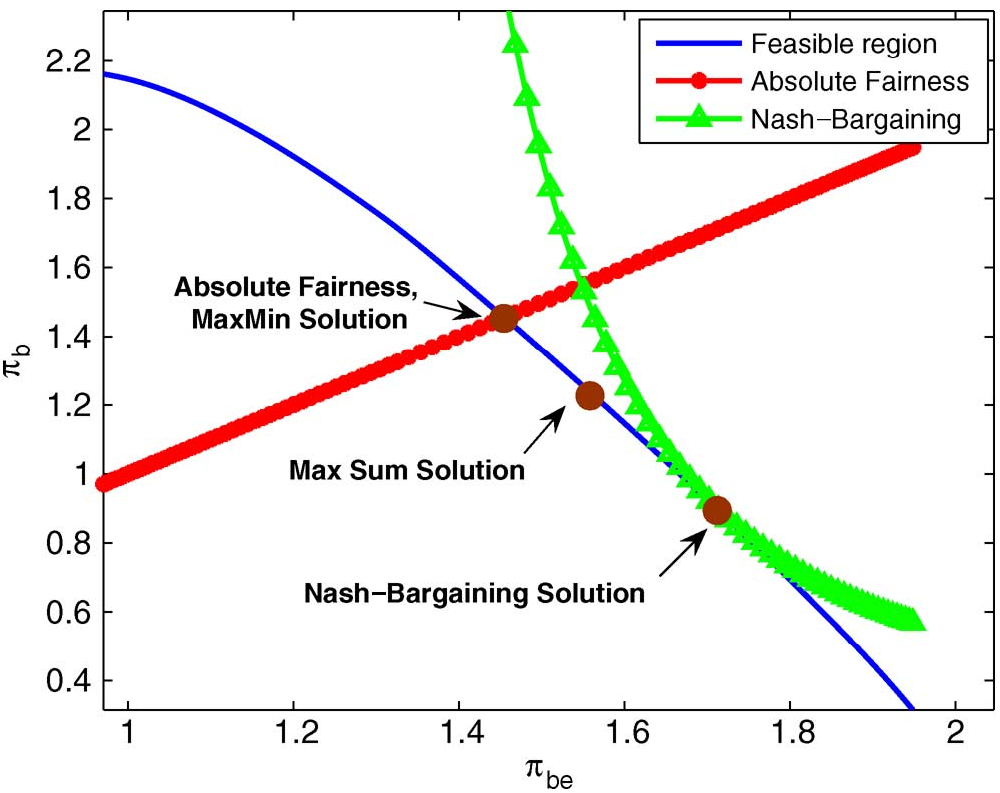 Figure 2: The Bargaining Equilibrium. As the conflict increases or the time sensitivity grows, the game converges to a predictable state where all parties have no incentive to deviate.
Critical Insight: The Detector-Colluder Game
The most profound impact of this work is for the Digital Rights Enforcer. Because the colluders are bound by their own need for "fairness," their possible attack strategies are not infinite. They are constrained to the Pareto-optimal set of the bargaining game.
By viewing the interaction as a Stackelberg Game (where the colluders move first and the detector follows), the authors prove that the best defense is a Self-Probing Detector. This detector "observes" the attack strategy and chooses the optimal statistical test to maximize the probability of capture ().
Conclusion & Takeaways
This paper shifts the paradigm from purely "signal-versus-noise" to "behavioral economics."
- Defense Efficiency: Knowing that colluders must be "fair" allows defenders to ignore irrational, non-fair attack types, simplifying the design of fingerprinting codes.
- Scalability: The model effectively handles differences in copy resolution (HD vs SD), making it highly relevant for modern streaming infrastructures.
- Limitations: The model assumes rational actors. Irrational actors or those motivated by non-monetary gains (e.g., pure activism) might not follow these bargaining equilibriums.
Ultimately, the study proves that the security of a multimedia system is as much about understanding the social incentives of its users as it is about the mathematical robustness of its watermarks.