
Game Theory Meets Social Networks: Solving Data Sparsity in Recommender Systems
A Framework for Recommender System Based on Game Theory in Social Networks
This paper introduces a hybrid recommender system framework that integrates Game Theory with SimRank++ to enhance social network recommendations. The core innovation lies in using an infinite repetitive game model with incentive functions to mitigate data sparsity and improve accuracy by encouraging user-item ratings.
TL;DR
The paper proposes a novel framework that treats user ratings as a strategic game. By introducing an incentive mechanism based on Game Theory and a multifaceted similarity measure (including SimRank++), the system effectively encourages user participation and improves recommendation accuracy (MAE/RMSE) compared to traditional collaborative filtering.
Problem & Motivation: The "Selfish" User Dilemma
In the ecosystem of social networks (like Douban or Amazon), the "recommendation" is only as good as the data it feeds on. However, most users are "rational decision-makers" who view rating items as a cost in terms of time and effort. This leads to two critical failures:
- Data Sparsity: A sparse user-item matrix where most cells are empty.
- The Cold Start Problem: The inability to provide meaningful suggestions to new users without historical footprints.
The authors argue that we cannot simply "force" users to rate; we must incentivize them.
Methodology: The Strategic Engine
The framework is built on a four-layer architecture: Preprocessing, New User Handling, Generation, and Evaluation.
1. Game Theory Incentive Mechanism
The authors model the rating behavior as an infinite repetitive game. To prevent "collusion" (dishonest ratings), they introduce a virtual payment function : This function rewards users whose ratings are close to the "trusted average," ensuring that high-quality, honest feedback leads to higher virtual payoffs.
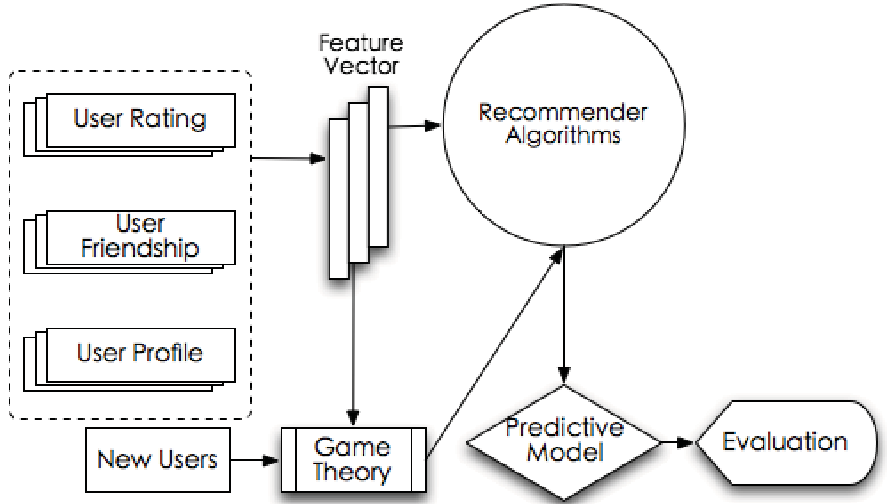 Figure 1: The structured framework of the proposed recommender system.
2. Multi-Dimensional Similarity Fusion
To compute the final recommendation, the system aggregates four distinct signals:
- Categorical Similarity (): Using Hamming Distance on user profiles.
- Implicit Trust (): Analyzing the consistency of ratings between users on overlapping items.
- Explicit Similarity (): Using SimRank++, which calculates structural similarity based on the friendship graph and overlapping social circles.
The final decision is a fusion of these values passed through a Sigmoid function to normalize the recommendation score.
Experimental Results: Proving Interest Alignment
The researchers utilized the Douban Dataset, involving over 56,000 users and 5,800 films.
Performance Gains
The proposed method consistently achieved lower MAE (Mean Absolute Error) and RMSE (Root Mean Square Error) than traditional baselines. This indicates that the combination of social trust and game-theoretic incentives allows the model to predict user preferences more precisely.
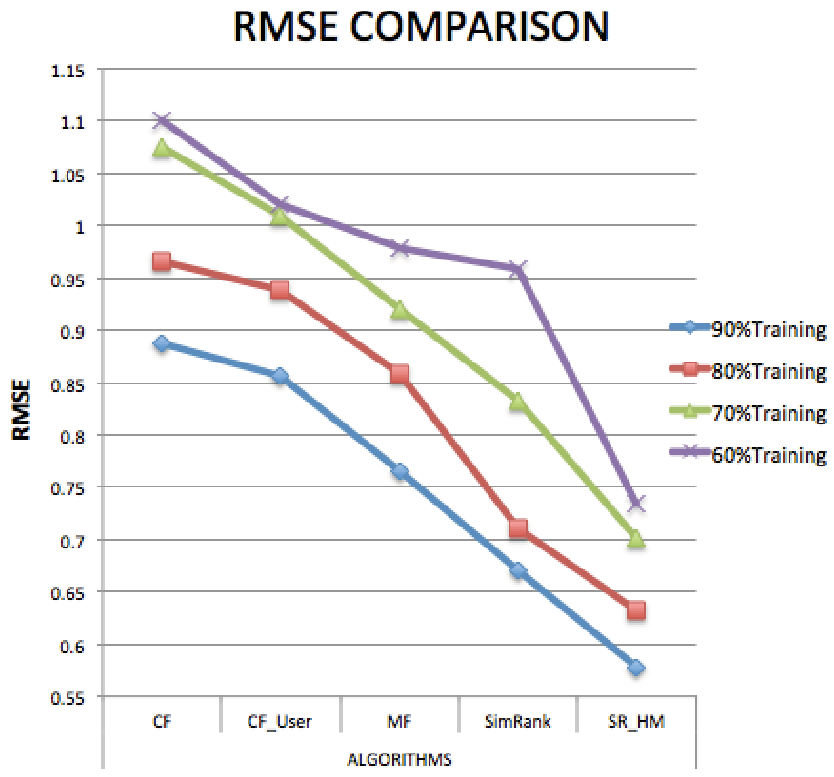 Figure 2: RMSE comparison showing the proposed method outperforming traditional algorithms.
The Game Theory Effect
The study analyzed three types of users. Users under the incentive strategy (U1) achieved significantly higher payoffs as they rated more items, proving the "long-term benefit" model works to increase the density of the rating matrix.
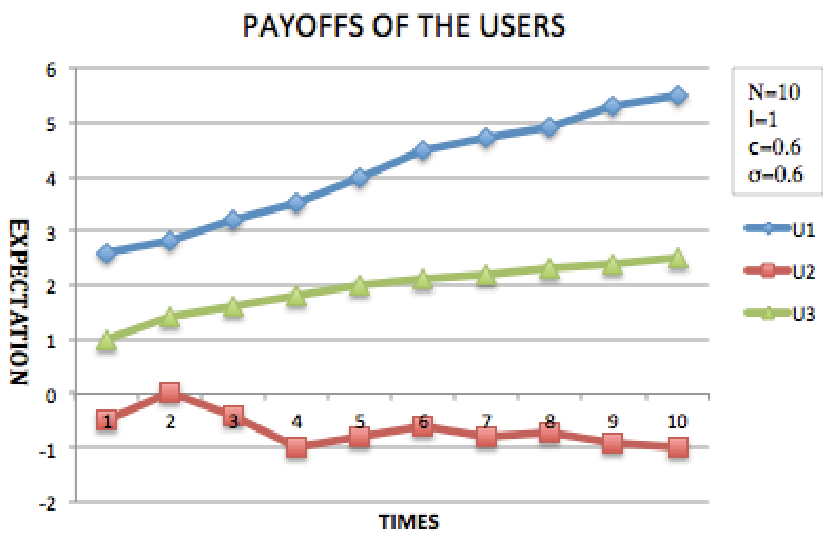 Figure 3: Payoff analysis showing higher revenue for active, incentivized users.
Critical Insight & Conclusion
The brilliance of this work lies in recognizing that a recommender system is not just a mathematical optimization problem but a social-economic system. By rewarding honesty and participation, the "Information Problem" of sparse matrices is addressed at the source—user behavior.
Takeaway: Effective AI in social contexts requires an "Inductive Bias" towards human psychology. By integrating Game Theory, weights for categorical data, and structural graph similarity, this framework provides a robust blueprint for the next generation of trust-aware social platforms.
Limitations: The current model assumes "rationality" in a mathematical sense; future work could explore "bounded rationality" and more complex, non-numerical data types (like text reviews) within the same game-theoretic framework.