
Game Theory Meets RL: Securing the Edge in Mobile Social Networks
Game Theory and Reinforcement Learning Based Secure Edge Caching in Mobile Social Networks
This paper proposes a secure edge caching scheme in Mobile Social Networks (MSNs) that integrates Stackelberg Game theory and Q-learning. It establishes a "leader-follower" framework to optimize the Quality of Secure Caching Service (QSCS) while achieving a SOTA defense against selfish behavior and external attacks through a zero-payment punishment mechanism.
TL;DR
To address the dual threats of selfish node behavior and external security attacks in Mobile Social Networks (MSNs), this paper introduces a hybrid framework. By combining Stackelberg Game Theory for incentive modeling and Q-Learning for dynamic strategy adaptation, the authors create a system where Content Providers can guarantee high-quality secure caching even when network parameters are unknown.
The "Selfishness" Bottleneck at the Edge
Edge caching is the backbone of modern content delivery, placing data closer to users to reduce latency. However, a critical "trust gap" exists:
- Node Egoism: Edge devices are rational entities. They may claim to cache content but actually deliver "fake" data to save storage and power while still collecting service fees.
- Open Access Vulnerability: Since these devices are public-facing, they are "low-hanging fruit" for Man-in-the-Middle (MITM) and tampering attacks.
- Parameter Blindness: In real-world MSNs, providers don't know the exact cost functions or power constraints of every edge device, making traditional optimization formulas fail.
Methodology: The Incentive-Learning Loop
1. The Stackelberg Game Model
The authors define a one-leader, multi-follower game:
- Leader (Content Provider): Broadcasts a payment strategy to motivate quality.
- Followers (Edge Devices): Choose a Security Quality . If a node is caught being "selfish" (), it is met with a Zero-Payment Punishment. This ensures that the utility of cheating is always lower than the utility of honest participation.
2. Physical Intuition of the Utility Function
The satisfaction function follows a Logarithmic Law, mapping the intuitive reality that increasing security has diminishing returns on user experience after a certain threshold. Conversely, the cost function for edge devices is Quadratic (), reflecting that achieving "near-perfect" security is exponentially more expensive in terms of computational resources.
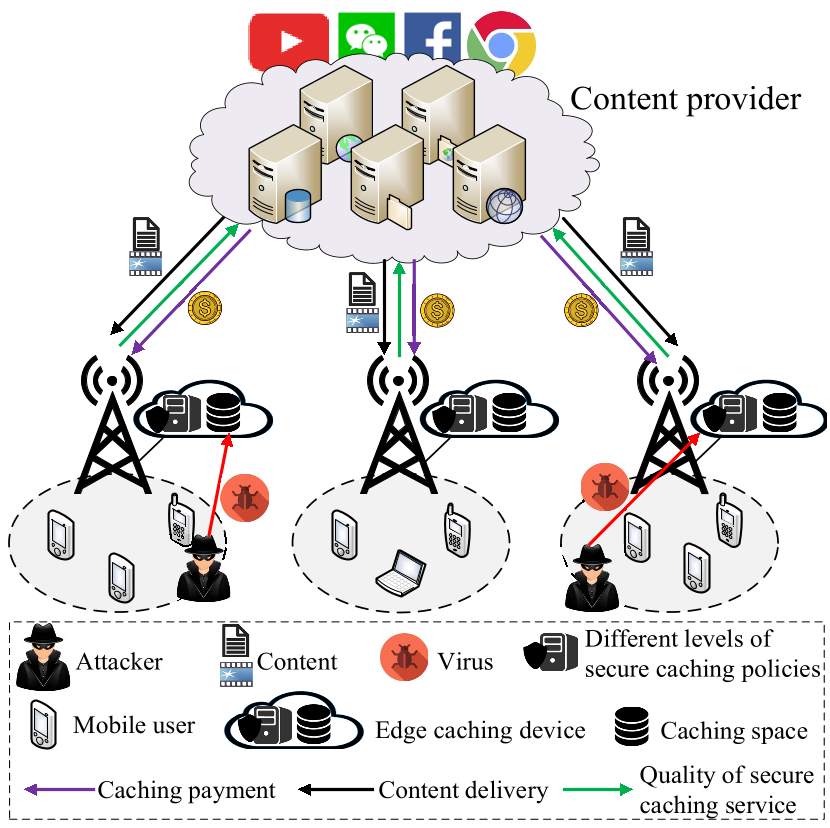 Fig 1: The MSN model featuring the interaction between providers, edge devices, and mobile users.
3. Solving the Dynamic Game via Q-Learning
Because the "game" is played repeatedly in a shifting environment (users moving in and out of range), the authors use Q-Learning.
- Provider Learning: Learns which payment levels result in the best security quality from devices.
- Device Learning: Learns how to adjust security levels to maximize profit based on the provider's payment history.
Experimental Validation
The paper rigorously tests the convergence of these strategies. A key takeaway from the results is that the system reaches a Stackelberg Equilibrium (SE) where neither the provider nor the device can improve their utility by unilaterally changing their strategy.
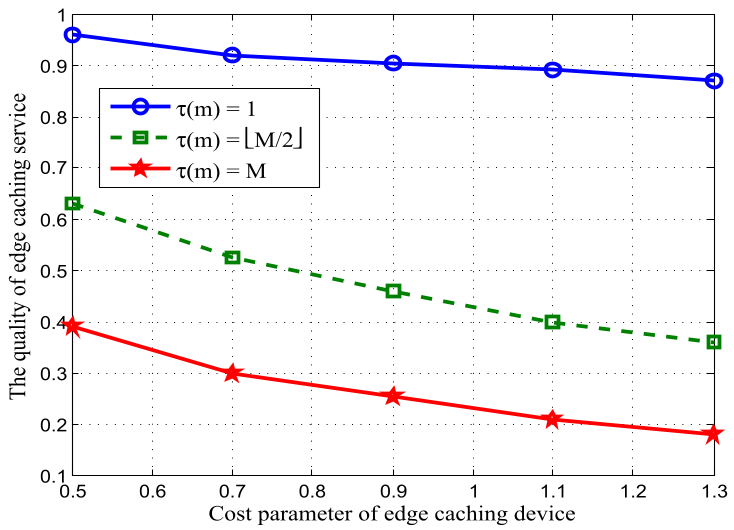 Fig 2: Q-Learning convergence showing the stabilization of utilities for both parties over time.
Compared to Auction-based schemes (which often ignore security for the sake of price) and Random schemes, this approach maintains a higher Secure Caching Ratio even as the cost of providing security increases.
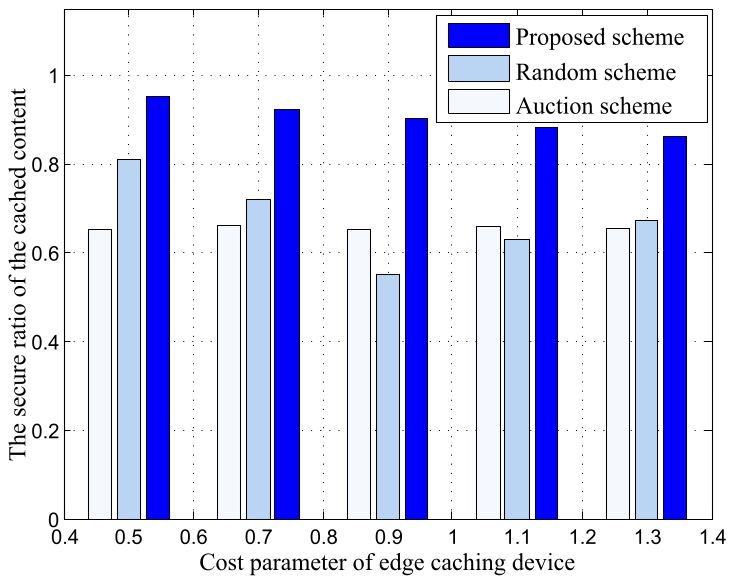 Fig 3: The proposed scheme significantly outperforms baselines in defense success rate.
Critical Insight & Future Outlook
The brilliance of this paper lies in the Zero-Payment mechanism. By mathematically ensuring that the "cheating reward" is zero, the authors transform security from a "burden" into a "utility-maximizing choice" for the edge devices.
Limitations: While Q-Learning is effective, its state space can explode in massive networks. Future research should look towards Deep Q-Networks (DQN) or Multi-Agent RL (MARL) to handle thousands of edge nodes simultaneously without high computational overhead at the provider level.
Conclusion
This research moves beyond "passive" security (like encryption) and treats security as a measurable quality of service that can be bought, sold, and optimized through intelligent incentives.