
PhotoTrip: Unveiling Hidden Heritage Through Gamified Geo-Data Mining
Using gamification to discover cultural heritage locations from geo-tagged photos
The paper introduces PhotoTrip, an interactive system that recommends non-mainstream "Local Points of Interest" (LPOIs) along travel itineraries. It leverages geo-tagged photos from Flickr and metadata from Wikipedia, utilizing a gamified feedback mechanism to ensure high-quality, relevant image selection.
TL;DR
PhotoTrip is a recommender system designed to rescue tourists from the "mainstream trap" by identifying charming local points of interest (LPOIs) that are often overshadowed by famous landmarks. By mining Flickr's vast repository of geo-tagged photos and employing a Facebook-integrated gamification loop, the system clarifies the noisy world of social media tags to provide a curated, high-quality travel experience.
The "Mainstream" Problem & The Noise Challenge
When traveling from Padua to Venice, most tourists stick to the highway. They miss sites like Villa Pisani in Stra—a stunning historic jewel—simply because it isn't "famous enough" for a standard guidebook.
While platforms like Flickr contain millions of geo-tagged images of such places, using this data is a nightmare for developers. Tags are subjective, noisy, and often misleading. A photo tagged "Architecture" might actually depict a group of tourists blocking the view of a cathedral. Current automated systems can fail to distinguish a "good" representation of a site from a "bad" one, and relying on basic metrics like "Favorites" is computationally expensive due to API rate limits.
Methodology: Divide, Cluster, and Conquer
1. Spatial Partitioning
PhotoTrip doesn't just search along a line. It uses a modified version of RouteBoxer to divide the travel path into a grid of boxes. The size of these boxes is dynamically adjusted based on the user's maximum allowed deviation (e.g., 5km detour).
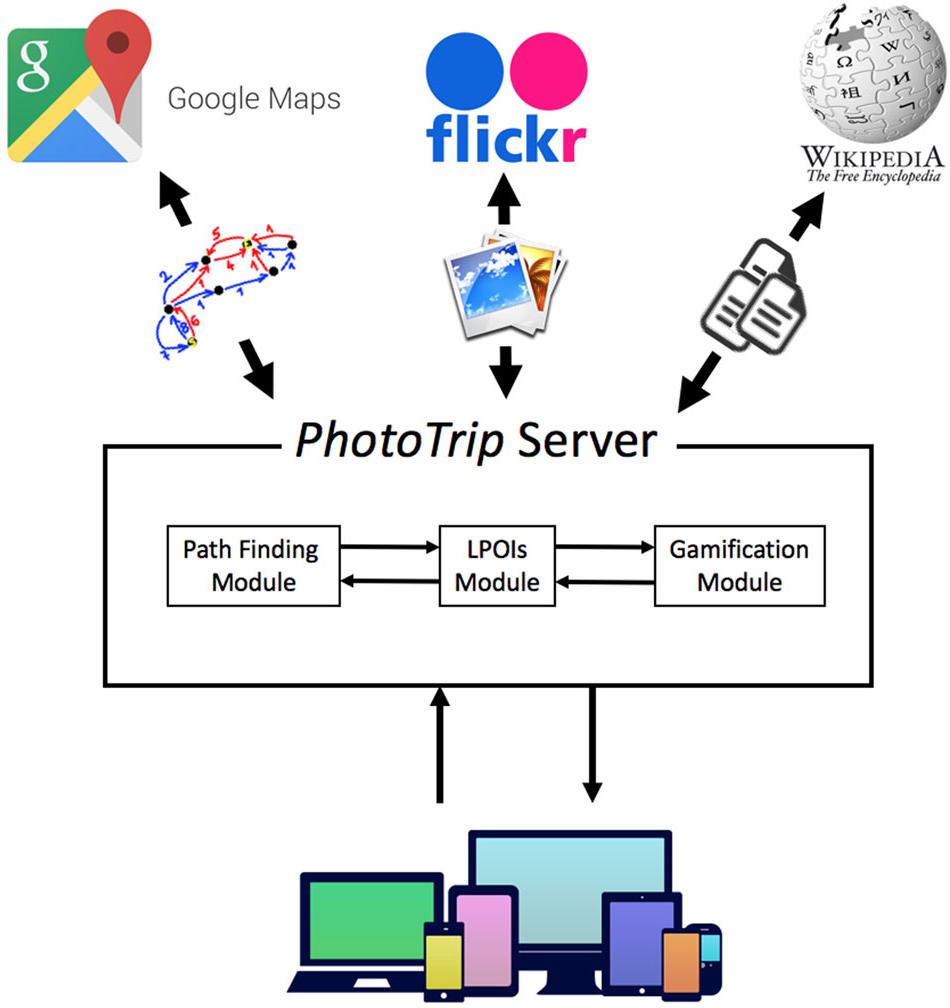
2. Clustering LPOIs
The system identifies LPOIs by clustering photos within these boxes. If a group of photos is located within a 100m–400m radius of each other (depending on travel by foot or car), it is identified as a unique point of interest.
3. The Gamification Loop: "Majority Wins"
To solve the quality problem, the authors moved the filtering task to the users through a Facebook app. Using Points, Badges, and Leaderboards (PBL), they incentivized users to vote on whether a photo truly represents its assigned category.
- Reputation System: Not all votes are equal. A user’s "weight" in voting increases as their reputation grows.
- Scoring: Users get 5 points for being the first to vote on a "fresh" photo and 2 points for siding with the eventual majority.
- Majority Threshold: If a photo receives discordance (no clear 70% majority after 25 votes), it is flagged as too ambiguous and removed.
Experimental Results: Humans vs. Noise
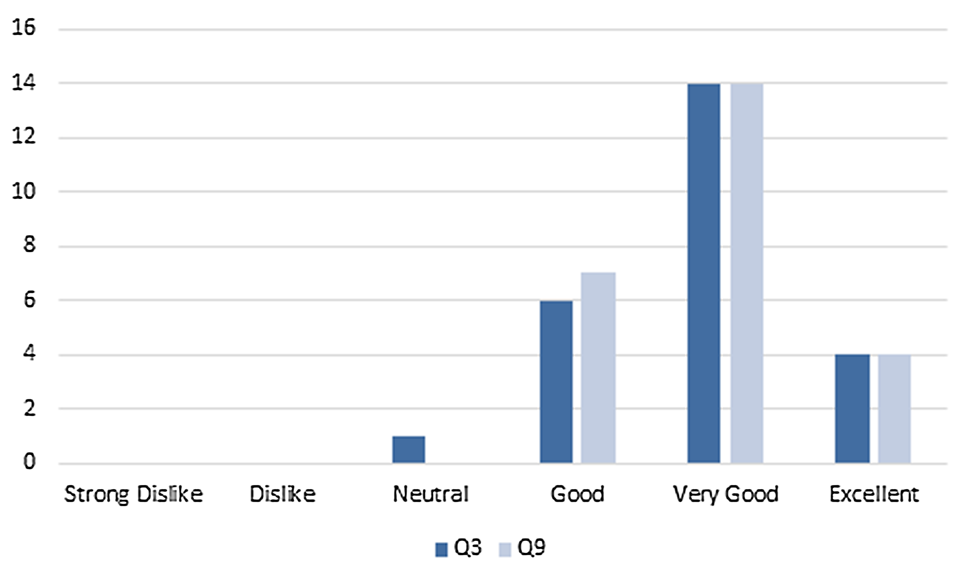
The study conducted two rounds of testing. The first round confirmed high usability (72% rated it "Excellent"). The second round focused on the effectiveness of the gamification.
In the chart above, we see how the percentage of agreement evolves. For clearly "good" or "bad" photos (the lines at 100%), consensus is reached almost instantly. For ambiguous photos (the lines hovering around 50%), the system effectively identifies that these images lack semantic clarity and should be discarded.
Critical Insight: The Power of Social Feedback
The most striking takeaway is that "Non-expert" users were just as effective as "Expert" users in identifying high-quality images. When incentivized by a game, common travelers naturally filter out "visual noise" better than high-latency API calls or complex algorithmic visual analysis (for 2016 standards).
Conclusion
PhotoTrip successfully bridges the gap between massive, messy social media datasets and the specific needs of cultural heritage tourism. While current LLMs and Vision Transformers might handle some of these filtering tasks today, the reputation-based crowdsourcing model remains a cost-effective and socially engaging way to manage the "Infinite Context" of global travel data.
Future Work: The authors aim to integrate real-time translation for tags, as many local gems are described only in their native languages, further breaking down the barriers to cultural discovery.