
Beyond Points and Badges: Unpacking Gamification in Developing Higher Education
Perceptions of gamification in education: Evidence from a developing country context
This study investigates the perceptions of female university students in Kuwait regarding the use of gamification in an educational technology course. Utilizing a mixed-methods approach with tools like Kahoot! and Educaplay, the research demonstrates that students maintain consistently high positive perceptions of engagement, motivation, and learning effectiveness.
TL;DR
A recent study in Kuwait explores how university students transition from "traditional" learning to gamified environments. The results show that while students are highly enthusiastic about gamification's potential to boost motivation and cognitive retention, the transition reveals critical friction points, including technical infrastructure gaps and concerns over classroom discipline.
Background: The Motivation Gap
In many developing countries, the lecture-style, teacher-centered model remains the "Gold Standard." However, this often results in passive learning. The authors of "Perceptions of gamification in education" sought to test if gamifying an "Introduction to Educational Technology" course could break this cycle for a cohort of 50 female undergraduates.
The "Why": A Multi-Theoretical Shield
Many gamification attempts fail because they are "skin-deep"—merely adding points to a boring task. This study avoids that pitfall by aligning gamification with four pillars:
- Self-Determination Theory (SDT): Satisfying the needs for autonomy, competence, and relatedness.
- Flow Theory: Balancing challenge and skill to keep students in "the zone."
- Constructivism: Using games as a tool for students to build their own knowledge.
- Behaviorism: Utilizing instant feedback as positive reinforcement.
Methodology: The Three-Week Sprint
The researchers used a mixed-methods, one-group pre-post design. The students used Kahoot! and Educaplay for three weeks to reinforce theoretical concepts.

The researchers monitored seven dimensions, including Engagement, Learning Effectiveness, and Doubts.
Results: High Expectations Meet Reality
The quantitative data was remarkably stable. Students entered the study with high optimism (Pre-test Mean ~4.30) and left with similarly high scores.
Key Observations:
- Enthusiasm is Infectious: Mean scores for "Encouraging others to try gamified courses" rose from 4.22 to 4.48.
- Cognitive Gains: Students felt gamification helped them "track performance" and "improve skills" (M=4.36).
- The "Serious" Factor: One of the biggest fears in academia—that games make learning "less serious"—was largely debunked, with the "Doubts" dimension scoring the lowest (M=2.64).
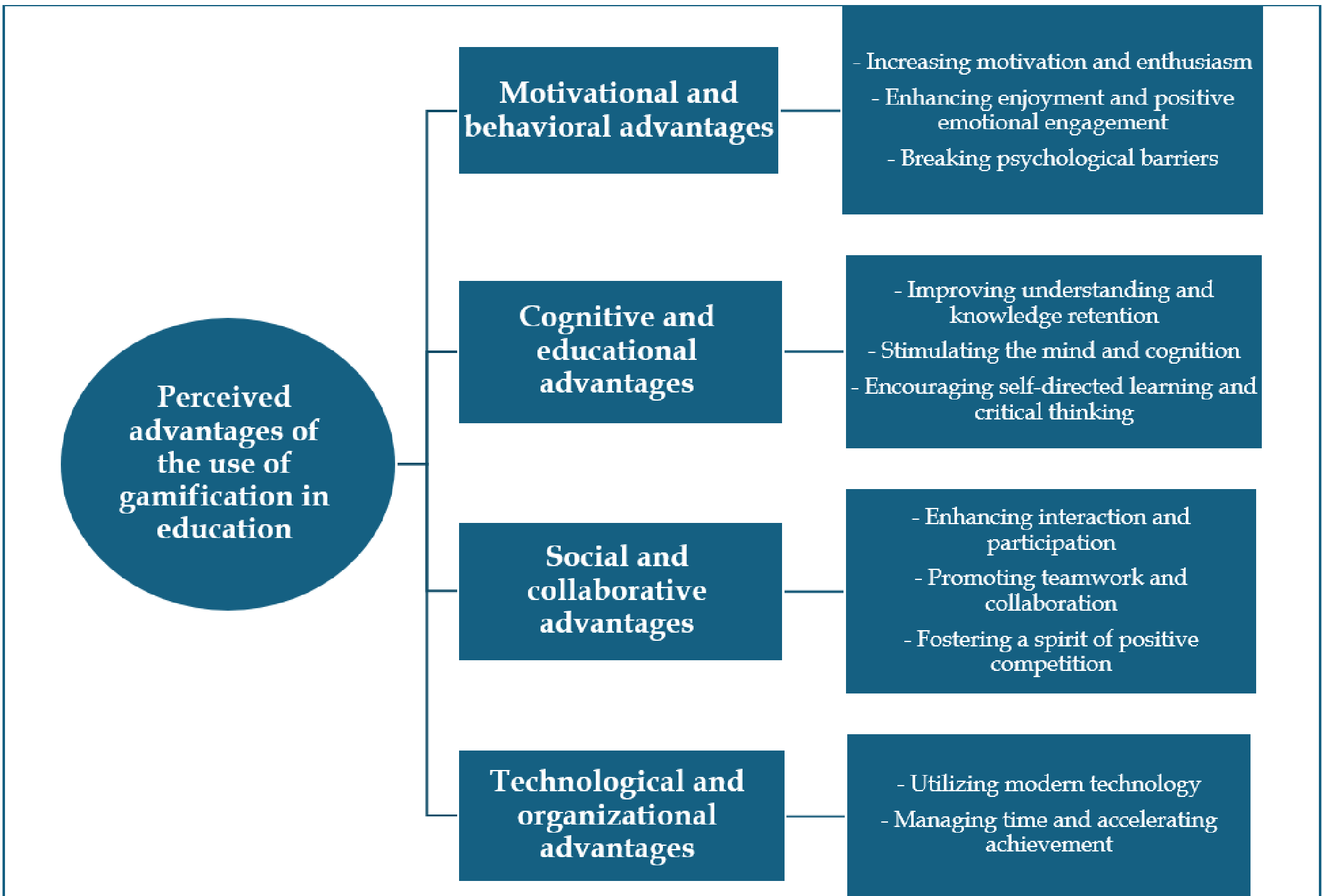
The study categorized the advantages into four buckets: Motivational, Cognitive, Social, and Organizational.
The Challenges: The "Dark Side" of Play
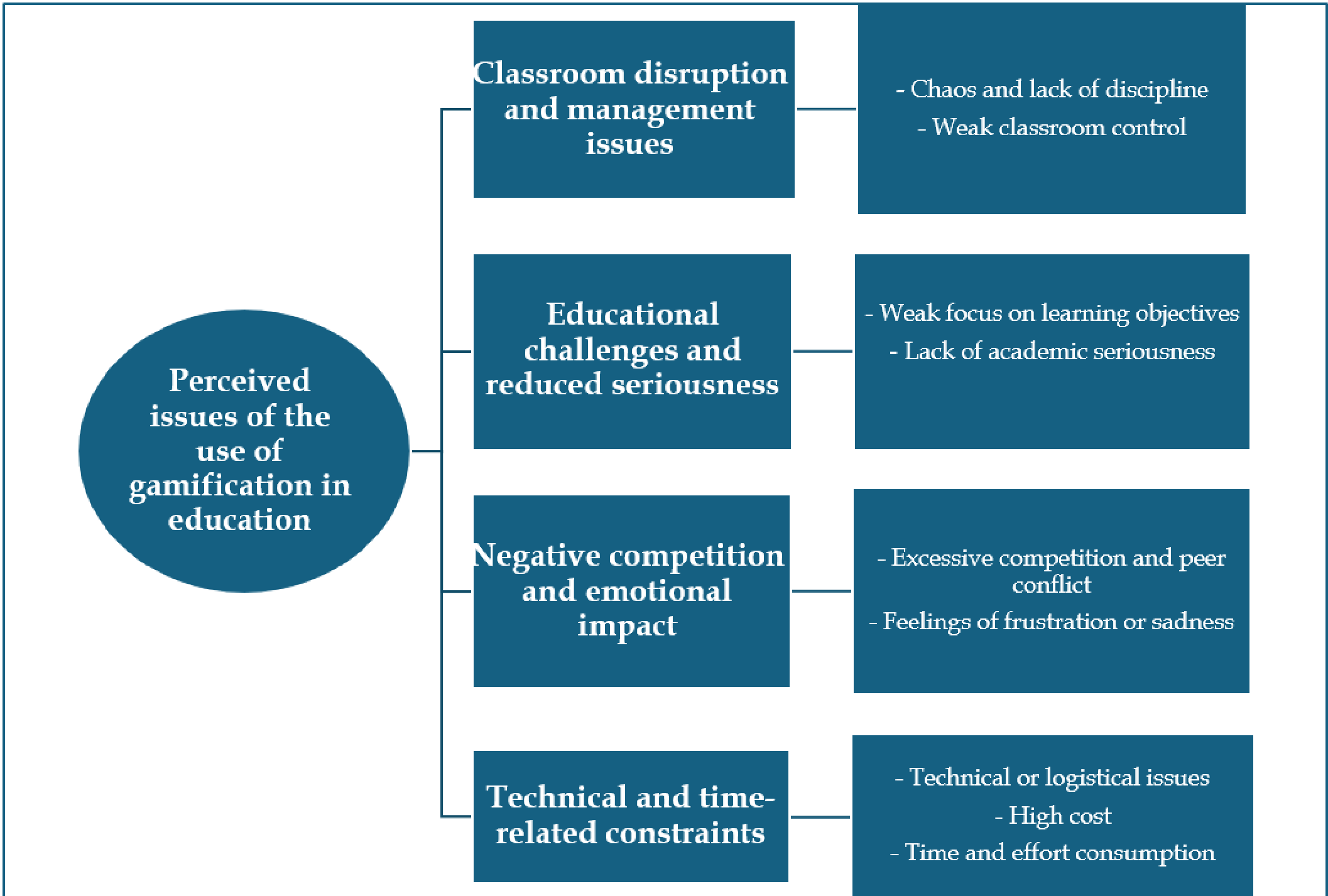
Despite the positive scores, qualitative feedback highlighted "Perceived Issues."
- Classroom Chaos: Students noted that the excitement often led to noise and "random participation" that could overwhelm the instructor.
- Tech Friction: In a developing context, internet stability is a major hurdle. A "game-over" screen caused by a dropped connection can instantly kill learning momentum.
- Negative Competition: Some students feared that leaderboards might discourage those who consistently rank lower.
Critical Analysis & Conclusion
The study proves that gamification is culturally and pedagogically welcomed in Kuwaiti higher education. However, the lack of a "statistically significant" jump between pre- and post-tests suggests a ceiling effect: students already believed it would work, and the three-week trial simply validated their bias.
Future Outlook: For gamification to move from a "novelty" to a "staple," institutions must:
- Invest in robust campus Wi-Fi.
- Train faculty not just on "tool use," but on classroom management in high-energy environments.
- Shift focus from purely competitive leaderboards to collaborative "Team Quests" to mitigate the emotional drawbacks of losing.
In conclusion, the transition to active learning through gamification is not just a technological shift—it's a psychological one that requires careful orchestration of both game mechanics and human emotions.