
Gamification Strategy: Bridging the Gap Between Citizens and Disaster Risk Management
Gamified crowdsourcing for disaster risk management
The paper proposes a gamification strategy for crowdsourced Disaster Risk Management (DRM) to enhance citizen engagement and data reliability. By integrating the MDA (Mechanics, Dynamics, Aesthetics) framework and RAMP motivators, the authors design a structured system for environmental reporting and peer validation.
TL;DR
This paper introduces a comprehensive gamification framework designed to transform passive citizens into active "citizen scientists" for Disaster Risk Management (DRM). By leveraging the MDA framework and RAMP motivators, the authors propose a system that incentivizes high-quality data reporting and peer-to-peer validation, ensuring that crowdsourced information meets the stringent requirements of professional emergency responders.
Problem & Motivation: The Engagement Vacuum
Disaster Risk Management is traditionally a hierarchical, top-down process. Conversely, the "crowd" is self-organized and non-hierarchical. While social media provides a wealth of data during crises, it is often unstructured, inaccurate, or redundant.
The core challenge is two-fold:
- Sustaining Engagement: How do you keep users interested during the "prevention" phase when no immediate disaster is occurring?
- Data Reliability: How can professional crisis managers trust data generated by untrained volunteers?
The authors argue that gamification—applying game-design elements to non-game contexts—can solve these issues by fostering awareness and creating a sense of social responsibility.
Methodology: The "Competence" Journey
The strategy is built on the MDA (Mechanics, Dynamics, Aesthetics) model, which focuses on the emotional response (Aesthetics) generated by game rules (Mechanics) and user interactions (Dynamics).
1. The Actor Ecosystem
The paper categorizes users into three types: Players (active reporters), Spectators (decision-makers/emergency services who issue "on-demand" quests), and Observers (potential future participants).
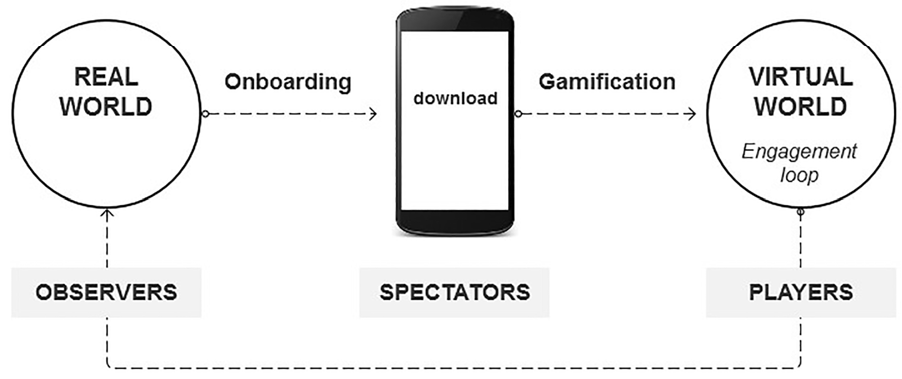 Figure 1: The interaction between Citizens (Players) and DRM Professionals (Spectators).
2. The Four Pillars of Competence
To provide a structured growth path, the authors map the system to four functional roles inspired by the RAMP model:
- Socializer: Builds the community (Relatedness).
- Learner: Builds domain knowledge via quizzes and tips (Mastery).
- Reporter: The core of the system—submitting field data (Purpose).
- Reviewer: Experienced users who validate others' reports (Autonomy/Mastery).
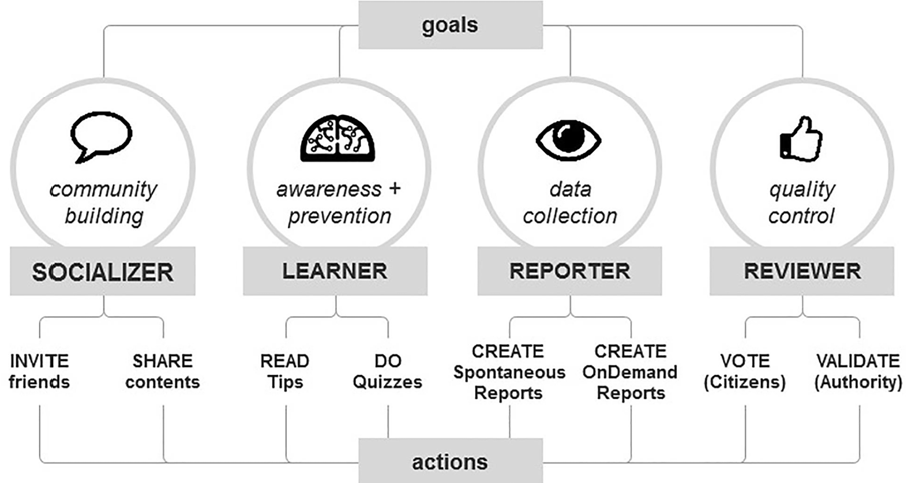 Figure 2: Mapping DRM goals to specific user activities and gamified competences.
Score and Reward: Maintaining Data Integrity
One of the most innovative aspects of this study is the negative reinforcement for poor data. Unlike traditional games that only reward, this DRM system protects against "fake news":
- Validated Reports: +50% bonus points.
- Inaccurate Reports: -50% penalty.
- Inappropriate/Counterfeit Reports: -150% penalty (causing a total score drop).
This creates a high-stakes environment where the "Master" or "Guru" level status actually indicates a high level of trustworthiness rather than just time spent in the app.
Experiments & Results: A Path to Mastery
The authors propose a 6-level progression: Novice → Apprentice → Skilled → Expert → Master → Guru.
- Barriers: Users cannot skip levels; for instance, you must be a proven "Reporter" before the "Reviewer" role is unlocked.
- Authority Alignment: A "Quality Reviewer" badge is earned only if the user's peer reviews consistently align with official authority validations.
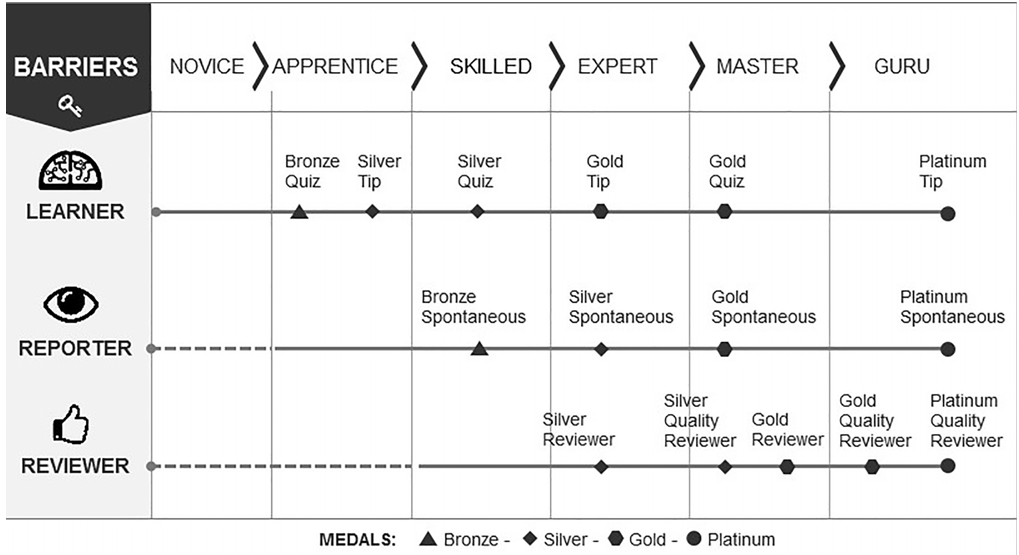 Table 1: The synergy between achievements and user progression levels.
Critical Analysis & Conclusion
Takeaway
The paper successfully demonstrates that gamification is a tool for professionalization. By treating data reporting as a "Quest" and validation as a "Mastery Skill," they provide a framework that turns a chaotic crowd into a reliable sensor network.
Limitations
- Aesthetic Generalization: The authors admit that aesthetics (the UI/UX and emotional "feel") vary by hazard and culture, meaning a universal app design might not work globally.
- Incentive Decay: The study does not yet address how to prevent "points farming" where users might spam low-quality social shares just to level up.
Future Outlook
The move toward "On-demand Reporting" (where the system asks, "Is there flooding on Main Street right now?") represents a shift from passive observation to active, guided sensing. The next step will be integrating this with I-REACT European project platforms to test these strategies in real-world flood and fire scenarios.