
Gamifying the Smart City: Harnessing Digital Rhetoric for Collective Action
Gamifying Human Behavior in Urban Crowdsourcing for a Sustainable Smart City
This paper introduces the "Game as Rhetoric" model, a design framework that leverages digital rhetoric and virtual objects to coordinate collective human behavior in mobile crowdsourcing. The authors implement "Collective Action Crowdsourcing," an IoT-based system aimed at fostering sustainable smart cities by gamifying micro-tasks through social and psychological mechanics.
TL;DR
Researchers from Waseda University have developed the Game as Rhetoric model to solve a classic social dilemma: the "Tragedy of the Commons" in urban environments. By integrating IoT devices, virtual "aging money," and social metaphors, they've created a system that encourages citizens to perform small, altruistic tasks (micro-tasks) that contribute to long-term city sustainability.
Background: Beyond Monetary Rewards
In the landscape of Smart Cities, crowdsourcing is usually synonymous with gig-economy platforms like Uber or Amazon Mechanical Turk. However, these rely almost exclusively on financial gain. When it comes to civic engagement—like keeping a public bookshelf tidy or reducing plastic waste—money often fails. It can even crowd out intrinsic motivation. The challenge lies in coordinating "collective action": how do we get a group of individuals to care about a shared goal when it's easier to just let someone else do the work?
The "Game as Rhetoric" Framework
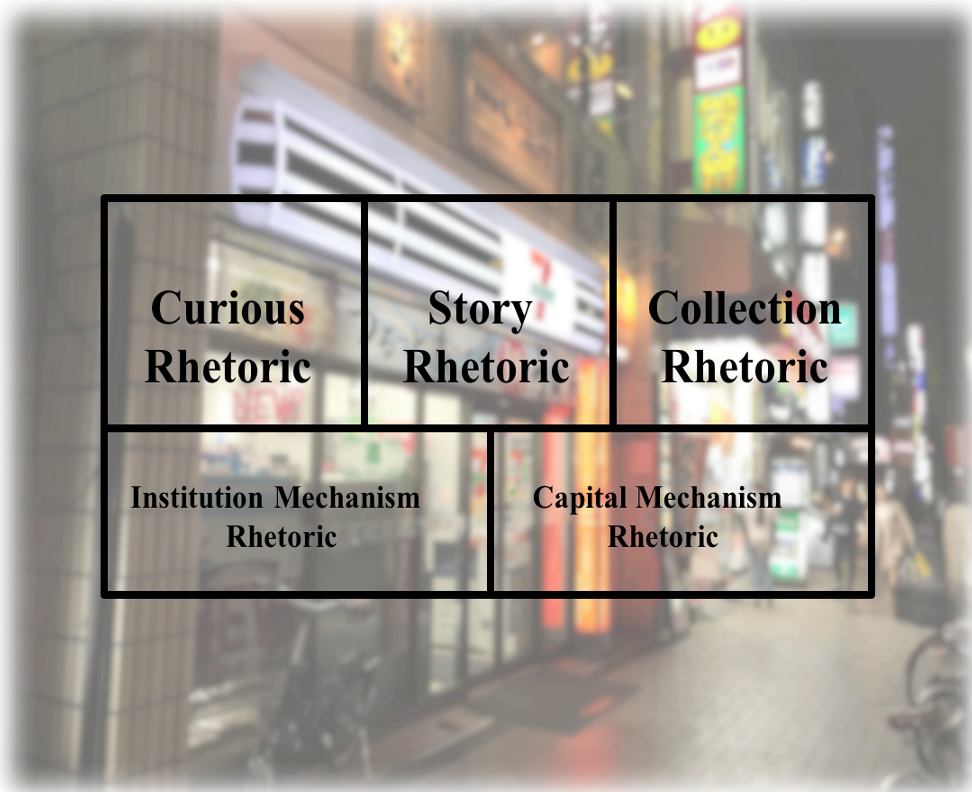
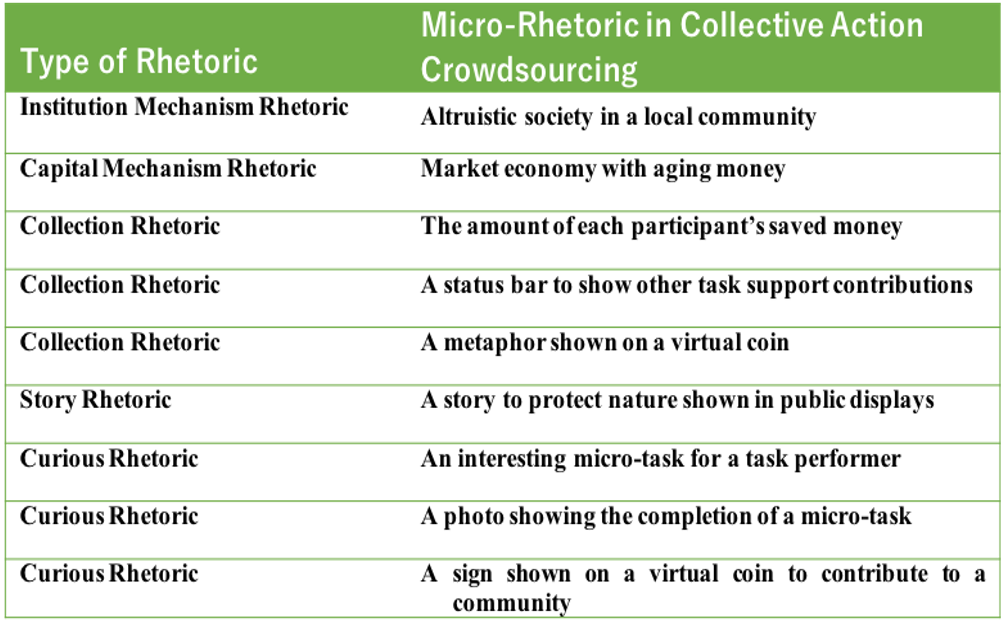
The authors argue that games are not just about fun; they are a form of persuasion. They propose five types of rhetoric to influence behavior:
- Curious Rhetoric: Sensory engagement (visuals/audio) to spark interest.
- Collection Rhetoric: Visualizing effort via progress bars and virtual goods.
- Story Rhetoric: Using narratives to teach ideological values (e.g., environmentalism).
- Institution & Capital Rhetoric: Defining the "laws" and "economy" of the interaction, such as local currencies.
Methodology: The IoT Ecosystem
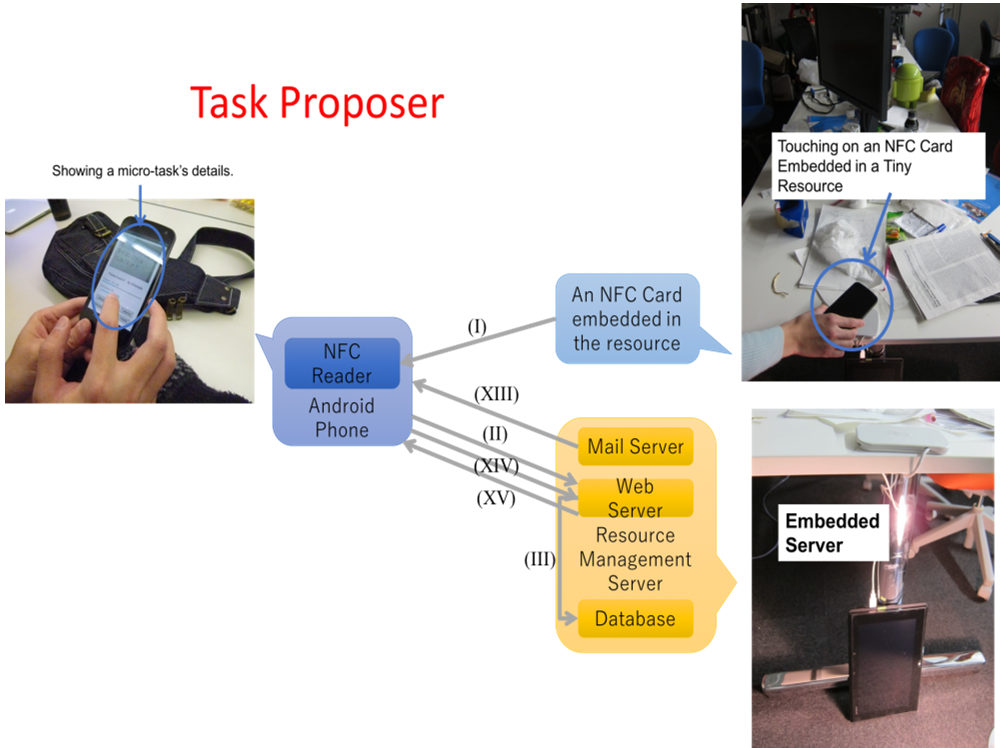
The researchers built a prototype involving three key roles: Task Proposers, Task Supporters, and Task Performers.
A unique feature of their "Capital Rhetoric" is Aging Money. Unlike real cash, this virtual currency loses value if it sits idle. This creates a "use it or lose it" mentality, forcing participants to invest their "grails" (the currency unit) into community tasks rather than hoarding them.
The Interaction Flow:
- Tag: A user touches an NFC-enabled IoT device at a location (e.g., a messy shelf).
- Propose: They upload a photo and request a micro-task.
- Support: Other community members fund the task using their virtual coins.
- Perform: A volunteer completes the task, takes a "proof" photo, and receives the reward.
Experiments and Key Findings
Through "User Enactments," the team simulated 18 scenarios to identify pitfalls.
- The Power of Aging Money: Participants reported that the devaluation of their currency made them likely to support tasks they might otherwise ignore. It successfully prevented "social loafing."
- The Psychology of Loss: Some participants felt a "sense of loss" because their currency was always decreasing. This suggests that the rate of devaluation is a critical design variable—too fast, and users quit; too slow, and they don't engage.
- Metaphor Awareness: One major hurdle discovered was that users didn't always connect the virtual coins to the abstract concept of "sustainability." For gamification to be "meaningful," the link between the game action and the real-world impact must be reinforced through stronger storytelling (Story Rhetoric).
Critical Insight: The Future of Urban Design
This research shifts the focus from individual gamification (Level up! Get a badge!) to collective gamification. By treating the city as a "game board" where the rules are designed to foster altruism, we can address urban decay and sustainability from the bottom up.
However, the "Game as Rhetoric" model faces a significant challenge in Reality Alignment. If the "fictional" world of the game doesn't feel relevant to the "real" world of the user, the influence fades. The next frontier for this work will be integrating Augmented Reality (AR) to overlay these digital rhetorics more seamlessly onto our physical streets.
Conclusion
Kimura and Nakajima provide a sophisticated roadmap for using game mechanics as a tool for social engineering. As smart cities evolve, the ability to coordinate the "crowd" through meaningful digital metaphors rather than simple financial transactions will be essential for building truly sustainable communities.