
Beyond the Chalkboard: Gamifying Mathematics in Rural Sri Lanka
Gamifying Mathematics for Primary Students in Rural Sri Lanka
The paper introduces a gamified mobile application for grade three mathematics tailored to the Sri Lankan curriculum. Tested with 130 students in rural schools, the study demonstrates a shift from traditional teacher-centric learning to a highly motivated, student-centric collaborative environment using tablet computers.
TL;DR
This study investigates the introduction of tablet-based gamified learning in rural Sri Lankan primary schools. By replacing traditional "chalk and talk" methods with a custom-built Sinhalese math game, researchers observed a radical shift toward student-led collaboration and increased engagement, despite identifying significant UI/UX hurdles for first-time digital users.
Background & Motivation: The Rural Education Crisis
In rural Sri Lanka, the graduate teacher-to-student ratio is alarmingly low, contributing to a staggering failure rate in mathematics—up to 90% in some national exams. Traditional pedagogy is heavily teacher-centric, leaving little room for individual attention or student engagement.
The authors hypothesized that Gamification and Tablet Computers could bridge this gap. However, unlike studies in developed nations, this research targets a demographic where household computer ownership is as low as 4.6% and digital literacy is minimal.
Methodology: Designing for First-Time Users
The researchers built a module called "The Shopper," designed to teach currency composition and subtraction.
- Native Context: The game uses local metaphors, the Sinhalese language, and familiar items like native coins and sweets.
- Pedagogical Foundation: Grounded in Piaget’s cognitive development theory, focusing on "concrete operations" for 8-year-olds.
- Gamification Elements: A 5-point star scoring system was implemented to replace stressful numerical grades with encouraging feedback.
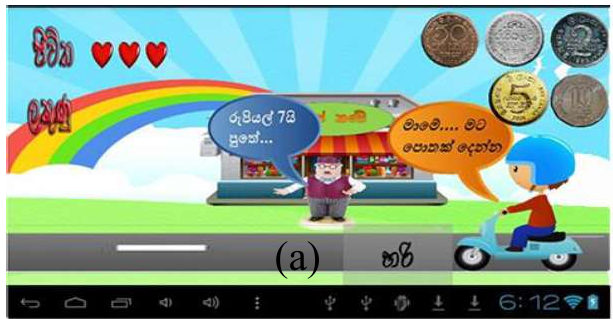 Figure 1: Comparison between Level A (Simple drag-and-drop) and Level B (Complex multi-step interactions).
Key Results: A Social Transformation
The most striking finding wasn't just the math scores, but the change in classroom social dynamics:
- Teacher as Facilitator: Instead of lecturing to a passive room, teachers moved between desks, providing personalized support to struggling students.
- The "Alpha Student" Effect: More competent students naturally took on leadership roles, helping peers navigate technical issues like screen timeouts or complex levels.
- Collaborative Learning: A teacher noted that students who previously couldn't sit together for 10 minutes were now working in groups for hours.
Interaction Design Pitfalls
The study highlighted a "Digital Divide" in motor skills:
- Drag-and-Drop Struggles: Students often lost contact with the screen mid-drag due to inconsistent pressure.
- Complexity Barrier: While Level A was intuitive, Level B’s requirement for multiple confirmations confused students, proving that UI complexity can overshadow educational content.
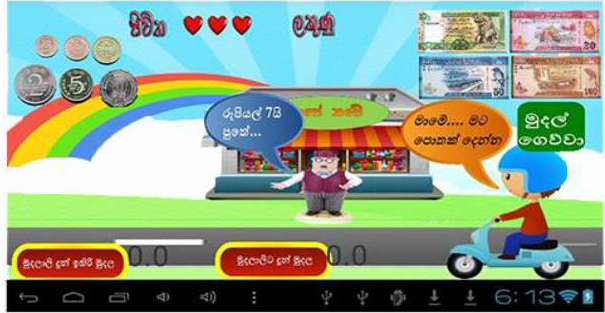 Figure 2: Example of complex interaction where students had to manage multiple steps to finish a "purchase".
Critical Analysis & Future Outlook
Takeaway: This work proves that technology in rural education acts as a "Social Catalyst." The primary value of the tablets was not the code itself, but the way it forced a shift toward collaborative, student-centric learning.
Limitations: The study was short-term (2 weeks). The "Novelty Effect" may have inflated engagement scores.
Future Work: The authors plan a longitudinal study over a full semester to see if the engagement lasts once the "newness" of the tablets wears off. They also aim to transition from "drag-and-drop" to "point-and-click" interfaces to better accommodate the physical interaction styles of rural children.
Conclusion
Gamifying the curriculum is more than just making math "fun"—it's a viable strategy for redistributing educational agency in regions where human teaching resources are scarce. However, developers must design with "Zero-Baseline" digital experience in mind to ensure the UI doesn't become a barrier to the pedagogy.