
Beyond the Joystick: Why Your Gaming Habits Dictate How Much You Learn
Investigating the Impact of Gaming Habits, Gender, and Age on the Effectiveness of an Educational Video Game: An Exploratory Study
This exploratory study investigates how personal factors influence the effectiveness of the educational adventure game "La Dama Boba" in increasing teenagers' interest in classical theater. By categorizing students into four distinct "Gaming Profiles" (Casual, Well-rounded, Hardcore, and Non-gamers), the researchers demonstrate that prior gaming habits significantly impact motivational outcomes, while age and gender do not.
TL;DR
Can a videogame make a teenager love 16th-century classical theater? The answer isn't a simple "yes" or "no"—it depends on what they play at home. This study reveals that while age and gender have negligible effects, a student's Gaming Profile (e.g., Casual vs. Hardcore) is the primary driver of an educational game's success. Paradoxically, traditional lectures only outperform games for those who rarely play them.
Background: The "Mixed Results" Trap
For years, the academic consensus on "Serious Games" has been frustratingly inconsistent. Some studies show massive engagement boosts; others show no improvement over a standard textbook. The researchers of "La Dama Boba" noticed a strange phenomenon: during their experiments, some students were electrified by the game, while others were bored and dismissive. This high variance suggested that the "average" effectiveness of a game is a myth—we must look at the individual.
The Taxonomy of a Student-Gamer
To solve this, the authors moved beyond basic demographics. They developed the Game Preferences Questionnaire (GPQ) to cluster students into four behavioral archetypes:
- Casual Players: Fans of puzzles, social, and music games.
- Well-Rounded (WR) Gamers: High-frequency players who enjoy almost everything.
- Hardcore Players: Focused almost exclusively on high-intensity FPS (First-Person Shooters) and sports.
- Non-Gamers: Students who rarely touch digital games.
Methodology Insight: The Architecture of Evaluation
The study used a point-and-click adventure game based on Lope de Vega’s play. The choice of the adventure genre was intentional: it mirrors the narrative structure of theater.
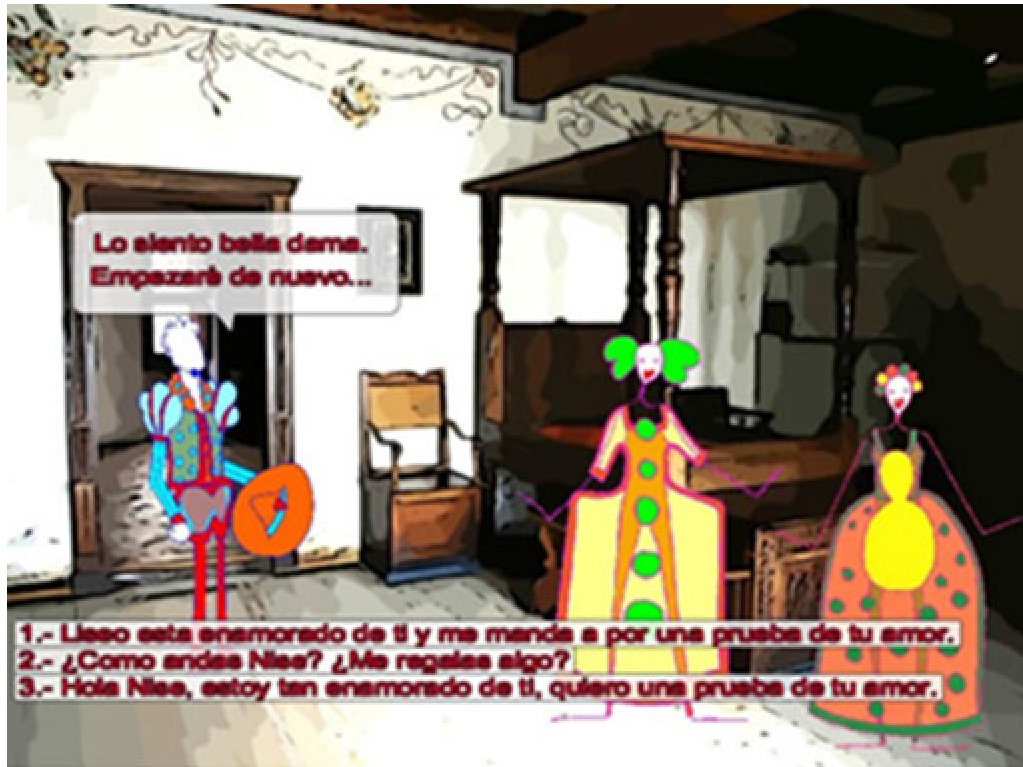 Figure 1: The experimental design comparing game-based learning vs. traditional teacher-led instruction.
Key Findings: The "Genre-Matching" Effect
The statistical analysis (ANCOVA) yielded several "Aha!" moments:
- Gender and Age are Irrelevant: Despite popular tropes, girls didn't inherently learn better from the story-driven game than boys, nor did a 12-year-old differ from a 15-year-old.
- The Casual Advantage: Casual and Well-rounded gamers responded best to the game. Why? Because the adventure game's pace and mechanics aligned with what they already liked.
- The Hardcore Wall: Hardcore gamers, used to the high-adrenaline feedback loops of Call of Duty or FIFA, found the slow-paced, text-heavy adventure game less engaging.
- The Traditionalist Sanctuary: Non-gamers were the only group that performed better under traditional teacher-led lectures.
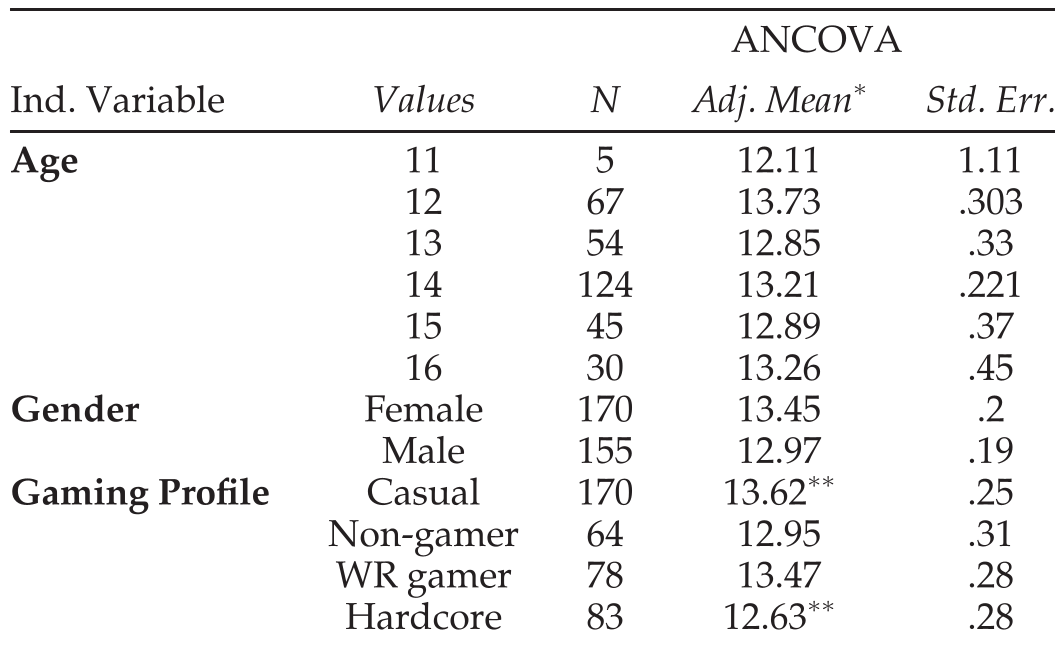 Table 1: Adjusted means showing that Casual gamers (13.62) significantly outperformed Hardcore gamers (12.63) in the game intervention.
Critical Analysis: The Future of Tailored Education
The most profound takeaway is that gaming habits are a proxy for cognitive and personality traits. A student who prefers strategy games likely uses different "in-game learning strategies" than one who plays puzzles.
Why this matters for Product Design:
If you are building an educational tool for a classroom, you cannot assume a single game genre will work. The authors suggest two paths:
- Genre Diversity: Offer different "skins" or mechanics for the same content (e.g., a "Quiz mode" for non-gamers and an "Action mode" for hardcore players).
- Strategic Deployment: Use games as a surgical tool for the 80-90% of students who are active gamers, while maintaining traditional support for the non-gaming minority.
Conclusion
This study dismantles the idea that "games are good for everyone." Instead, it proves that the effectiveness of an educational videogame is governed by the inductive bias of the player's own habits. To maximize learning, we must stop designing games for "students" and start designing them for "players."
Limitations to Consider: The study was a short-term intervention (40-50 minutes). Long-term "novelty effects" (the Hawthorne effect) might fade, and future research is needed to see if these profiles hold true across different subjects like Mathematics or Engineering.