
The Generational Gap in a Smile: How Age and Gender Decode Emoji Functions
8240_Gender and Age Influences on Interpretation of Emoji Functions.
This study investigates how receiver demographics influence the pragmatic interpretation of emoji in social media contexts. Using a modified functional taxonomy and authentic Facebook comment examples, the research identifies "tone modification" as the dominant interpretative lens for emoji.
TL;DR
Think an emoji is just a "picture worth a thousand words"? Think again. A deep-dive study into 519 social media users reveals that while we all see the same yellow icons, our brains decode their purpose based on our birth year. While young users use emoji to subtly shift the "vibe" of a sentence (Tone Modification), older users—specifically males over 30—often find them confusing or interpret them as literal physical actions.
The "Why": Beyond Surface Ambiguity
We’ve known for years that a "Grimace" face on an iPhone looks like a "Smirk" on a Samsung, leading to awkward misunderstandings. But Susan C. Herring and Ashley R. Dainas argue that the problem is deeper than just rendering. The real friction lies in Pragmatics: what is the emoji doing in the conversation?
Current NLP models and social theories often treat emoji as mere "sentiment indicators." This paper challenges that, suggesting that your demographic profile—your "Inductive Bias" as a human—changes whether you see a ❤️ as a virtual hug (Action) or just a way to make a message look friendlier (Softening).
Methodology: Testing Real-World Context
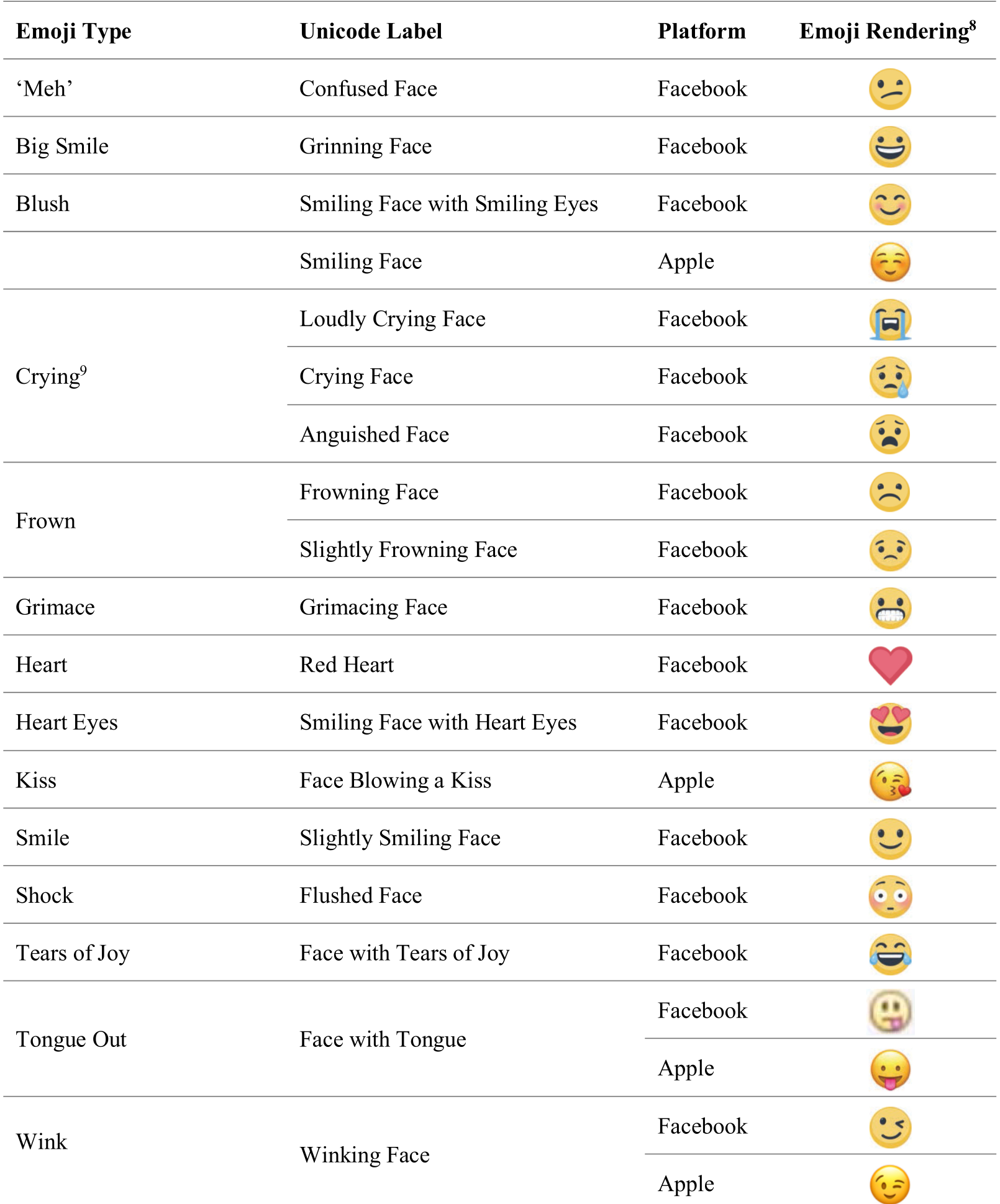
Unlike previous studies that showed emoji in isolation, this research used authentic screenshots from Facebook groups. They mapped interpretations to a refined taxonomy:
- Tone Modification: "I'm late 🙃" (The emoji changes the meaning of the words).
- Virtual Action: "Sending a kiss 💋" (The emoji performs the act).
- Softening: "Please help me 😊" (Making a request less forceful).
Key Findings: The Great Divide
1. The Literal vs. The Conventional
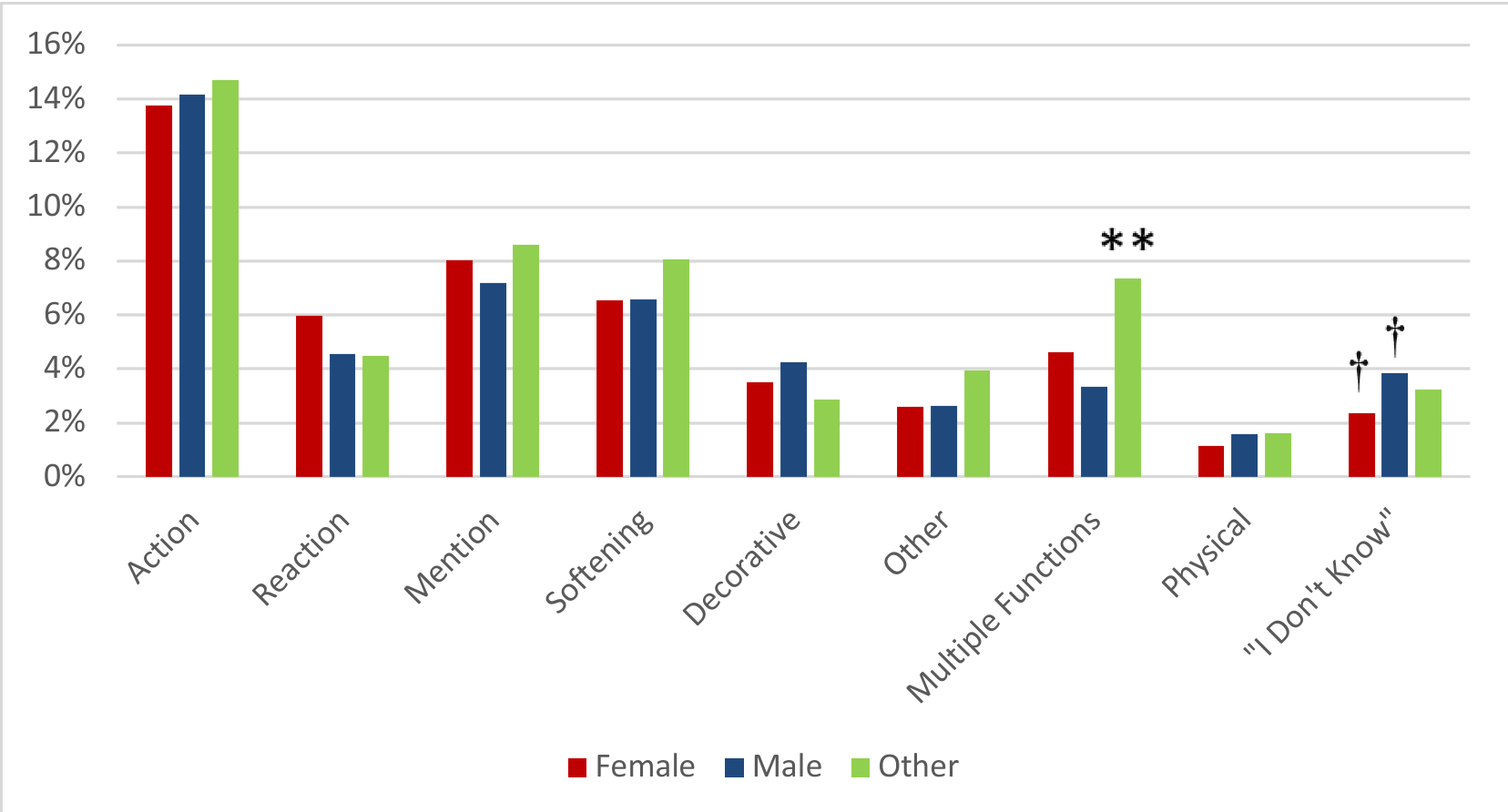
The most striking discovery was the "Age Effect." Researchers found that users over 30 and specifically over 50 tend to be "Literalists." They are significantly more likely to view an emoji as a Virtual Action (e.g., "This person is literally smiling at me").
Conversely, users under 30 view emoji as "Conventionalized" tools. For them, emoji serve as grammatical markers like punctuation, used for Softening or Tone Modification. To a 20-year-old, a "Smile" isn't a gesture; it's a "don't be mad at me" signal.
2. The Gender Paradox
Surprisingly, biological gender (Male vs. Female) showed few differences in interpretation, despite women using emoji significantly more often. However, the study identified a unique "Other" gender demographic that rejected binary interpretations, often selecting Multiple Functions for a single icon. This suggesting that identity performance plays a role in how "fixed" we want our language to be.
3. The "I Don't Know" Factor
The "I don't know" response was a demographic landmark. Older males were the most likely to "give up" on an emoji, whereas younger females were the most confident. This aligns with the "Academic Professionalism" view that emoji use is a form of social labor—one that young women are socialized to perform and master.
Critical Insight: Why Does This Table Matter?
Look at the performance breakdown below. It highlights how specific emoji are "hardcoded" to certain functions in the collective consciousness.
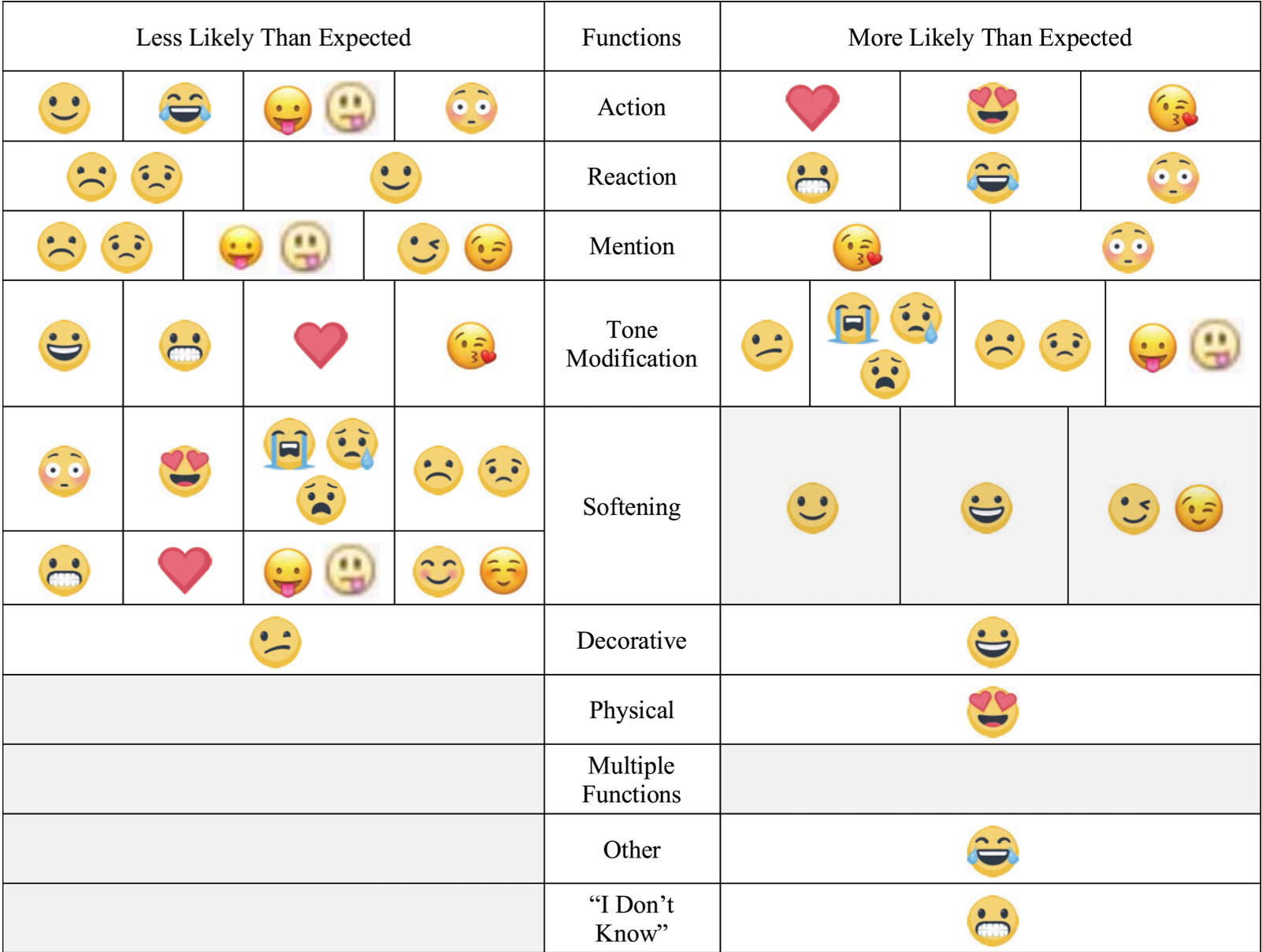
- Winks and Smiles are the workhorses of "Softening."
- Tears of Joy and Tongue Out are the kings of "Tone Modification."
- Hearts and Kisses remain stubbornly "Action-oriented."
Conclusion & Future Outlook
The takeaway for the tech industry is clear: Context is king, but the Receiver is the judge. For developers building AI for sentiment analysis or workplace collaboration tools (like Slack), assuming a universal meaning for emoji is a recipe for failure.
Limitations: The study is localized to English-speaking Facebook users. As we move into an era of "Emoji Drift"—where Gen Z uses 💀 to mean "dead from laughter"—the generational gap identified here will likely only widen, requiring dynamic, age-aware NLP models to bridge the communication chasm.
Takeaway for Readers:
Next time you send a 😬 to your boss or your grandma, remember: they might not follow your "code." To you, it’s a "yikes" tone; to them, it might just be a confusing set of teeth.