
Sensing Gender Through Floors: A Structural Vibration Approach to Non-Invasive Biometrics
Gender Classification of Walkers via Underfloor Accelerometer Measurements
This paper presents a non-invasive gender classification system using underfloor accelerometers to capture human gait vibrations. By deploying 14 high-sensitivity sensors in a "smart building" (Goodwin Hall), the authors achieved a peak gender classification accuracy of 88% using boosted decision trees on time-domain features.
TL;DR
Researchers at Virginia Tech have demonstrated that floor vibrations alone can reveal a walker's gender with 88% accuracy. By using high-sensitivity accelerometers hidden beneath the floor of a "smart building" and applying machine learning—specifically Boosted Decision Trees—this method bypasses the privacy concerns of cameras and the compliance issues of wearable sensors.
Context & Motivation
Gait analysis—the study of how we walk—has long been used for identification and health monitoring. However, most current systems are intrusive. Cameras require a line-of-sight and raise massive privacy red flags, while wearables require the subject's active cooperation.
The authors of this paper turn the building itself into the sensor. By instrumenting Goodwin Hall with underfloor accelerometers, they capture the subtle structural signatures left by every footstep. The core insight is that physiological differences (like hip vs. shoulder swing) translate into unique vertical force profiles that propagate through the building's floor.
Methodology: The Core
The experimental setup involved 15 walkers in a "real-world" operational building. The researchers focused on reducing raw, high-dimensional vibration data into manageable feature sets.
1. Feature Engineering
Data was processed into three main types:
- SAS (Sensor Averaged Step): Averaging the top steps to reduce noise while maintaining the "general" signature.
- MSS (Multiple Sensor Step): Concatenating steps from different sensors to preserve spatial-temporal information.
- SSS (Single Sensor Step): A control set using just one footstep to test the limits of the data.
2. Model Architecture
The study compared four major ML paradigms:
- Bagged & Boosted Decision Trees: Effective at handling the variance in walking styles.
- Support Vector Machines (SVM): Utilizing kernel tricks to find optimal boundaries in high-dimensional space.
- Neural Networks (NN): Testing a single-layer approach for non-linear mapping.
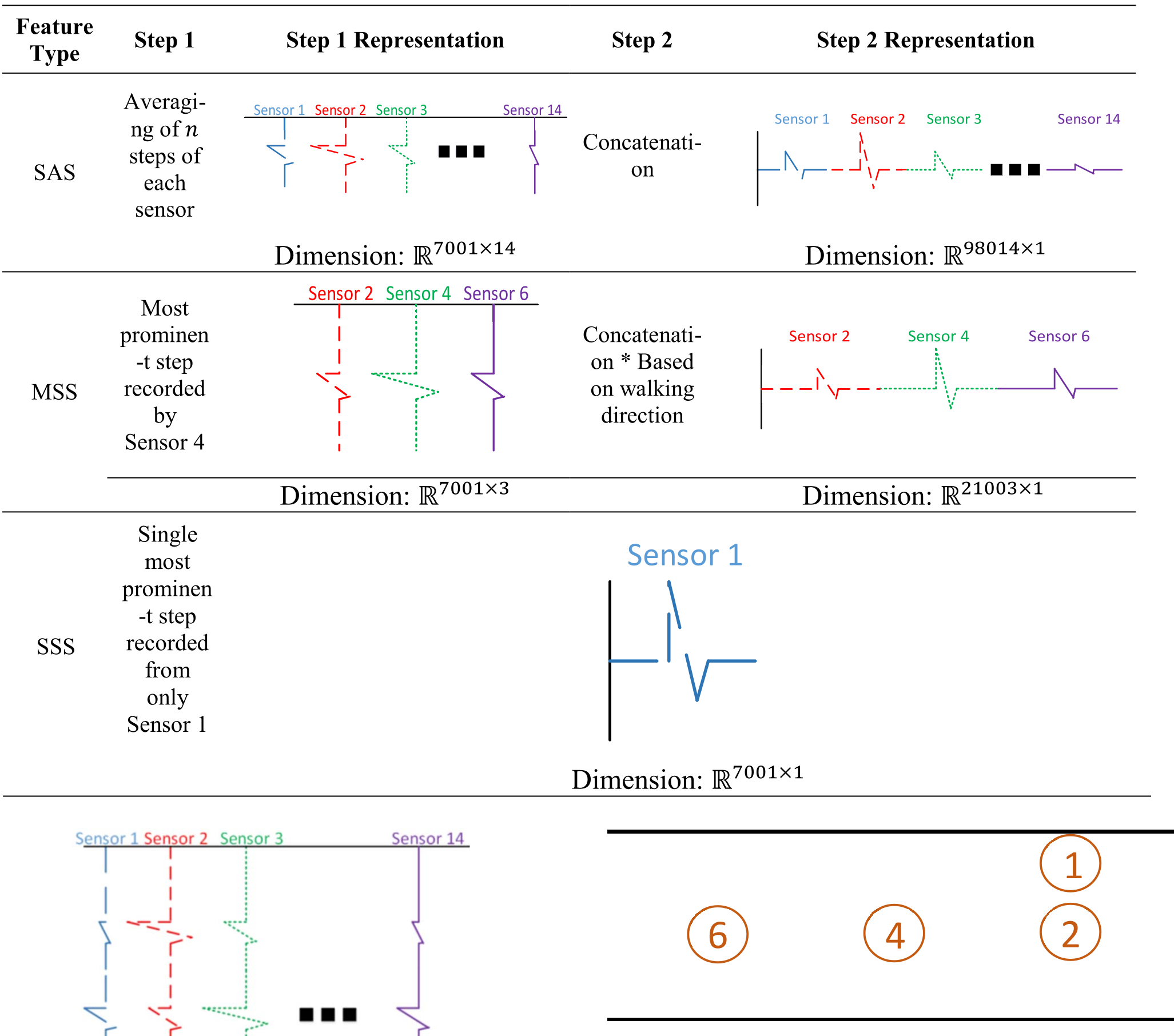 Figure 1: Illustration of the feature type construction for time-domain signals.
Experiments & Results
The findings were definitive: Time beats Frequency. While dynamicists usually love frequency domains for vibration, the time-domain features provided a much richer signal for the classifiers.
Key Metrics:
- Top Performance: 88.3% accuracy (Boosted Decision Trees + SAS5 Time features).
- Single Step Potential: Even with just one footstep (SSS), the system reached 80% accuracy, proving that gendered gait signatures are robust and concentrated.
- Algorithm Performance: Decision trees and SVMs were statistically similar, whereas Neural Networks struggled, likely due to the risk of overfitting on a relatively small subject pool (15 individuals).
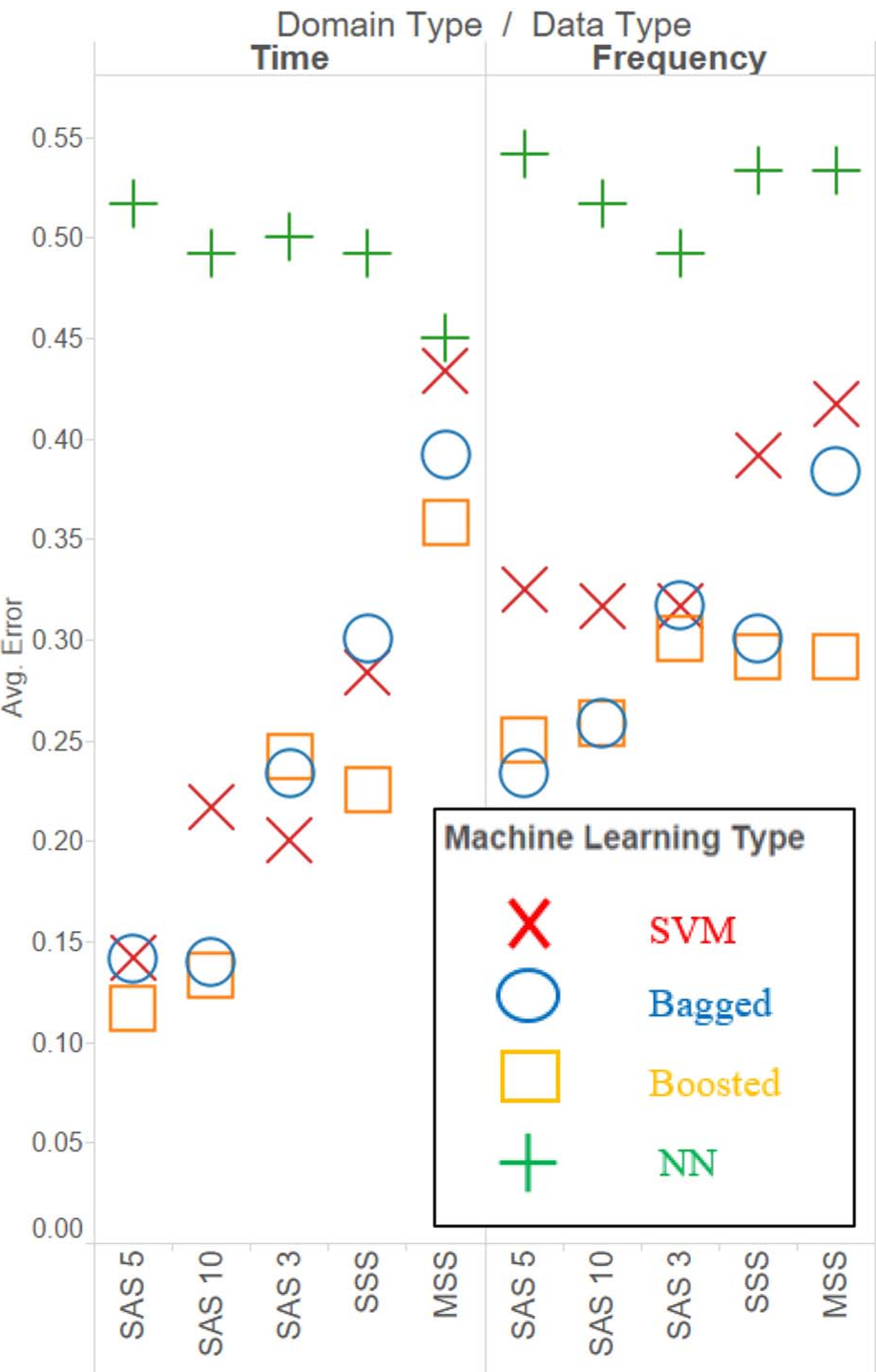 Figure 2: Performance breakdown across different algorithms and features. Lower error rates are observed in the time domain.
Critical Analysis & Conclusion
Takeaway
This work highlights the potential of "structural intelligence." Buildings can become aware of their occupants' demographics without "seeing" them, which has huge implications for retail analytics, security, and automated building management (e.g., climate control based on occupant profiles).
Limitations
- Subject Diversity: With only 15 walkers, the generalization to a global population needs further validation.
- Single vs. Multi-walker: The current study focuses on solo walkers. In a crowded hallway, "signal collision" between multiple walkers remains a major technical hurdle.
Future Outlook
The next frontier is robustness across different floor types (hardwood vs. concrete) and the ability to untangle overlapping vibration signals from crowds. As smart buildings evolve, underfloor sensing provides a silent, invisible, and highly effective layer of behavioral data.