
Decoding the Digital Persona: A Global Data Mining Study of Gender and Culture in Online Dating
Exploring Gender Differences in Member Profiles of an Online Dating Site Across 35 Countries
This paper presents a large-scale data mining study using 10 million user profiles from the Mamba dating site to explore gender differences in self-disclosure across 35 countries. The researchers utilized C4.5 decision tree algorithms to build gender classification models and employed Multidimensional Scaling (MDS) to map cross-country behavioral similarities, identifying distinct cultural and geographical clusters in online self-presentation.
TL;DR
Is online dating behavior universal, or does where you live dictate how you "sell" yourself? Analyzing 10 million profiles across 35 countries, this study moves beyond small-scale surveys to prove that gender differences in self-disclosure are deeply intertwined with national culture. Using decision trees and spatial clustering, the researchers reveal that while men often talk about cars and sex, and women about family, the way they disclose this information follows distinct geographical patterns.
Background Positioning
In the world of Social Science, "convenience samples" (like surveying 200 local college students) are the norm. This paper is a large-scale empirical pivot, utilizing a massive dataset from the "Mamba" dating site to provide a "macro-view" of human behavior. It bridges the gap between Computer Science (Data Mining) and Sociology (Cross-cultural psychology).
Problem & Motivation: The Sample Size Trap
Most theories on how men and women present themselves online come from Western, Educated, Industrialized, Rich, and Democratic (WEIRD) populations. The authors argue that Social Networks are heterogeneous systems. A theory of self-disclosure tested in California might crash and burn when applied to users in Kazakhstan or Turkey. The challenge was: how do we find hidden behavioral patterns in a sea of 10 million users without losing the nuance of individual country cultures?
Methodology: The Decision Tree Approach
To turn profiles into data, the authors didn't just look at averages; they built Classifiers.
- Filtering for "Realness": They prioritized users who completed 100-question psychological surveys or had "Real" status (verified via SMS).
- Feature Engineering: Over 40 attributes (hobbies, car ownership, smoking habits, etc.) were encoded.
- C4.5 Logic: For each country, a decision tree was built to answer: "What attribute best distinguishes a man from a woman here?"
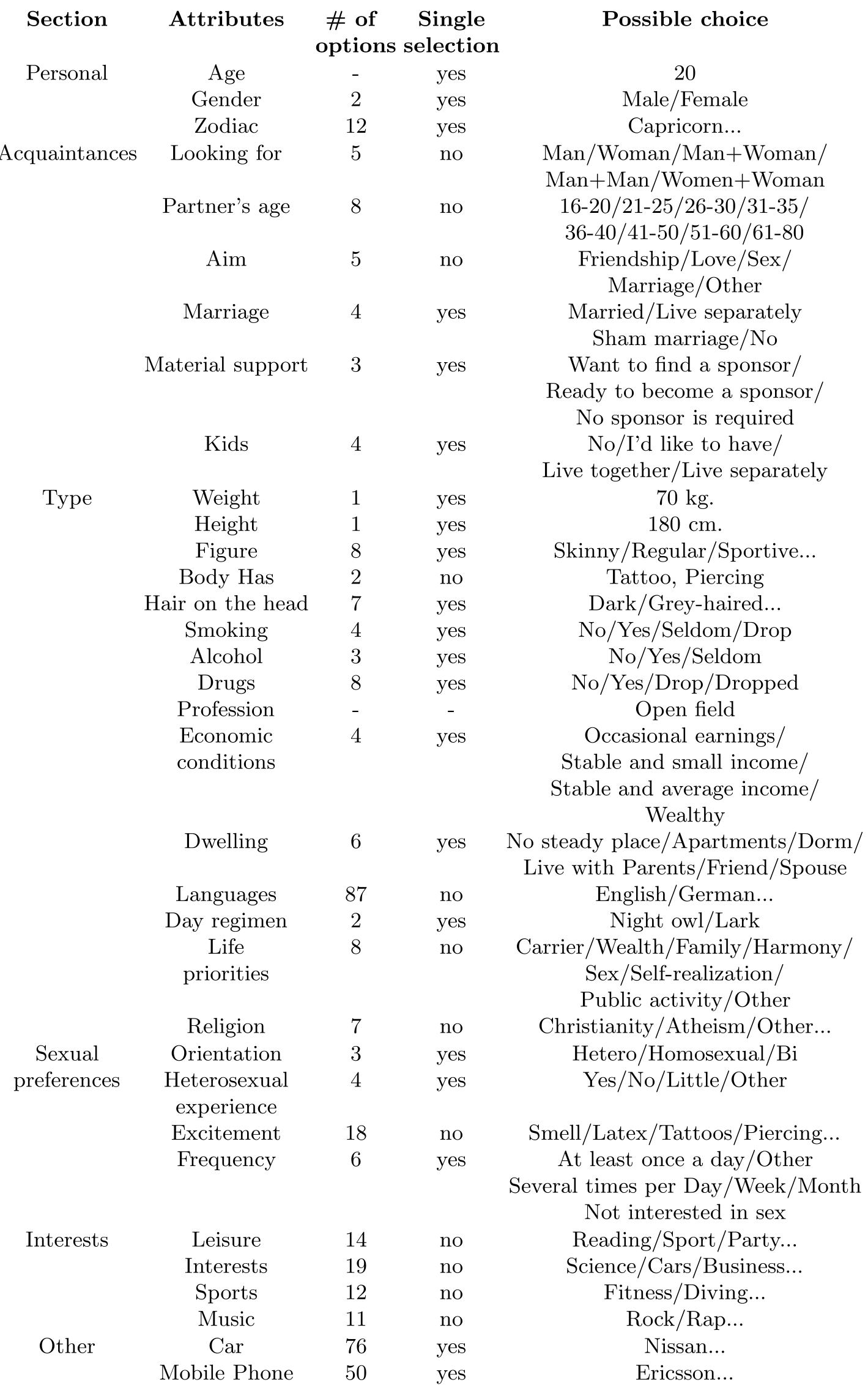
The Root Attributes of these trees told the real story. In 14 countries (like Spain and Israel), the most "gender-defining" question was whether the user was looking for sex. In 12 others (including Russia and the USA), "Car ownership" was the primary divider.
Experiments & Results: Mapping Similarity
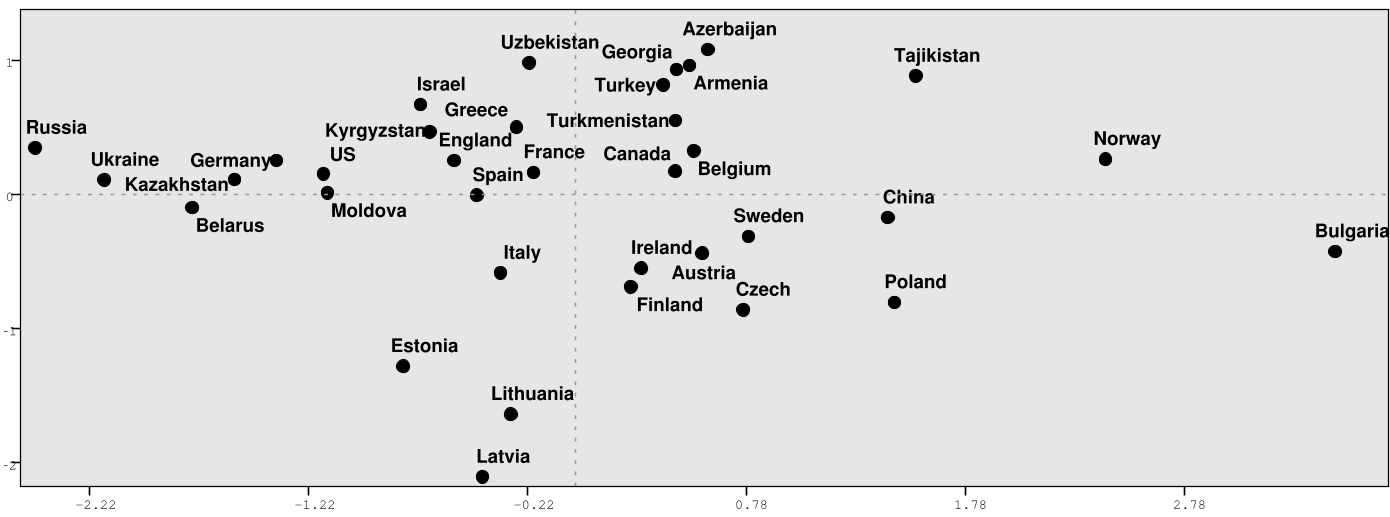
The most striking part of the research isn't just how genders differ, but how countries cluster. By applying rules learned in one country to the data of another, the authors measured "Cross-Country Similarity."
Key Findings:
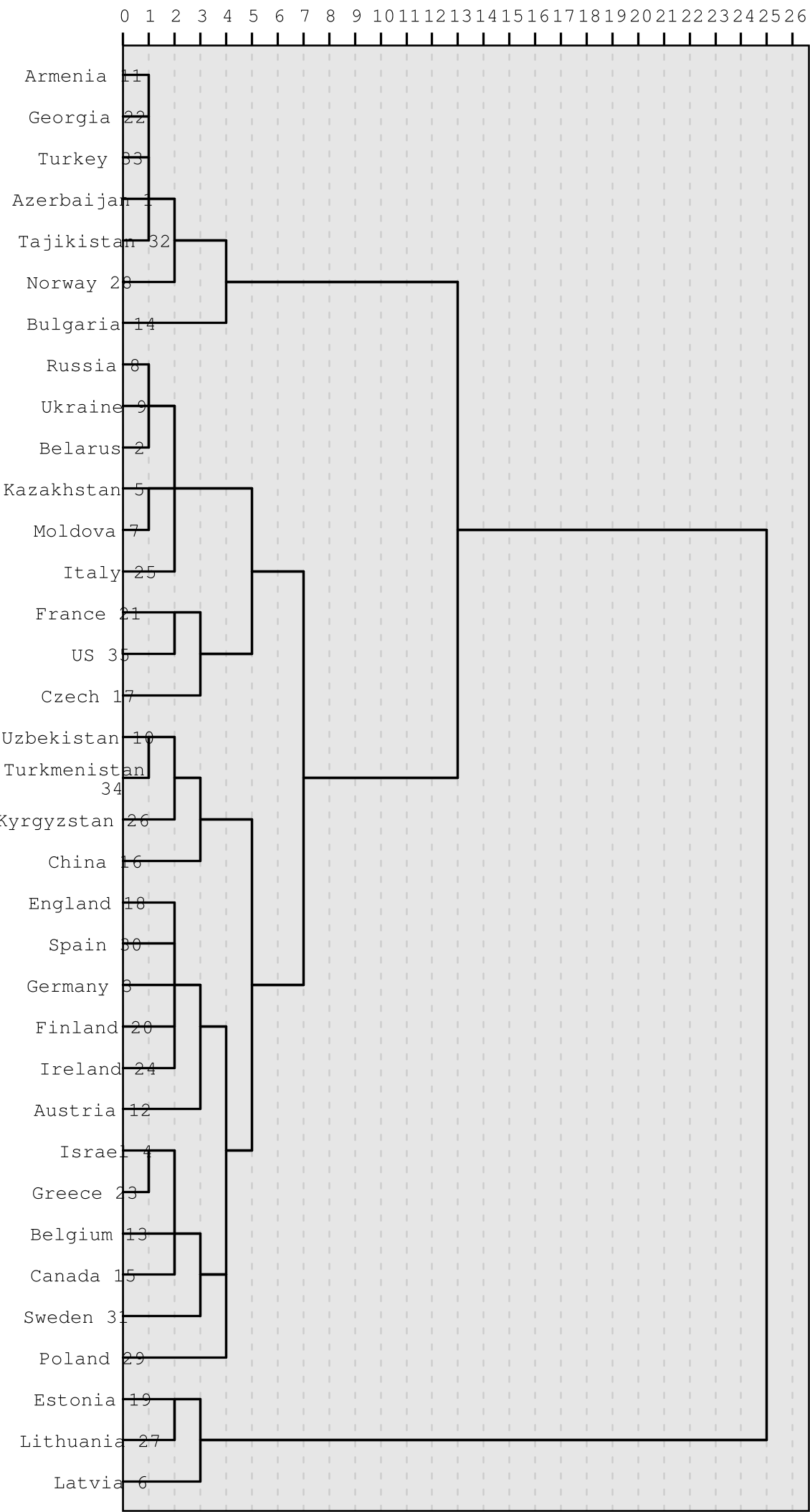
- The Slavic & Baltic Clusters: Russia and Ukraine share nearly identical profile behaviors. Similarly, Estonia, Lithuania, and Latvia form a tight-knit subgroup, showing that geography is a proxy for digital culture.
- Heterogeneity vs. Homogeneity: Female users were consistently found to be more "creative" and "heterogeneous" in their profile construction. It took significantly more rules to classify 90% of the female population than the male population.
- The Asian Cluster: Countries like Armenia, Azerbaijan, Georgia, and Turkey showed specific patterns regarding "Desired Partner Age," indicating different social norms for romantic selection in these regions.
Deep Insight & Conclusion
This paper concludes that Digital Culture is Geography-Dependent. Even on a single platform (Mamba) unified by a common language (Russian), the "Inductive Bias" of local upbringing shines through.
Takeaway: For UX designers and AI researchers, this highlights the "Masculine vs. Feminine" cultural index proposed by Hofstede. You cannot build a "one-size-fits-all" recommendation engine or profile template for a global audience.
Limitations: The study relies on self-reported data. As any online dater knows, "Self-presentation" is often "Self-idealization." While the authors filtered for "fake" profiles, the "intentionality" (serious vs. fun) remains a hidden variable.
Future Outlook: The next step in this lineage of research is likely Multimodal Analysis—combining this tabular data with Computer Vision to analyze how profile photo styles (e.g., "selfies" vs. "action shots") vary across these same 35 countries.