
Inclusive Mobility: Why Social Media is Failing Public Transport Participation
Gender- and Diversity-Oriented Design of Social Media for Participation in Public Transport
The paper defines design recommendations for gender- and diversity-sensitive social media appearances to enhance public participation in transport planning. It evaluates 5,656 posts from 16 European public transport companies against accessibility standards (WCAG) and gender-sensitive language guidelines.
TL;DR
Despite the potential for social media to democratize urban planning, a deep-dive analysis of over 5,500 posts from European transport companies reveals a "participation desert." The research shows that diversity is rarely visually represented, gender-neutral language is almost non-existent, and interactive features like polls are used for jokes rather than planning.
Academic Context: This work emerges from the EU's TInnGO project, positioning itself at the intersection of HCI (Human-Computer Interaction), Gender Studies, and Urban Mobility Planning.
Problem & Motivation: The "News Ticker" Trap
The digital presence of public transport (PT) companies is currently suffering from a functional bottleneck. While PT moves millions of people across gender, cultural, and physical boundaries, their digital avatars (on X, Facebook, and Instagram) remain static.
The authors argue that social media should be an instrument for active participation. However, existing content often fails "Gender Mainstreaming" standards—learned socially and culturally shaped roles—leaving mothers, the elderly, and people with disabilities on the periphery of the mobility conversation.
Methodology: A Three-Tiered Design Framework
To evaluate these digital spaces, the authors developed a framework based on three categories of design elements:
- UI-Related Elements: Technical features like color contrast, font scaling, and screen-reader compatibility (WCAG 2.1 standards).
- Content-Related Elements: The use of "Easy Language" (reduced syllables for cognitive impairments) and gender-sensitive visuals.
- Participation-Related Elements: Interactive mechanisms such as Like/Share, Live Chats, and Votings for decision-making.
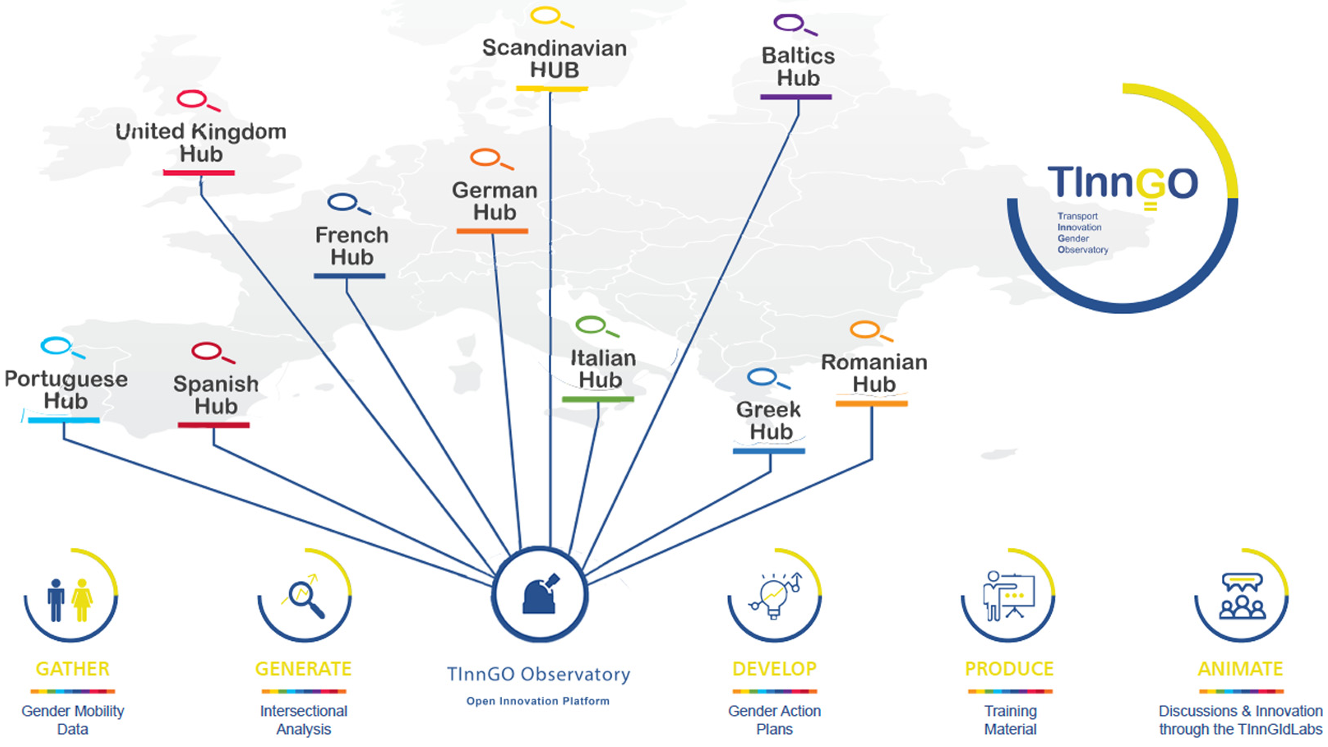 Fig 1: The TInnGO project framework for gender-sensitive transport innovation.
Experiments & Results: The Diversity Gap
The empirical study covered 16 companies (6 German, 10 International). The findings highlight a systemic "color-blindness" and gender imbalance in digital communication:
- Visual Representation: In the German sample, only 1.2% of image posts represented minorities (children, elderly, or people with disabilities). Men appeared nearly twice as often as women in visual content.
- The "Ticker" Effect: Platforms like X (formerly Twitter) are used almost exclusively as "news tickers" for disruptions, with almost zero attempt at community building.
- Interaction Inertia: Across 3,365 international posts, providers only engaged with user comments in 377 instances, suggesting a one-way broadcasting culture.
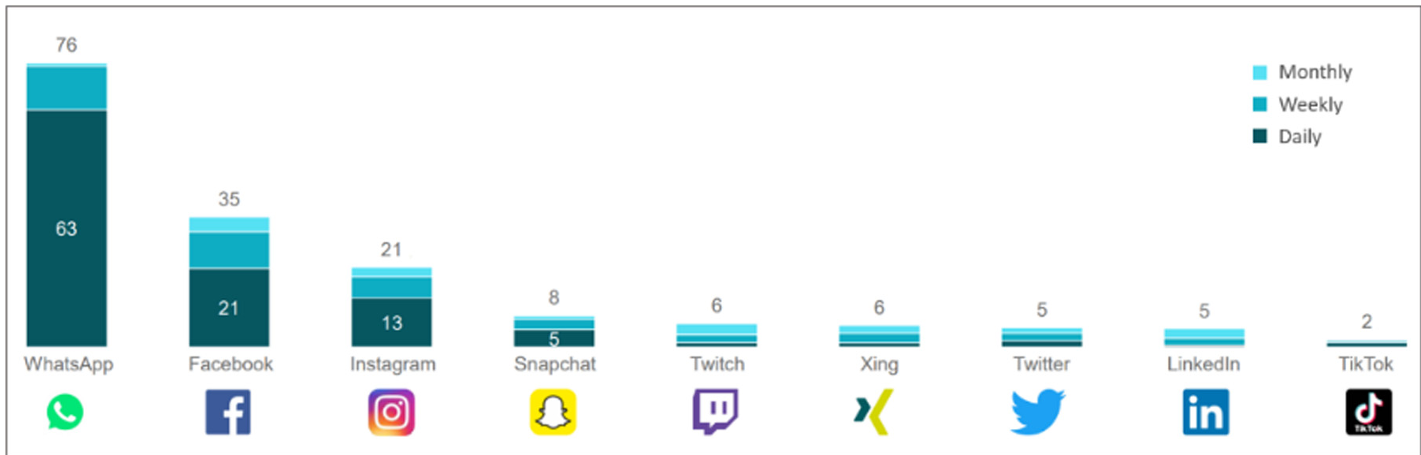 Fig 2: Social Media usage statistics in Germany, showing the dominance of Facebook and Instagram for visual engagement.
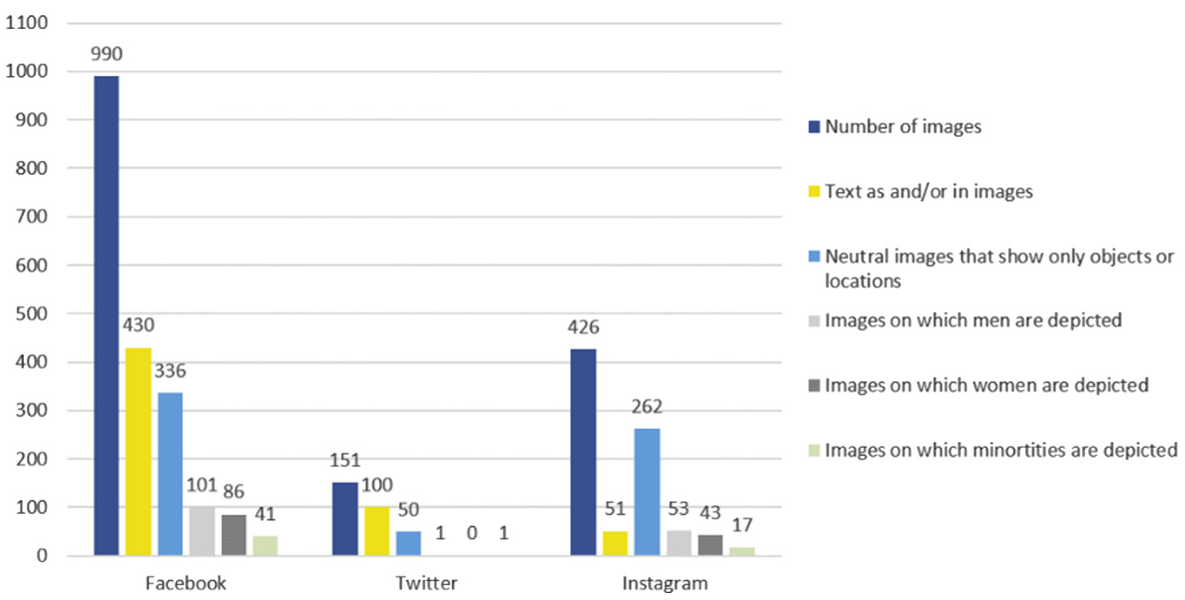 Fig 3: Quantitative breakdown of visual diversity—displaying a stark lack of minority and female representation.
Critical Analysis & Conclusion
The core insight of this paper is that accessibility is not just technical; it is cultural. While platforms provide the UI tools (scaling, contrast), PT providers fail on the "Content" and "Participation" levels.
Limitations
- Language Barrier: The study could not evaluate gender-sensitive language for non-German posts due to linguistic limitations of the researchers.
- Platform Scope: It focuses on traditional social media (FB/IG/X) but ignores emergent participatory platforms or dedicated "Citizen Science" apps.
Future Outlook
For future mobility planning to be truly "smart," it must move beyond technical ROI. Researchers and developers should focus on:
- Automating Easy Language translation for complex transit updates.
- Implementing Interactive Votings that actually influence route planning or vehicle design.
- Using inclusive visual libraries that reflect the actual user base of public transport.
Final Takeaway: If a public transport company's Instagram feed shows only modern trains and business-attired men, they are signaling that their service is not designed for everyone else. Participation starts with representation.