
Gendered Privacy: Unveiling the Skill Gap in Cloud Computing Services
The role of Gender Privacy in the use of Cloud Computing Services
The study investigates the impact of gender and educational background on online privacy perceptions and practices within cloud computing services (social networking, e-commerce, e-banking). Using a sample of Greek internet users, it identifies significant gender-based disparities in privacy awareness and protective behaviors.
TL;DR
This research explores whether your gender and education dictate how you protect yourself online. Analyzing Greek users, the study reveals that while women are often more concerned about privacy, they lack the technical knowledge to implement protection. Conversely, men possess higher technical awareness but exhibit a "overconfidence" that leads them to ignore risks.
The "Digital Disparity" Problem
As we shifted from physical storage (disks and sticks) to the Cloud (OneDrive, Gmail, Social Media), our personal data became the "new currency" of the internet. However, not everyone spends this currency with the same level of caution.
The authors argue that existing research has focused too much on who has internet access and not enough on how different groups manage their "informational unreachability." The core motivation here is to understand the "Gender Privacy" concept—the theory that socialization and environmental factors lead men and women to perceive and act upon digital threats differently.
Methodology: Who was Surveyed?
The researchers conducted a month-long empirical study targeting Greek internet users. The sample was relatively balanced (42% male, 58% female) and diverse in educational fields, ranging from Technology and Engineering to Humanities and Social Sciences.
They utilized two primary statistical models:
- Cross Tabulation (Chi-Square): To see if two categorical variables (like Gender and PayPal usage) are related.
- Hierarchical Multiple Regression: To understand if one variable can predict another while holding others steady.
Key Insights: Why Gender Matters More Than Degree
The most striking findings come from the disparity in technical tool usage and financial privacy.
1. The Protection Paradox
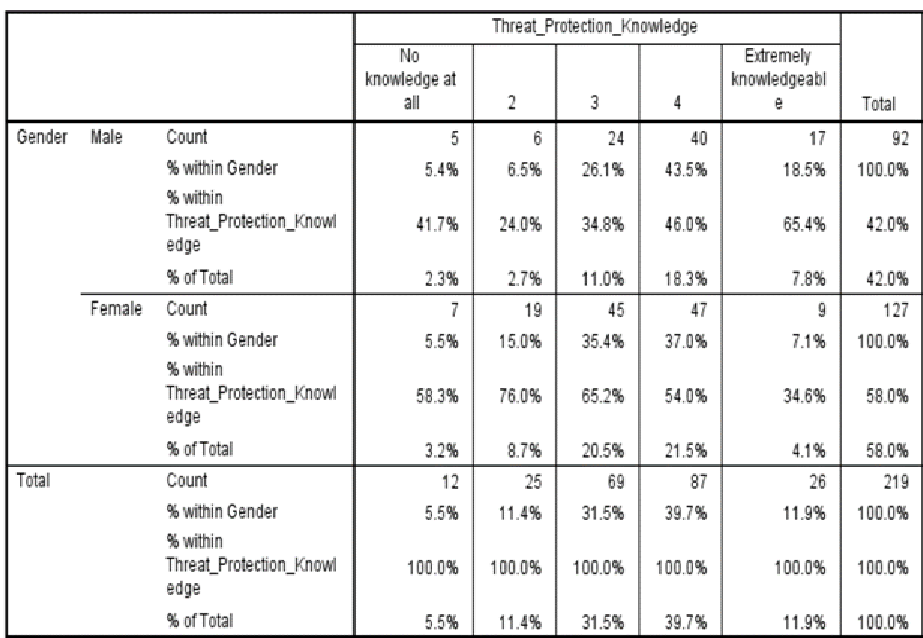
Men reported significantly higher knowledge regarding threat protection (Ad-blockers, Anti-malware). In the "Extremely Knowledgeable" category, men outperformed women by nearly 3x (18.5% vs 7.1%).
2. Financial Caution vs. Technical Confidence
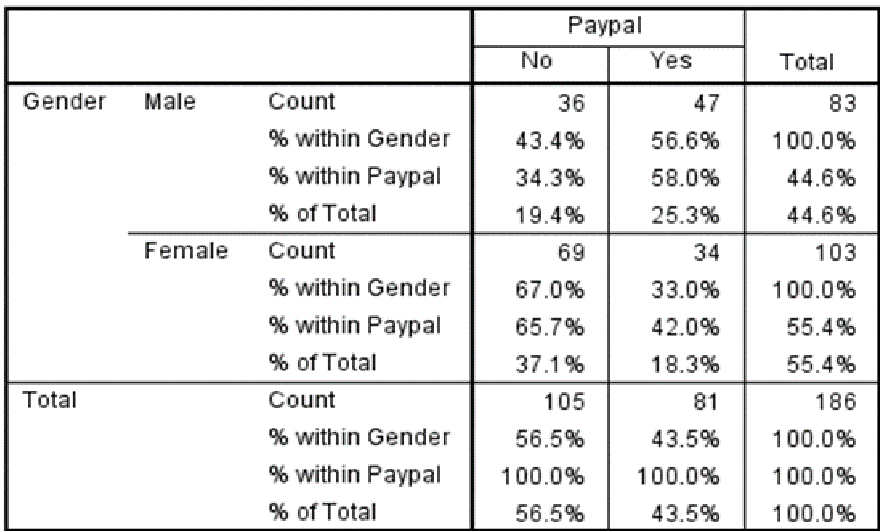
The study found a major divide in e-commerce. Women are far more cautious—67% of female respondents refused to use PayPal, a service often regarded as a "safer" intermediary.
3. The Education Factor
Interestingly, the user’s "Educational Field" had a less direct impact than gender. While individuals in Technology and Military sciences showed a tendency to be more aware, this didn't always translate to safer behavior. In fact, those in technical fields were less likely to reconsider using a service even after being informed of its risks—a sign of technical bravado.
Critical Analysis & Conclusion
This paper provides a vital "snapshot" of the Greek digital landscape, identifying that "skill gaps" are the modern frontier of digital inequality.
Limitations: The sample size (219) is relatively small for definitive global generalizations, and the data relies on self-reporting, which can be subject to social desirability bias (users claiming more knowledge than they actually possess).
Future Outlook: For the industry, this suggests that "Privacy by Design" must be inclusive. If a large segment of the population (specifically females in this study) feels concerned but lacks the technical literacy to use protection tools, the tools themselves have failed. Future cloud services should focus on simplifying the "Privacy UI" to bridge this gendered expertise gap.