
Beyond the Silhouette: Mastering Gender Recognition with 3-D Body Shapes
Gender Recognition Using 3-D Human Body Shapes
2011-02-22
Summary
Problem
Method
Results
Takeaways
Abstract
This paper presents a robust gender recognition system based on 3-D human body shapes obtained via laser scanning. By leveraging specialized geometric features like mesh normal distributions, curvature, and Fourier Descriptors, and employing Support Vector Machines (SVM), the system achieves a state-of-the-art recognition rate of up to 98.3%.
## TL;DR
While facial recognition is a solved problem for many, gender identification from a distance remains challenging. This paper shifts the paradigm from 2-D pixels to 3-D geometry. By analyzing laser-scanned human meshes, the researchers achieved a **98.3% accuracy rate**, demonstrating that the high-dimensional curvature and normal distributions of the human torso are far more reliable than 2-D images in varying light and poses.
## The Limitation of the Flat World
Historically, gender recognition has been trapped in a 2-D plane—relying on face images, gait silhouettes, or video sequences. These methods share a common "Achilles' heel": **Sensitivity.** A change in lighting, a different camera angle, or a baggy sweater can easily spoof a 2-D classifier.
The authors argue that the solution lies in the third dimension. 3-D shapes are intrinsically invariant to lighting. Whether in total darkness or blinding glare, the geometry of a laser-scanned body remains constant.
## Methodology: The Geometry of Identity
The workflow follows a rigorous pipeline: **Preprocessing → Alignment → Feature Extraction → Classification.**
### 1. Mesh Refinement and PCA Alignment
Raw laser scans are messy, often containing "holes" where the laser couldn't reach. The authors used tools like **PolyMender** for hole filling and simplification. To ensure all bodies were compared fairly, they used **Principal Component Analysis (PCA)** to rotate and align every mesh into a unified coordinate system.
### 2. Feature Insight: Normals and Curvatures
The core technical "secret" of this paper lies in two specific geometric descriptors:
* **Distribution of Mesh Normals**: The authors observed that male breast regions tend to be more planar (normals concentrated in one direction), while female breast regions are more spherical (normals scattered).
* **Fourier Descriptors (FD)**: To make the system robust, they sliced the torso horizontally and used Elliptic Fourier Descriptors to describe the contour. This avoids the need for perfect "nipple detection," which can be error-prone in noisy scans.
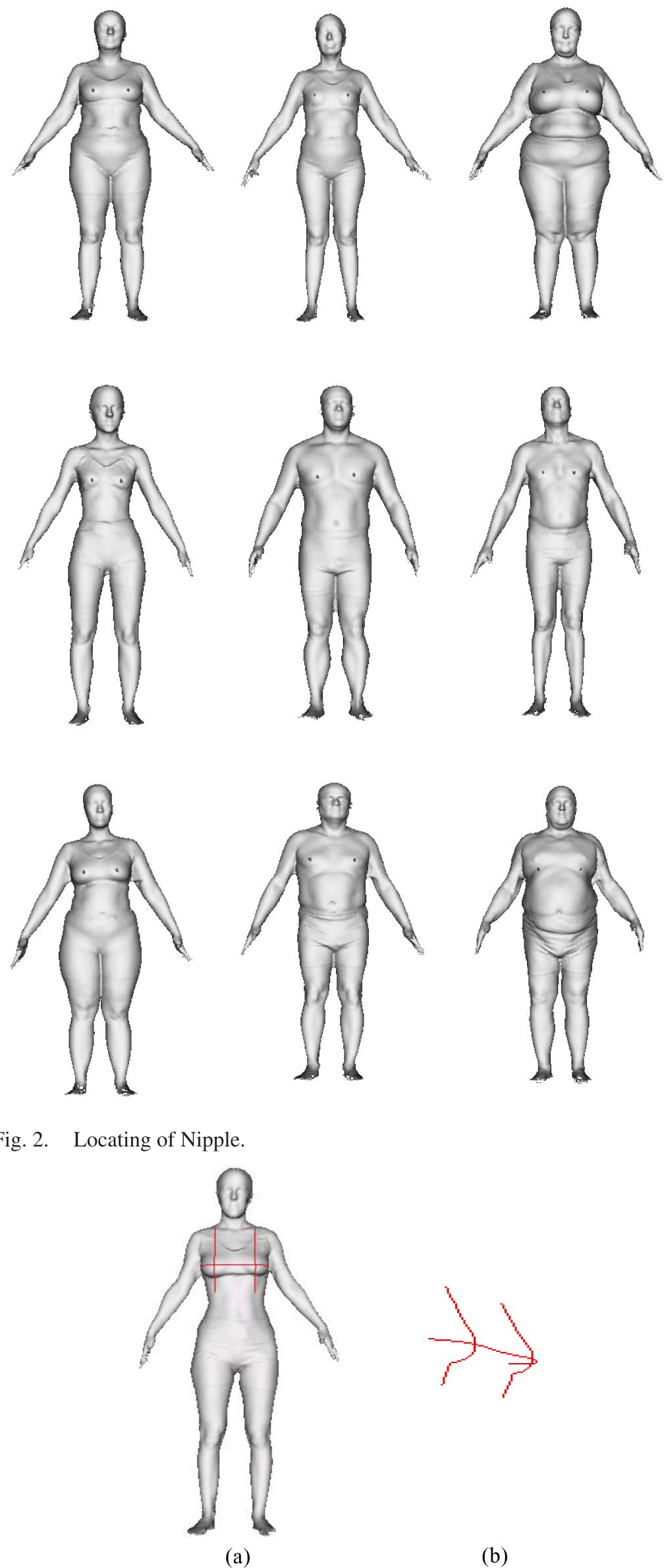
*Fig 1: Locating anatomical landmarks using curvature and prior knowledge.*
## Experiments: SVM Reigns Supreme
The study compared several machine learning heavyweights: K-Nearest Neighbor (KNN), Artificial Neural Networks (ANN), and Support Vector Machines (SVM).
**Key Findings:**
* **Winner**: SVM with an RBF kernel consistently outperformed others, likely due to its ability to handle high-dimensional feature vectors with structural risk minimization.
* **Feature Power**: Normal distributions alone yielded 96% accuracy.
* **Synergy**: By combining all features (Heights, FD, Normals, and Curvatures), the accuracy climbed to an impressive **98.3%**.
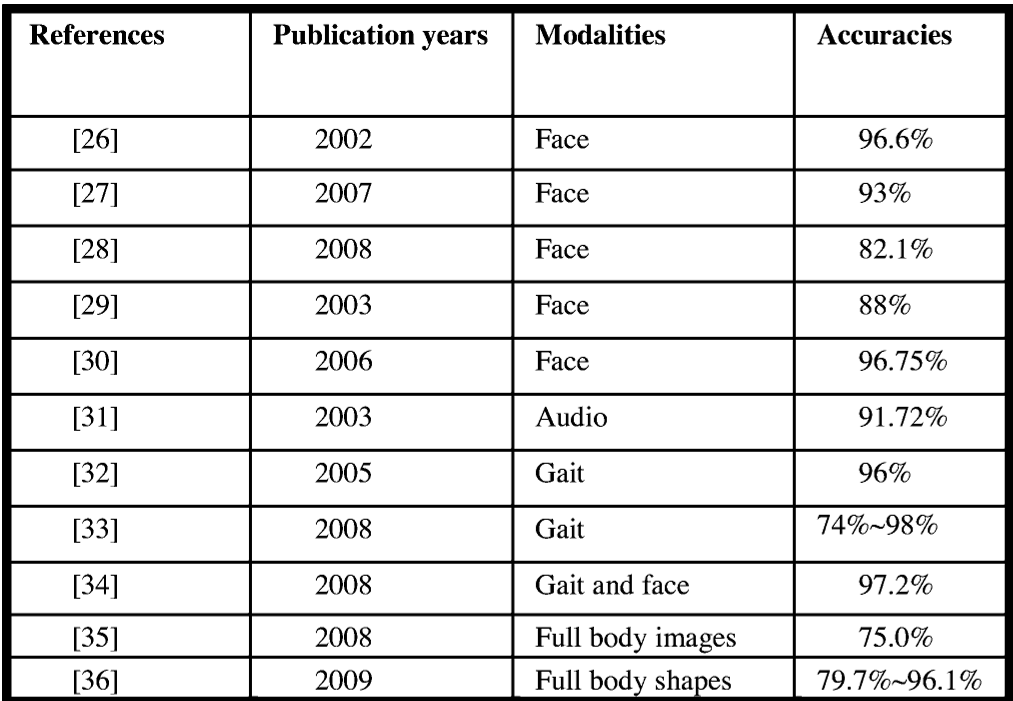
*Table 1: Comparison of the proposed 3-D method against historical 2-D and audio-based benchmarks.*
## Critical Analysis & The "Cloth" Problem
While the results are near-perfect, there is a catch: the **"Naked Truth."** The dataset used (CAESAR) consists of subjects in minimal clothing. In the real world, coats, dresses, and layers obscure the very geometric features (like breast curvature) that this algorithm relies on.
The authors acknowledge this limitation, pointing toward future work in **under-cloth body shape estimation**. This involves using machine learning to "predict" the underlying anatomy from a clothed scan—a significantly harder task.
## Conclusion
This research provides a definitive "Yes" to whether 3-D body shapes can be used for high-stakes biometrics. By moving from textures to tensors, the authors have built a system that is robust against the environmental noise that plagues traditional CV. As 3-D sensors become more common in mobile devices and security hubs, this geometric approach may soon become the standard for demographic analysis and identity verification.
**Takeaway for Practitioners**: When 2-D data is ambiguous, look at the surface normals. The "distribution" of geometry often encodes more identity information than the pixels ever could.