
Secure Social Trust: High-Efficiency Recommendations via Homomorphic Encryption
Generating private recommendations in a social trust network
This paper presents a privacy-preserving recommender system for Social Trust Networks (STNs) using Homomorphic Encryption (HE) and Secure Multi-Party Computation (MPC). By introducing a Privacy Service Provider (PSP) and employing data packing, the system computes personalized recommendations on encrypted ratings without revealing user identities, trust lists, or ratings to the service provider.
TL;DR
In the age of data privacy, Social Trust Networks (STNs) face a paradox: how can a server recommend products based on your friends' opinions without knowing who your friends are or what they like? This paper introduces a cryptographic protocol using Paillier/ElGamal encryption and data packing to generate recommendations in under 3 minutes for a network of 10,000 users, all while keeping user profiles completely invisible to the service provider.
Problem & Motivation: The Cost of Privacy
Recommender systems are the backbone of e-commerce, but they are also a privacy nightmare. In Social Trust Networks, the risk is doubled: not only are your ratings exposed, but your social graph—who you trust—is also revealed.
Prior works attempted to solve this using:
- Randomized Perturbation: Adding noise to data (differential privacy style), which sacrifices accuracy.
- Generic Cryptography: Tools like Yao’s Garbled Circuits or Threshold Decryption, which are computationally "heavy" and slow.
- User-Side Computation: Forcing users' phones to do the heavy lifting, leading to poor battery life and slow responses.
The authors' insight was to move the heavy lifting to the server-side by introducing a Privacy Service Provider (PSP) that helps with computation without ever seeing the raw data.
Methodology: Polynomials and Packing
The protocol relies on two core technical "tricks" to remain efficient:
1. The Trust Polynomial
Instead of sending a list of trusted IDs, User A creates a polynomial where the roots are the IDs of their friends. When the Service Provider (SP) wants to see if User B is trusted by User A, it evaluates this polynomial in the encrypted domain. If the result is an encryption of , a trust relationship exists.
2. Data Packing
Encryption creates massive overhead. A 3-bit rating can turn into a 2048-bit ciphertext. To solve this, the authors "pack" multiple ratings into a single large integer before encrypting it. This allows the server to perform operations on dozens of items simultaneously, drastically cutting down on communication and storage.
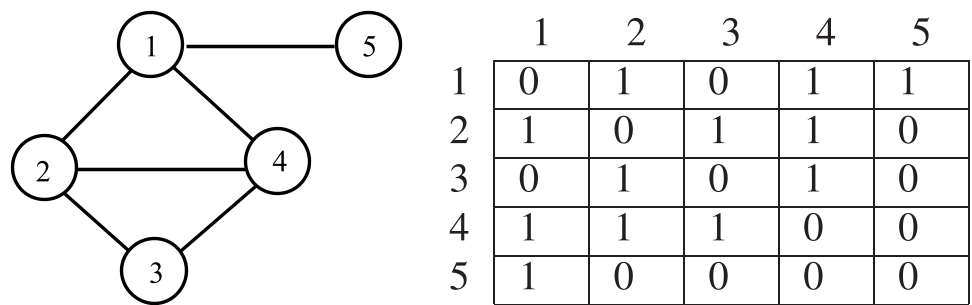 Fig 1: The mapping of social trust into a matrix structure that the system processes under encryption.
The Workflow
- Encryption: Users encrypt their trust polynomials (ElGamal) and packed ratings (Paillier).
- Zero-Checking: The SP evaluates encrypted polynomials; the PSP identifies "zeros" (trusted users) without knowing whose IDs they are.
- Aggregation: The SP aggregates the encrypted ratings of those trusted users.
- Blinding: The SP applies a random mask to the result so the PSP can't see the final recommendation during the final decryption step for the user.
Experiments & results
The authors tested their system on the Epinions dataset.
- Speed: For 10,000 users and 1,000 items, the protocol finishes in 135 seconds.
- Bottleneck: Nearly 97% of the time is spent calculating the "blinding factor" at the Service Provider. However, this part is highly parallelizable.
- Scalability: While the Service Provider needs significant storage (~1.8 GB for 10k users), the burden on the end-user is minimal (only 188 KB of data transfer).
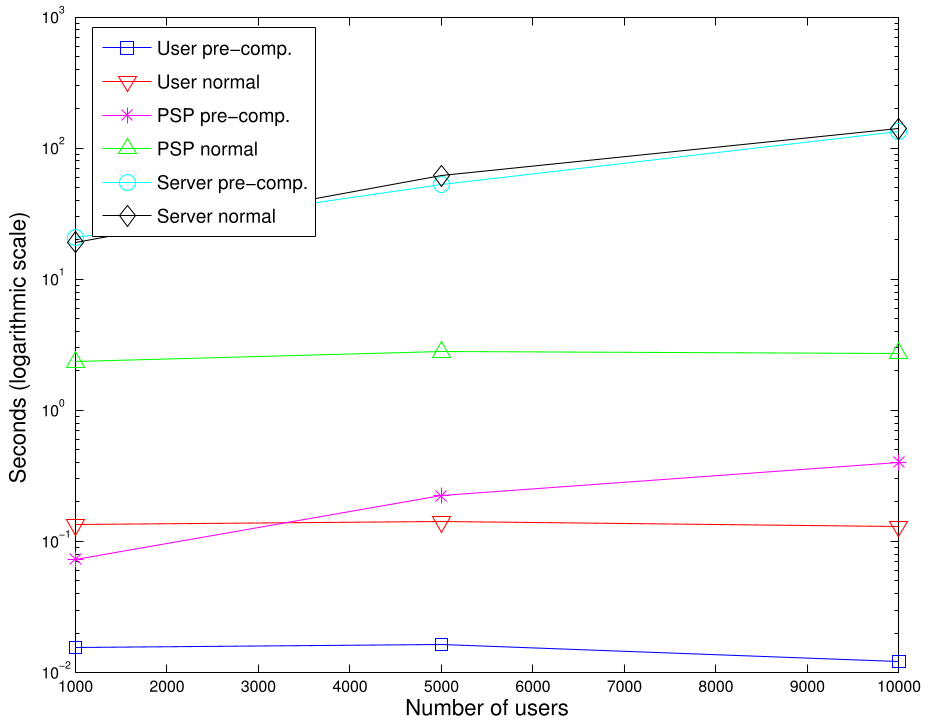 Fig 2: Analysis showing the dominant time spent on blinding factor computation.
Critical Analysis & Conclusion
Takeaway: This paper successfully shifts the paradigm from "how do we hide data from the server?" to "how can the server work on data it cannot see?" By using domain-specific optimizations (polynomial roots for trust and packing for ratings), they achieved a speedup of over 3x compared to contemporary privacy-preserving methods.
Limitations:
- Semi-Honest Model: The protocol assumes the Service Provider and PSP won't collude. If they did, privacy would be compromised.
- Symmetry: The current polynomial approach assumes a fixed social graph; dynamic changes in trust would require users to re-upload their encrypted polynomials.
Future Outlook: As hardware acceleration for homomorphic encryption (like HE-ASICs) becomes available, the "blinding factor" bottleneck will likely disappear, making sub-second private social recommendations a reality.