
Beyond Preferential Attachment: Decoding the Geometry of Cellular Social Networks
Generative models for cellular social networks
2014-02-01
Summary
Problem
Method
Results
Takeaways
Abstract
This paper introduces novel generative models for cellular social networks (Voice and SMS) based on spatial Poisson processes and nearest-neighbor linkages. It accurately identifies and replicates the exponential and piecewise-exponential degree distributions found in large-scale real-world Asian telecom data.
## TL;DR
Most social network theories lean on the famous "rich-get-richer" (Power Law) logic. However, real-world cellular data—voice calls and SMS—tells a different story: an **Exponential Distribution**. This paper introduces a generative framework using 2-D spatial Poisson processes and "nearest emotional neighbor" connections to replicate how millions of users actually interact.
## The Problem: Why Zipf’s Law Fails Here
For years, the Barabási-Albert model has been the gold standard for networks like the Internet or Citation indexes. It assumes that new nodes prefer to connect to high-degree hubs. But in a cellular network, you don't call someone just because they are popular; you call them because they are **close** to you—geographically or emotionally.
Empirical analysis of an Asian telecom giant’s data revealed that the "hub" effect is muted. Instead of a long power-law tail, the degree distribution decays exponentially. Furthermore, SMS networks show a "piecewise" decay—a sharp drop for low-degree nodes and a slower one for high-degree ones—which standard models completely ignore.
## Methodology: The "Emotional Space" Generative Model
The authors propose that users are dropped into a 2-D Euclidean "emotional space" following a Poisson Point Process.
### 1. The Voice Call Model (Exponential)
When a new node enters, it connects to its $K$ nearest neighbors. This represents a "minimum cost" connection strategy. Using **Mean Field Analysis**, the authors prove that this simple local-connectivity rule naturally leads to an exponential degree distribution:
$$p d f (d) = \sum_ {i} \frac {\alpha_ {i}}{\mu_ {K}} e ^ {- \frac {d - k _ {i}}{\mu_ {K}}} \mathbb {I} (d \geq k _ {i})$$
### 2. The SMS Model (Piecewise Exponential)
SMS behavior is more complex. The authors divide users into two categories:
* **Pro-Gossip**: Prefer connecting to "hubs" (nodes with degree $\geq T$).
* **Gossip-Averse**: Prefer connecting to low-degree nodes ($< T$).
By blending these two behaviors, the model achieves the "kink" observed in real data, where the slope of the degree distribution changes at a specific threshold.
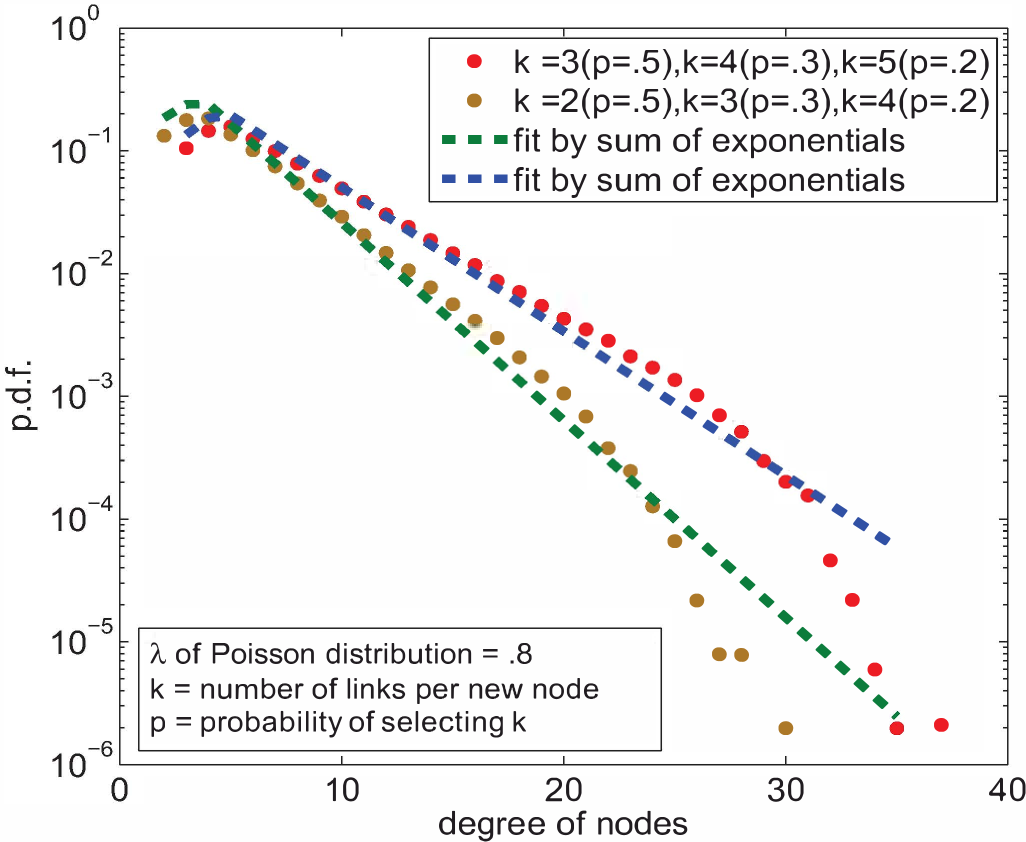
*Figure 1: Fitting the sum of exponential PDFs to variable K values.*
## Experimental Validation: Real-World Data
The researchers tested their model against a massive dataset:
* **Voice Network**: 820,000 nodes and 5 million links.
* **SMS Network**: 3.7 million nodes and 4.2 million links.
As shown below, the theoretical mean-field analysis (red lines) matches the empirical data (dots) with high precision, capturing the unique piecewise nature of the SMS network.
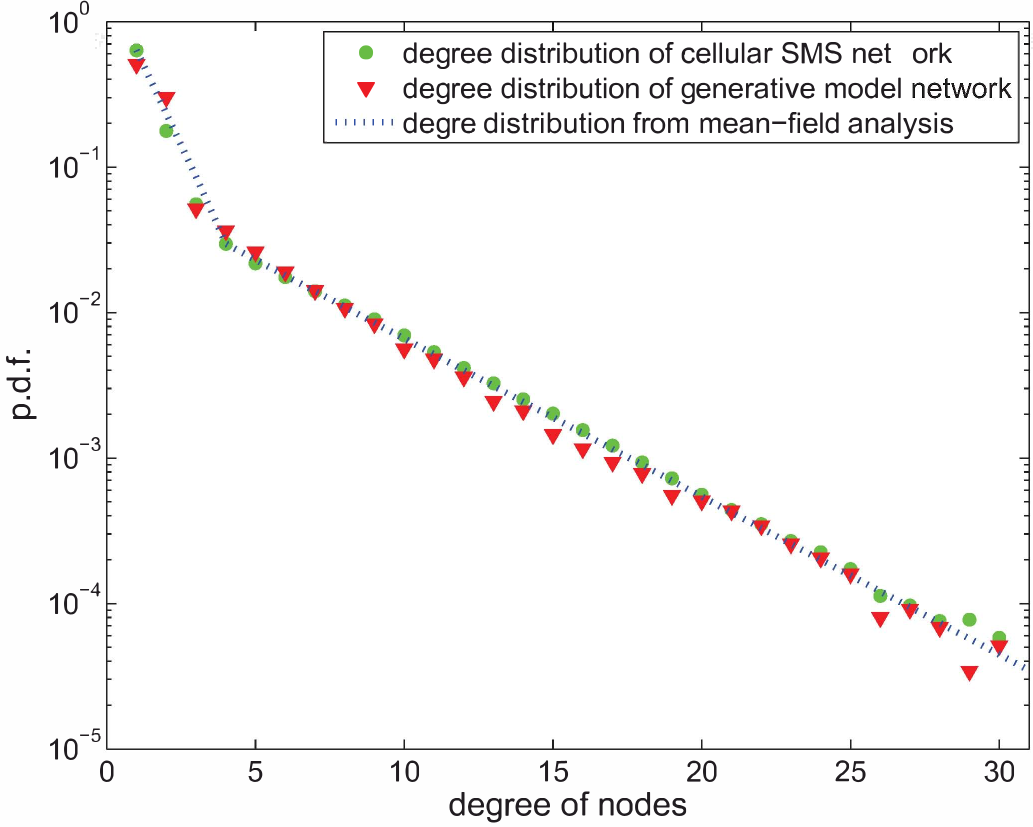
*Figure 2: Comparison between the real SMS network and the proposed generative model.*
## Vulnerability and SIR Models
Why does this matter? To protect a network, you must know how it breaks. The authors simulated the **SIR (Susceptible-Infected-Removed)** model to track how a mobile virus or a piece of gossip spreads. The generative model's infection curve was nearly identical to the real network's curve, proving that the **topology produced by the model is functionally equivalent** to the real thing for risk assessment.
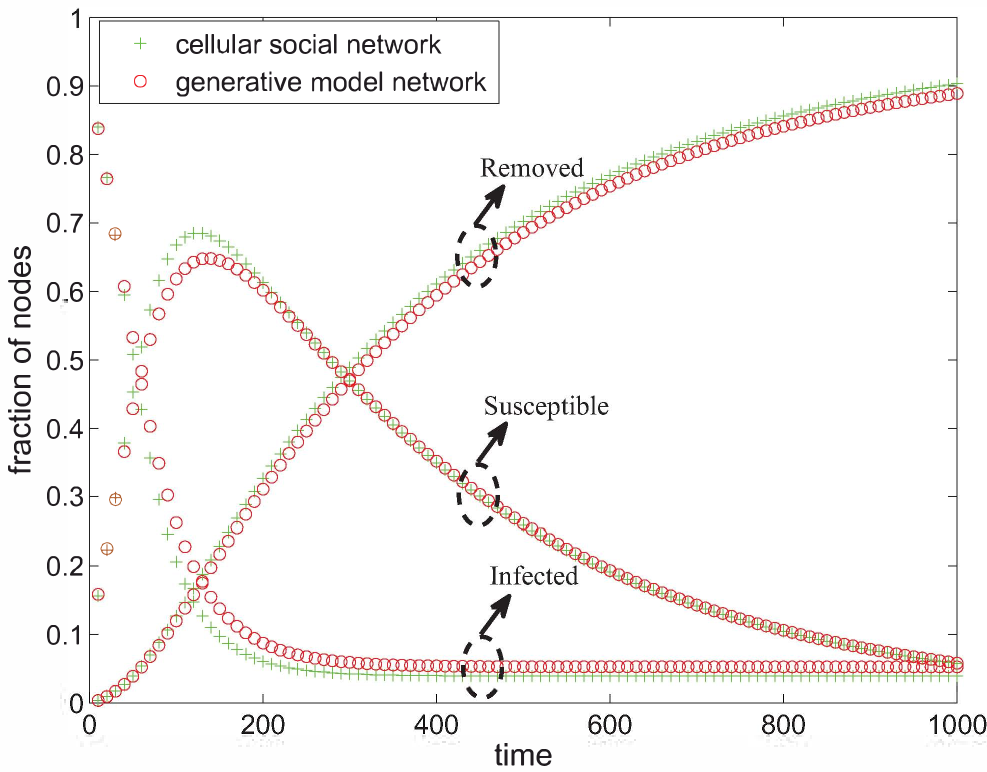
*Figure 3: SIR infection propagation—Real vs. Generative Model.*
## Deep Insight & Conclusion
This work shifts the focus from global "popularity" to local "proximity." It suggests that cellular social networks are better understood as organic, spatially-constrained growths rather than centralized architectures.
**Takeaway for the Future**: When building decentralized systems or mobile-first social apps, designers should assume an exponential connectivity model. The "Gossip" preference parameters provide a tunable way to simulate different social dynamics (e.g., echo chambers vs. broad broadcasters).
**Limitations**: The model currently assumes a static 2-D space. Future work could incorporate node mobility or multi-layer interactions (where voice and SMS data overlap for the same user).