
Elevating Recommendations: Harvesting Collective Intelligence for Generic Item Discovery
Generic framework for recommendation system using collective intelligence
The paper introduces a generic recommendation framework leveraging "Collective Intelligence" by aggregating user-contributed tags, community feedback, and co-occurrence patterns. It achieves a 30-40% improvement in user engagement over traditional category-recency baselines and significantly enhances item discovery.
1. Executive Summary
In the modern web era, users have shifted from passive consumers to active contributors. This paper presents a Generic Framework for Recommendation that moves away from computationally expensive individual profiling and instead taps into Collective Intelligence. By synthesizing user tags, community opinions, and navigational patterns, the authors developed a system that is item-agnostic and highly scalable.
Positioning: This work serves as an architectural bridge between early collaborative filtering and modern session-aware systems, emphasizing a "wisdom of the crowd" approach to solve the cold-start and data-sparsity issues common in industrial applications.
2. Problem & Motivation: The Limitations of "Individual" Silos
The authors identify five critical pain points in existing recommender systems:
- Lack of Data: Hard cold-starts for new products.
- Changing Data: Bias toward "old" items.
- Fluid User Preferences: Intent changes from one day to the next.
- Unpredictable Items: Eccentric content that defies standard categorization.
- Excessive Complexity: High overhead of maintaining dense User-Item matrices.
The core insight is that collective behavior (navigation paths, common tagging, and community voting) provides a more robust signal for relevance than isolated historical profiles.
3. Methodology: The Three Pillars of Crowd Intelligence
The system architecture, as seen below, integrates three distinct data streams to generate a final recommendation score.
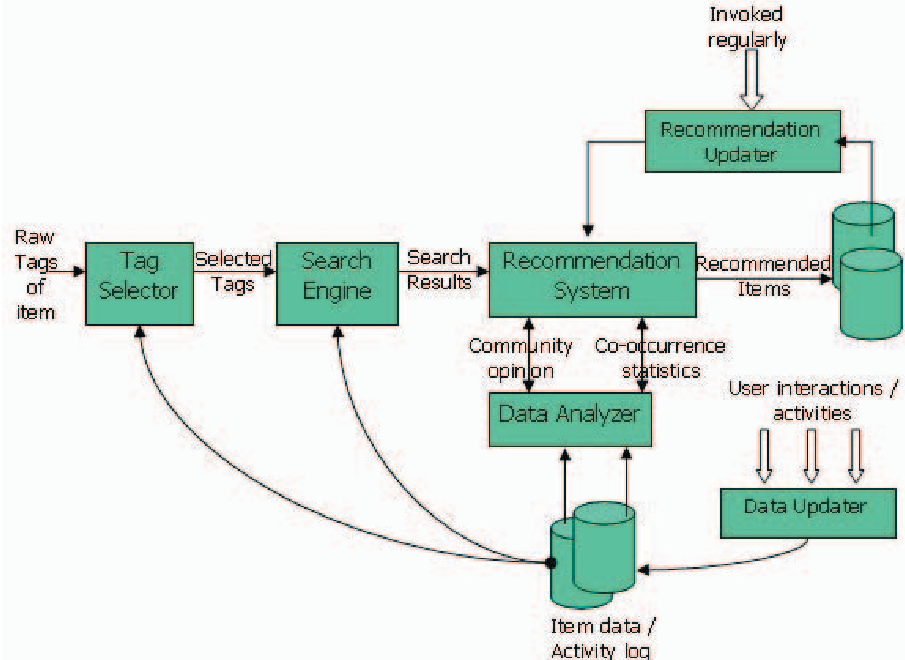 Figure 1: Architectural components of the proposed generic recommendation system.
The Ranking Function
The final recommendation for an item relative to item is defined by:
- Relevance Score : Derived from significant tags. Using TF-IDF and Named Entity Relationship (NER), the system extracts metadata to find topically similar items via search queries.
- Community Score : Unlike raw view counts which lead to "rich-get-richer" bias, the authors implement a Dynamic Scoring Function.
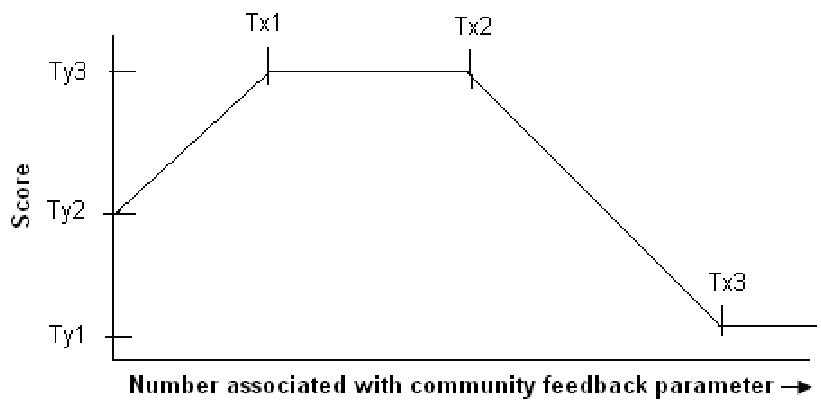 Figure 2: Non-linear dynamic scoring function designed to penalize extreme popularity bias and reward emerging content.
- Co-occurrence Score : Captured through:
- Coincidence: Items uploaded by the same user in a similar category/timeframe.
- Navigational Adjacency: Items frequently viewed in the same user session, regardless of their content metadata.
4. Experiments & Results: Real-World Impact
The researchers utilized A/B (Split) Testing on Rediff.com, comparing their system against a standard category-recency baseline.
Performance Boost
The proposed system outperformed the baseline consistently across media types. In video and photo categories, the likelihood of a user clicking a recommended item increased by 30% to 40%.
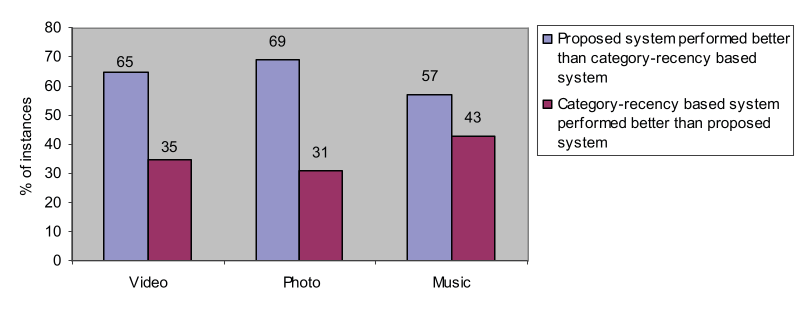 Figure 3: Click-through performance showing the superiority of the CI-based approach.
Content Diversity
One of the most striking results was the increase in the "Discovery" factor. The number of unique items consumed grew by 2x to 10x, proving that the system effectively pushed "Long Tail" content to interested users rather than just circulating the same popular hits.
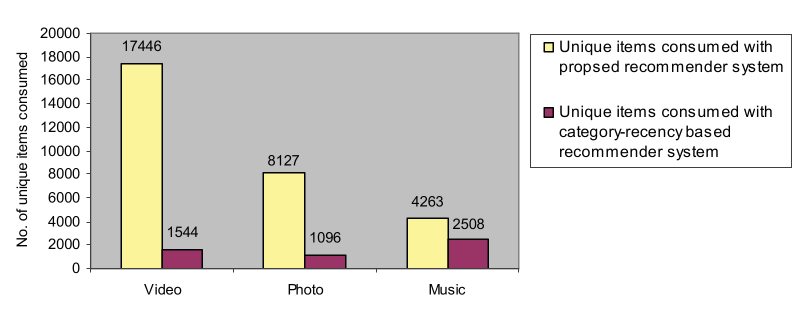 Figure 4: The system significantly widened the variety of media consumed by users.
5. Critical Analysis & Conclusion
Takeaway: By focusing on the interactions around items (Collective Intelligence) rather than just the attributes of users, the framework remains lightweight and adapts nearly instantly to changing trends.
Limitations:
- The system relies heavily on the quality of tags. If user-generated tags are noisy or absent, the Relevance Score () degrades.
- The constants require manual tuning or domain-specific heuristics, which might not generalize perfectly without frequent re-evaluation.
Future Outlook: Integrating this collective intelligence approach with modern Representation Learning (Embeddings) could further refine the "Navigational Adjacency" logic, creating an even more potent hybrid recommender for large-scale e-commerce and media platforms.