
Harnessing the Crowd: A Generic Framework for Recommendation via Collective Intelligence
Generic framework for recommendation system using collective intelligence
The paper introduces a generic recommendation framework leveraging Collective Intelligence (CI) through user-contributed tags, community opinions, and navigational co-occurrence patterns. It achieves a 30-40% improvement in click-through rates and significantly increases item consumption diversity compared to traditional category-recency baselines.
TL;DR
This paper proposes a robust, scalable recommender system that moves away from computationally expensive individual user profiling. By synthesizing Collective Intelligence—specifically tags, community feedback, and behavioral co-occurrence—the authors created a generic framework that boosts click rates by up to 40% and exponentially increases the diversity of content consumed by users.
Problem & Motivation: The Limits of Individualism
In the early 2000s and 2010s, recommendation engines became the backbone of the web (Amazon, Netflix, Google). However, the authors identify several critical bottlenecks in the status quo:
- The Data Hunger: Traditional systems require massive datasets before becoming effective.
- Static Bias: Most algorithms are biased toward historical data and fail to surface "New/Hot" items effectively.
- Complexity Trap: Keeping individual profiles for millions of users leads to linear growth in computational overhead, which is unsustainable for real-time industrial applications.
- The Eccentric Item: Niche or "unpredictable" items often fall through the cracks of standard collaborative filtering.
The Insight here is simple yet powerful: Small groups of experts are often outperformed by the "Crowd." Instead of trying to model a single user's mind, why not model the emergent intelligence of the entire community?
Methodology: The Three Pillars of Collective Intelligence
The framework utilizes a modular architecture to calculate a final recommendation score based on three distinct signals.
1. Tag-Based Relevance (The Semantic Layer)
The system doesn't just look at metadata; it selects the n most significant tags using techniques like TF-IDF and Named Entity Recognition (NER). These tags are then used to query a search engine, obtaining a base set of contextually similar items.
2. Dynamic Community Opinion (The Popularity Layer)
Universal popularity is a double-edged sword. If you only show what's popular, the same items get clicked, their scores rise, and new content is buried (Biasing). The authors designed a Dynamic Scoring Function to handle this.
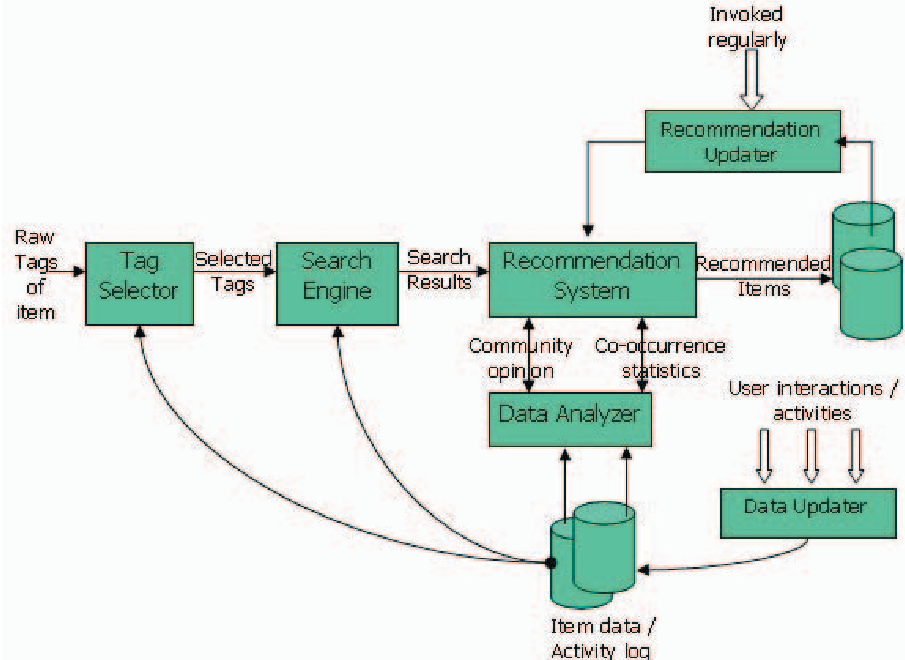 Figure 1: The overall architecture where Tag Selectors and Data Analyzers feed into a unified ranking engine.
3. Co-occurrence Patterns (The Behavioral Layer)
This is perhaps the most "intelligent" part of the system. It identifies two types of links:
- Coincidence: If the same user uploads multiple items in the same category within a short 1-hour window (e.g., photos from a trip), those items are intrinsically linked.
- Navigational Adjacency: If most users view item B immediately after item A, a strong "navigational path" is established regardless of content similarity.
Quantitative Success: Beyond the Click
The authors utilized A/B Testing (split testing) to compare their system against a baseline that recommended items based on category recency.
Key Results:
- CTR Improvement: A 30-40% increase in clicks for video and photo categories.
- Diversity Discovery: The number of unique media items consumed increased by 2x to 10x. This is a massive win for platforms looking to monetize the "Long Tail" of their content library.
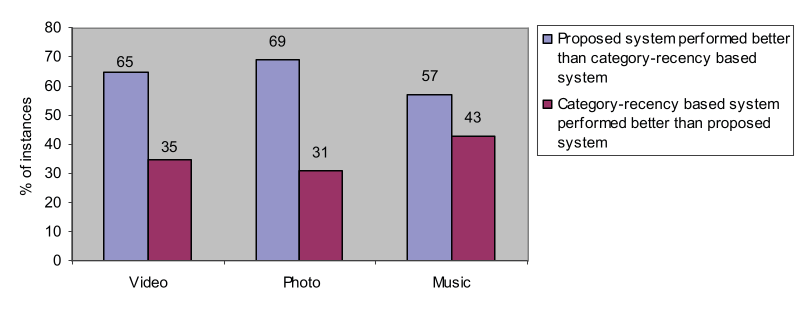 Figure 3: Click-through performance showing the significant lead of the CI-based system over traditional recency methods.
Critical Insights & Conclusion
The value of this research lies in its Genericity. Unlike specialized models, this framework treats a "News Article," a "Music Track," and a "Shopping Product" exactly the same—as an entity within a web of collective actions.
Takeaway: If your platform is struggling with the computational cost of user-based collaborative filtering or the stagnation of category-based feeds, look to Collective Intelligence. By weighting search relevance, community momentum, and session behavior, you can create a system that is both computationally efficient and surprisingly human.
Limitations: While the system excels at surfacing community-wide trends, it may lack the hyper-personalization required for niche interest discovery where the "crowd" hasn't yet trodden. Future iterations could benefit from blending this collective approach with lightweight latent factor models.