
Deciphering the Mind: Genetic Type-2 Fuzzy Logic as a "White-Box" Solution for BCI
A genetic interval type-2 fuzzy logic-based approach for generating interpretable linguistic models for the brain P300 phenomena recorded via brain–computer interfaces
This paper introduces a Genetic Interval Type-2 Fuzzy Logic System (IT2FLS) for P300 Event-Related Potential (ERP) classification in Brain-Computer Interfaces (BCI). The method combines an ensemble neural network-based recursive feature selection with a hierarchical IT2FLS optimized by genetic algorithms, achieving superior robustness and interpretability compared to standard SOTA classifiers like BLDA and RFLDA.
TL;DR
Researchers have developed a novel Interval Type-2 Fuzzy Logic System (IT2FLS) specifically designed to decode the P300 brain signal. Unlike traditional "black-box" machine learning models, this system provides interpretable linguistic rules (e.g., "IF Sensor X is Low, THEN Intent is Y") while outperforming standard methods like BLDA in handling the inherent uncertainty of human brain waves.
Background: The Problem with Mental Noise
Brain-Computer Interfaces (BCI) rely on identifying Event-Related Potentials (ERPs), specifically the P300 wave—a positive spike occurring 300ms after a significant stimulus. However, the brain is an ultra-noisy environment. Fatigue, food intake, and individual physiological differences cause the P300's amplitude and timing to shift constantly.
Most current SOTA methods like BLDA (Bayesian Linear Discriminant Analysis) or RFLDA are:
- Opaque: They provide a final decision but no clinical justification.
- Brittle: They often require painstaking recalibration if the user or the environment changes.
The Proposed Innovation: Type-2 Fuzzy Logic
The authors propose a "white-box" model using Interval Type-2 Fuzzy Logic. Why Type-2? Traditional (Type-1) fuzzy sets use crisp membership functions. Type-2 adds a third dimension—the Footprint of Uncertainty (FOU)—allowing the model to mathematically represent the "blurriness" of brain signals.
1. Feature Selection: Identifying the "When" and "Where"
Before classification, the system uses an Ensemble Neural Network Recursive Feature Elimination. This determines which specific time instances across which electrodes (F3, Pz, etc.) are actually relevant to the P300 event.
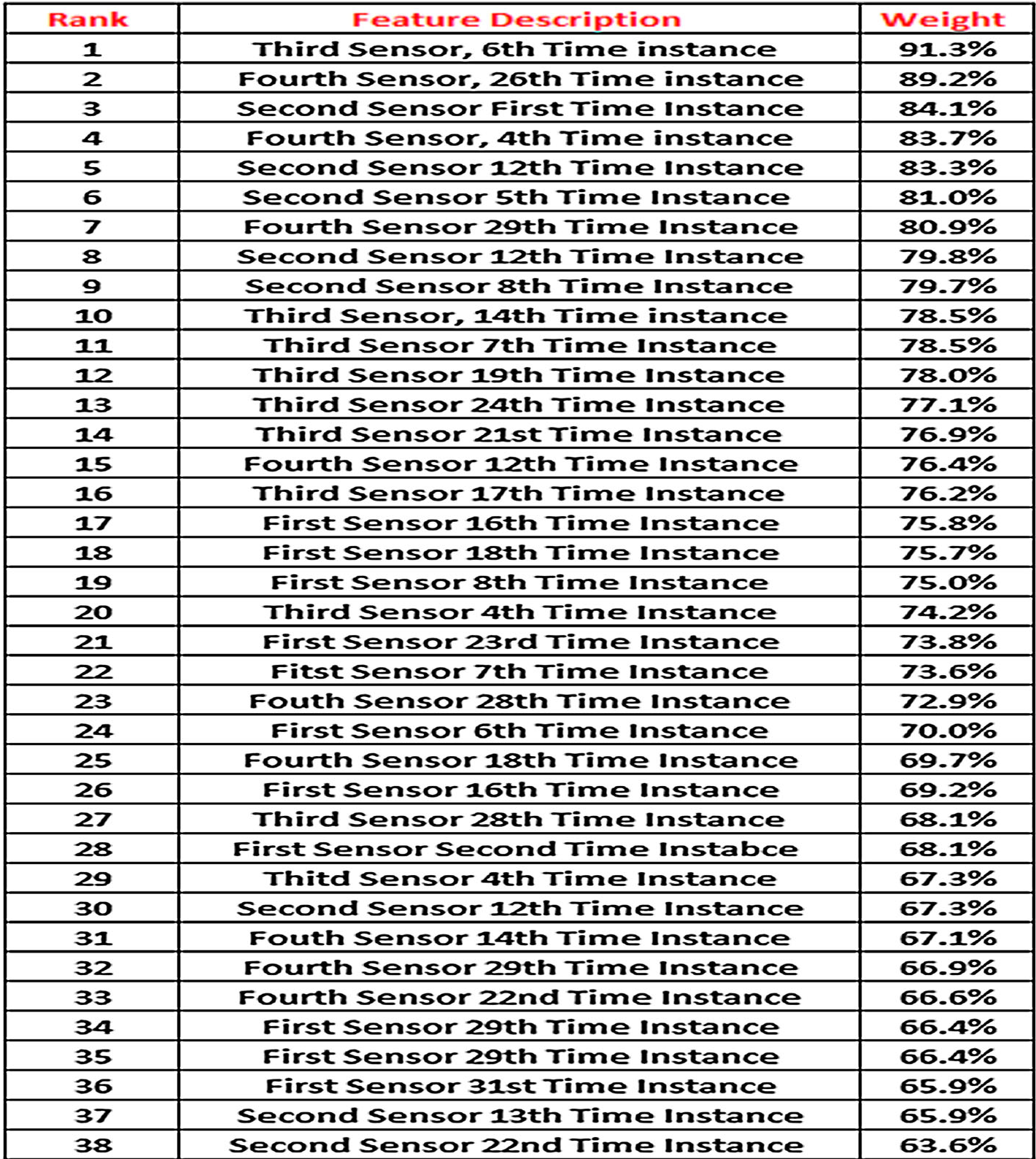 Figure 1: Transparent feature ranking showing the influence of specific sensors and time instances on the P300 detection.
2. Hierarchical Genetic Learning
To avoid the "curse of dimensionality" (where too many inputs lead to too many rules), they used a hierarchical structure. Each rule is simplified to a single antecedent, and a Genetic Algorithm (GA) is used to evolve the best possible set of rules from training data.
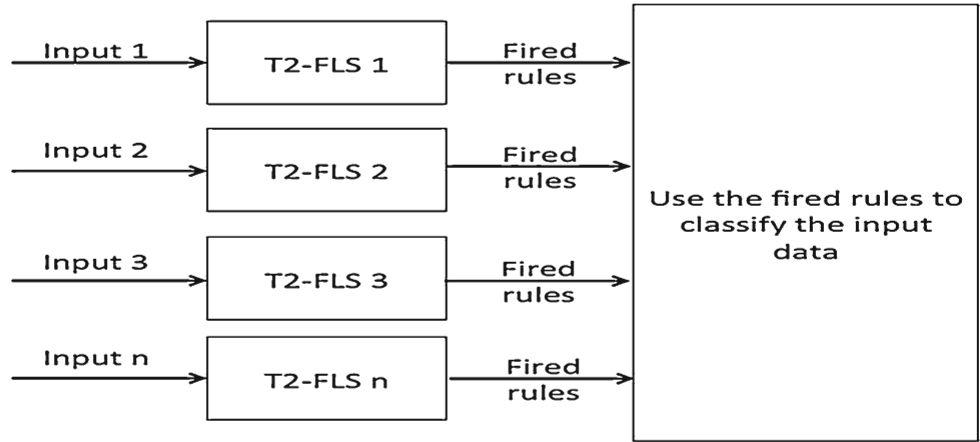 Figure 2: The proposed hierarchical structure that allows rules to grow linearly rather than exponentially with the number of inputs.
Experimental Battle: Standards vs. Real-World
The model was tested against two datasets: the standard Hoffmann dataset and a newly collected KAU (King Abdulaziz University) dataset involving Arabic character spellers.
Performance Results
The IT2FLS showed remarkable stability. In cross-subject scenarios, it outperformed BLDA and RFLDA across 4, 8, and 32 sensor configurations.
 Figure 3: Accuracy comparison on standard data. Note the IT2FLS consistently holds an edge in average accuracy.
When tested on the unseen KAU data (new subjects, different lab conditions), the traditional models' performance tanked, but the Type-2 model remained robust, proving its ability to generalize across different humans.
Why This Matters: Interpretability is Key
Perhaps the most significant achievement is the Rule Base. Instead of a complex matrix of weights, the clinician sees a list of simple linguistic instructions:
- Rule 1: IF Third Sensor (6th time instance) is Low THEN Class +1
- Rule 2: IF Fourth Sensor (26th time instance) is High THEN Class +1
This transparency allows doctors to understand why a brain-computer interface is making a specific decision, potentially unlocking new insights into neuro-pathologies.
Conclusion and Future Outlook
This research proves that BCI doesn't have to be a "black box." By leveraging the mathematical modeling of uncertainty through Interval Type-2 Fuzzy Logic, we can build systems that are both more accurate across different users and more understandable to humans. The authors' future work focuses on General Type-2 systems, which offer even more degrees of freedom for modeling the complex, shifting landscape of the human mind.