
Beyond Blind Division of Labor: A Hybrid Model for Skill-Based Specialization
A Genetic and Social Computational Model for the Emergence of Skill-Based Agent Specialization
The paper introduces a hybrid computational model combining the Genetic Threshold Model (GTM) and the Social Inhibition Model (SIM) to study the emergence of agent specialization. By integrating genetic predispositions with social pressure, the authors achieve skill-based task allocation in heterogeneous agent populations.
TL;DR
Is a highly specialized society always an efficient one? This paper challenges the traditional view of specialization by introducing a hybrid model that blends Genetic Thresholds with Social Inhibition (WASPS). While standard models focus on how much agents specialize, this work focuses on how well they do so, demonstrating that focusing on agent skill increases the Quality of Work (QOW) at the cost of total specialization levels.
Problem & Motivation: The Gap in Traditional Models
In natural and artificial systems, the Division of Labor (DOL) is a key survival strategy. However, most existing models fall into two camps that rarely talk to each other:
- Genetic Threshold Model (GTM): Agents respond to stimuli. If Task A's signal is loud enough, the agent does it. The problem? GTM doesn't care if the agent is actually good at Task A.
- Social Inhibition Model (SIM): Agents talk to each other to suppress competition. However, these models often rely on central ranking or don't account for varying intrinsic aptitudes.
The authors identify a critical "blind spot": in a heterogeneous population where agents have different skills, these models may lead to a scenario where a "clumsy" agent specializes in a task simply because they reached the threshold first, while a "master" agent remains idle or performs a task they are ill-suited for.
Methodology: The WASPS Hybrid Approach
The authors propose the Weight-Allocated Social Pressure System (WASPS) hybrid. The core innovation lies in how task thresholds are updated using two distinct drivers:
1. The Genetic Pull (Intrinsic)
Instead of a random threshold, each agent has a "genetic stable point" calculated by their skill level.
- Formula Intuition: .
- Effect: This creates a natural gravity toward tasks the agent is best at.
2. Social Inhibition (Extrinsic)
When agents interact, they "push back" against others.
- Mechanism: An agent performing a task releases inhibition proportional to its skill level.
- Effect: High-skill agents exert more social pressure, effectively "crowding out" less skilled competitors from that specific task.
 Note: The WASPS framework allows for dynamic weight allocation (ALLOC) based on combined activator and inhibitor signals.
Experiments & Results: The Quality vs. Quantity Trade-off
The researchers compared their Hybrid model against a GTM baseline across various agent-to-task ratios.
Key Findings:
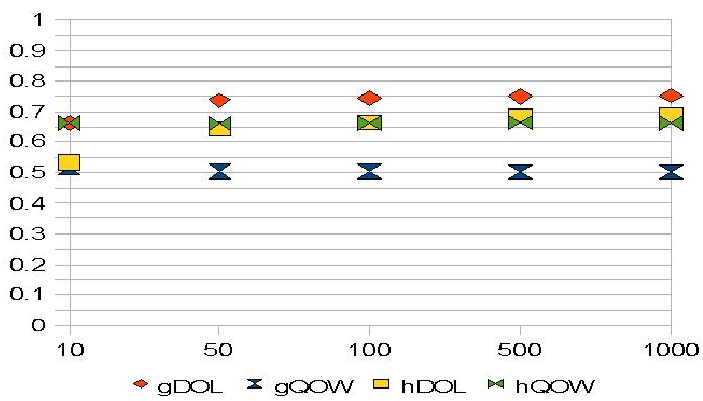
- Quality of Work (QOW): The Hybrid model significantly outperformed GTM across all scenarios. While GTM hovered around a skill average of 0.5 (random efficacy), the Hybrid model successfully pushed skilled agents into their optimal roles.
- The Specialization Dip: Interestingly, the gDOL (GTM specialization) was often higher than hDOL (Hybrid specialization).
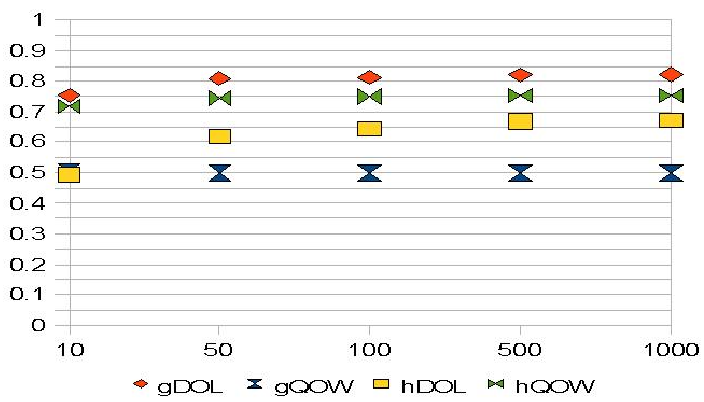 Fig 1: As agent count increases, both models show more specialization, but the Hybrid model (hQOW) maintains a clear superiority in work quality.
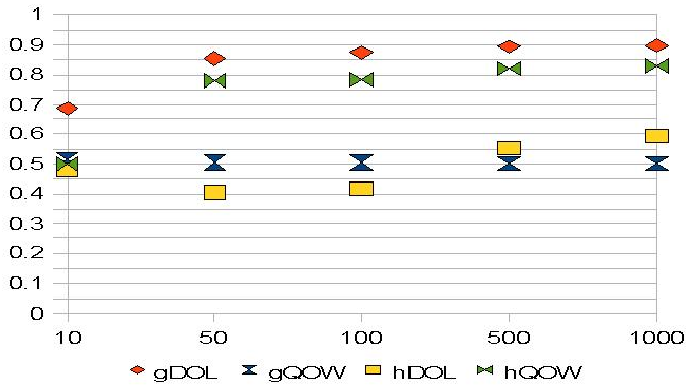 Fig 3: Even with more complex task environments, the trend persists: the Hybrid model prioritizes "doing the right job" over "just doing one job."
Critical Analysis & Conclusion
Takeaway
The paper proves that a "jack-of-all-trades" who is somewhat specialized but highly skilled in their chosen area is more valuable to a population than an agent who is 100% specialized in a task they perform poorly.
Limitations & Future Work
The authors noted a strange "dip" in specialization when the number of agents equaled the number of tasks (e.g., 10 agents, 10 tasks). This suggest a potential "instability" in the social inhibition mechanism when competition is too direct or sparse. Future research could explore dynamic skill acquisition, where agents don't just start with skills but improve them through specialization, creating a positive feedback loop between GTM and SIM.
Final Thought: For developers of Decentralized Multi-Agent Systems (MAS), this paper suggests that instead of just balancing loads, we should be designing protocols that allow agents to "brag" about their efficiency to inhibit less efficient peers.