
GDM: Rethinking Social Network Diffusion through the Lens of Genetics
A new genetics-based diffusion model for social networks
The paper introduces a Genetics-based Diffusion Model (GDM) to simulate complex information spreading in social networks. By representing individuals as "chromosomes" and messages as "genes," GDM enables the modeling of multiple objects with independent, competing, or preferred relationships, outperforming traditional Independent Cascade (IC) models in versatility.
TL;DR
Researchers have developed the Genetics-based Diffusion Model (GDM), a novel framework that treats social media users as "chromosomes" and information as "genes." Unlike traditional models that only track a single "infected" status, GDM simulates the complex interplay of multiple competing or independent news pieces. It identifies a critical "break-point" in information growth, offering a new strategy for viral marketing and misinformation control.
Motivation: The Flaws in Digital Epidemiology
Most existing diffusion models, such as the Independent Cascade (IC) or the Susceptible-Infected (SI) models, treat information like a virus. While effective for simple scenarios, they fail when:
- Multiple messages coexist: How does a user handle two different rumors at once?
- Information is lost: Previous attempts like GADM (Genetic Algorithm Diffusion Model) used "cross-over" techniques that accidentally deleted old information when new data arrived.
The authors argue that human interaction isn't just a swap of data; it's an additive process where we accumulate knowledge and only discard it if the new information is significantly more "valuable" or "preferred."
Methodology: Genes, Chromosomes, and Show-Points
GDM redefines information interaction by simulating a biological "donator-receptor" relationship.
- Chromosome (Individual): A binary string representing everything a person knows.
- Gene (Message): Defined by its position (), score (), and length ().
- The Interaction Rule: When two people interact, a "show-point" is randomly selected on the donator's chromosome. The receptor only sees genes below this point. If a gene is new and non-conflicting, the receptor adopts it. If there is a conflict, the gene with the higher score wins.
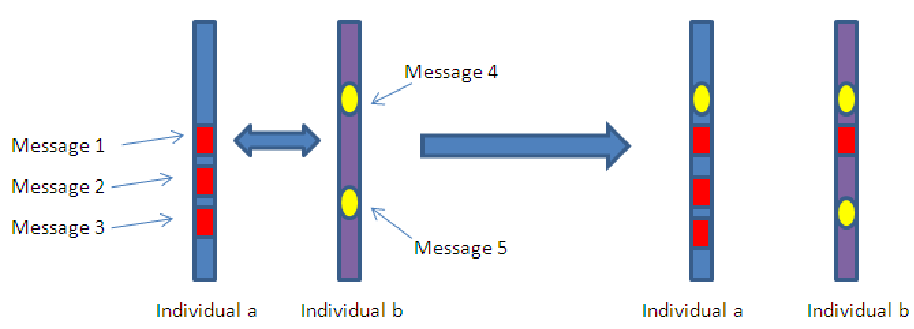 Figure 1: The GDM Interaction Mechanism effectively simulates information transfer without the "information lost" problem.
The propagation probability () for an independent gene is calculated as: where is the start-point, is the total length, and is the score.
Experiments: The Discovery of the "Break-Point"
Using the Enron Email Dataset (approx. 84,000 nodes and 1.3 million interactions), the team simulated three scenarios:
- Independent Spreading: Two unrelated news pieces.
- Competitive Spreading: Mutually exclusive parties (you can only attend one).
- Preferred Spreading: One concert being much more popular than another.
Key Finding: The Break-Point
The most striking result is the visualization of the diffusion scale. The scale remains stagnant for a long period and then suddenly explodes.
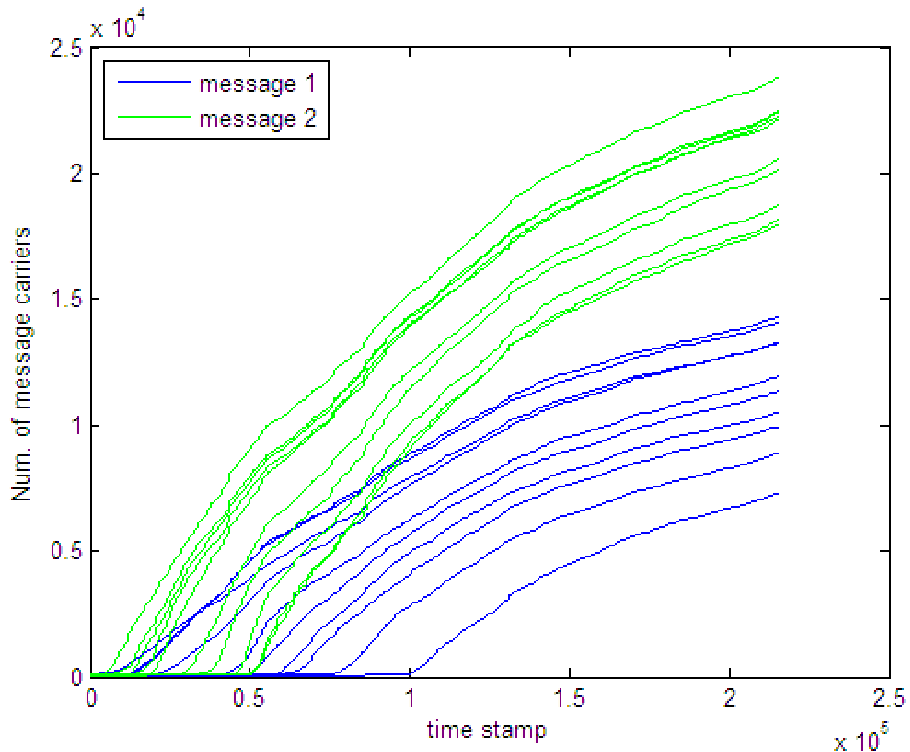 Figure 2: The diffusion scale of messages in GDM. Note the "break-point" where the rate of adoption sharply increases.
This "break-point" corresponds to the message reaching a "hub" (a vertex with high out-degree). Before this point, the message is localized. After this point, it becomes a pandemic.
GDM vs. GADM: Eliminating Information Elitism
Earlier models (GADM) showed a strange "information elitism" where a few nodes always became "information rich" regardless of the network structure. GDM fixes this by refining interaction rules, showing a more natural distribution of knowledge across the network.
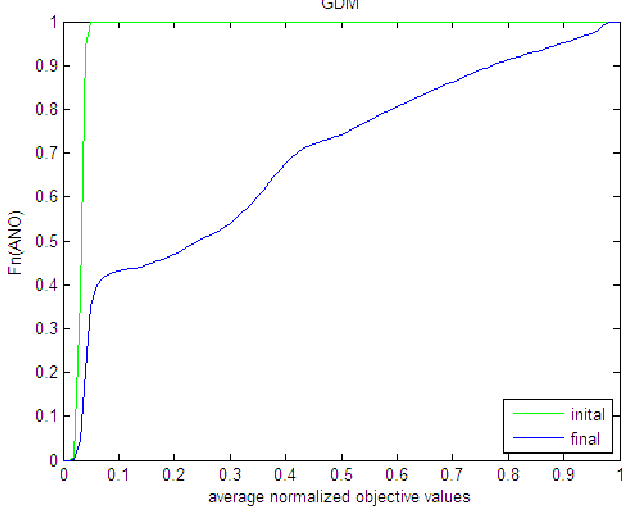 Figure 3: Comparisons of Average Normalized Objective (ANO) values. GDM (bottom) avoids the artificial clustering of high values seen in GADM (top).
Critical Insight & Conclusion
GDM is a significant step toward "social physics." By treating information value as a "gene score," researchers can now model why some high-quality content fails to go viral while lower-quality, high-probability content takes over.
Limitations: The "show-point" in this paper is generated uniformly at random. In reality, individuals are selective about what they share based on social context. Future work integrating "outgoingness" as a variable for the show-point would bring this model even closer to real-world social dynamics.
Strategic Takeaway: If you are trying to stop a rumors, do not wait for it to trend. Identifying the "break-point" through network topology analysis and blocking paths before that point is the only cost-effective way to prevent a global cascade.