
Genuine Personality Recognition: Can a Passport Photo Reveal the Real You?
Genuine Personality Recognition from Highly Constrained Face Images
This paper presents an approach for recognizing genuine personality traits from highly constrained "passport-style" facial images. Using a pre-trained VGG16 architecture for feature extraction and a regression-based neural network, the authors demonstrate that internal facial features can predict self-reported Big Five personality scores (NEO-IPIP), moving beyond mere apparent personality consensus.
TL;DR
While most AI personality research focuses on "first impressions" (how you look to others), this study investigates "genuine personality" (who you actually are). By analyzing highly constrained, neutral "passport-style" images using deep learning, researchers found that our actual personality traits—based on self-reported inventories—are fundamentally encoded in our facial structures, independently of expressions or styling.
The Motivation: Beyond the Surface
In the realm of psychology, "thin slices" of behavior suggest that humans are remarkably good at judging social traits from minimal information. However, in computer vision, most models have been trained to predict apparent personality—the consensus of what observers think about a person.
The authors of this paper identify a critical gap: Does our face contain objective signals of our actual self? By stripping away "controllable cues" such as:
- Hairstyles and cosmetics
- Jewelry and glasses
- Facial expressions
The researchers aimed to discover if the invariant geometry of the face—the parts we cannot change—holds the key to our psychological profile.
Methodology: Mining the Invariant Face
The researchers curated a unique dataset of 997 individuals, ensuring every image was captured with a neutral expression and no "noise" from styling. They then mapped these images to the Five-Factor Model (FFM): Extraversion, Agreeableness, Conscientiousness, Neuroticism, and Openness.
The Technical Pipeline
- Feature Extraction: They leveraged a VGG16 network pre-trained on ImageNet to extract a 25,088-dimensional feature vector from the facial regions.
- Regression Models: Two strategies were tested:
- Single Trait Regression: Training a specific model for each personality dimension.
- Full Vector Regression: Training one model to predict all five traits simultaneously, attempting to capture hidden correlations between traits (e.g., the negative correlation between Extraversion and Neuroticism).
- Visualization: To ensure the model wasn't "cheating," they used Grad-CAM (Gradient-weighted Class Activation Mapping) to see exactly which parts of the face were driving the predictions.
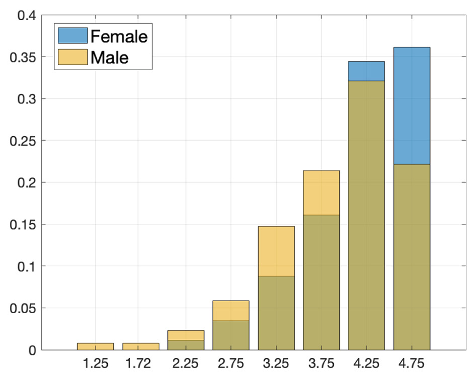 Figure 1: The deep architecture uses VGG16 features fed into dense layers for personality score regression.
Key Results: The Face Speaks Truth
The study found that neural networks could indeed predict genuine personality scores with significant accuracy.
- Quantitative Success: The Mean Square Error (MSE) results were competitive with state-of-the-art "apparent" personality models, proving that "genuine" traits are just as detectable.
- Vector vs. Single Regression: Interestingly, the "full vector" regression (learning all traits at once) did not always outperform single-trait models, suggesting that the Five-Factor traits are largely independent in terms of visual representation.
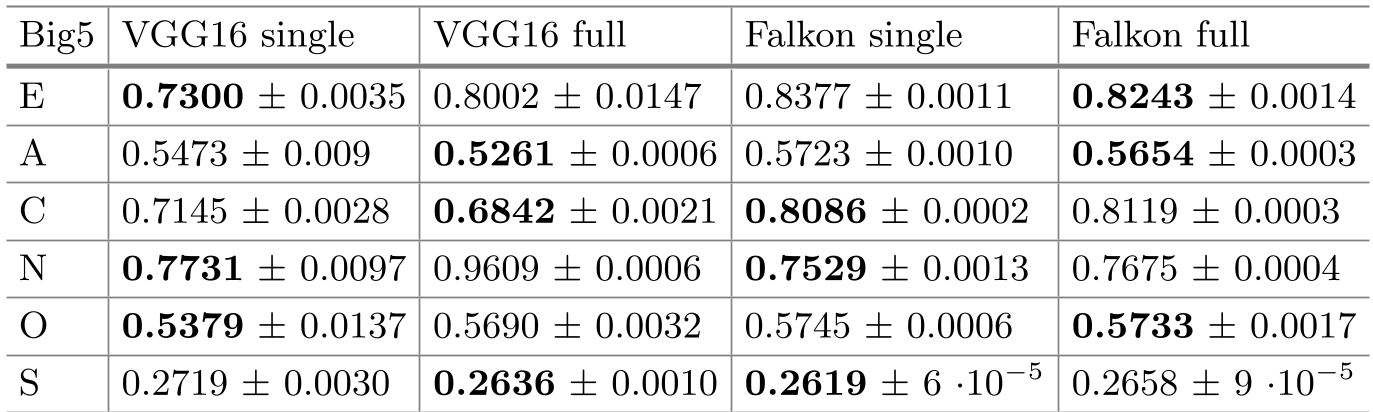 Figure 2: Comparison of MSE across VGG16 and Falkon (kernel-based) methods. Lower values indicate higher predictive accuracy.
Deep Insight: Where are the Cues?
The most fascinating part of the study involves the Activation Maps. For the trait of Neuroticism, the network consistently highlighted the jaw and the brow. These are the most sexually dimorphic regions (widely different between males and females) of the human face. Given that Neuroticism often shows statistical differences across genders, the model's reliance on these features suggests a deep biological link between facial structure and temperament.
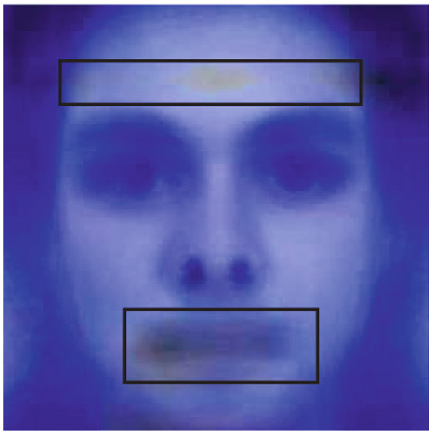 Figure 3: Average heatmaps showing the network focusing on specific facial regions like the jaw and brow for trait estimation.
Critical Analysis & Future Outlook
The study provides a powerful "proof of concept" that personality is not just "in the eye of the beholder" but written on the face itself.
Limitations:
- The dataset, while unique, is relatively small (under 1,000 samples) compared to massive "apparent personality" datasets from social media.
- The use of 2D images limits the capture of precise 3D bone structure, which might hold even more accurate cues.
Future Work: This research opens the door for personality-aware intelligent systems. Imagine AI interfaces that can adapt their communication style based on a user's inherent conscientiousness or extraversion, detected instantly from a neutral camera feed. It also raises significant ethical questions regarding privacy and the "unmasking" of our inner selves through simple visual data.
Takeaway: Our faces are more than just communicative tools; they are stable biological signals of our psychological identity.