
Smart Tourism Platforms: Bridging the Gap Between Geo-BI and Social Connectivity
Using Geo-business Intelligence and Social Integration for Smart Tourism Cultural Heritage Platforms
This paper introduces the Smart Tourism System (STS), a model architecture that integrates Geo-Business Intelligence (Geo-BI) with social networks to enhance cultural heritage tourism. It leverages the "Angels for Travellers" platform to facilitate personalized communication between tourists and local experts, utilizing GIS and BI to provide data-driven decision support for tourism operators.
TL;DR
The paper presents the Smart Tourism System (STS), a framework that fuses Geo-Business Intelligence (Geo-BI) with social networking to modernize how we experience cultural heritage. By integrating geospatial data with real-time human interaction—exemplified by the "Angels for Travellers" community—the STS platform aims to deliver hyper-personalized travel experiences while providing tourism stakeholders with advanced decision-support tools.
Problem & Motivation: The Fragmentation of the Tourist Gaze
Historically, tourism platforms have suffered from a "data-location" disconnect. A traveler might find a hotel on one site, read reviews on a second, and look at a map on a third. For cultural heritage, this fragmentation is even more severe: the "spirit of place" is often lost in static databases.
The authors argue that the Web 2.0 paradigm (collaboration and shared knowledge) has not been sufficiently applied to tourism data. Existing platforms fail to turn raw geographic data into actionable "Location Intelligence" that can guide both the traveler's experience and the operator's business strategy.
Methodology: The STS Architecture
The core innovation lies in the STS Architecture, which treats tourism data as a "common good." It is built upon four functional pillars:
- Sensing & Information Creation: Ingesting structured and unstructured data from the environment and social feeds.
- Geo-Business Intelligence (Geo-BI): Unlike traditional BI, Geo-BI adds a spatial dimension to Key Performance Indicators (KPIs). Reports are not just charts; they are interactive maps that visualize tourist flows, density, and resource allocation.
- The Social Layer (Angels for Travellers): Introducing the concept of "Travel Angels"—local specialized users who help visitors plan trips, ensuring "authenticity" in the travel experience.
- Cloud & Big Data: Utilizing SaaS models to allow small-scale touristic operators to access high-level analytics and workflow management tools.
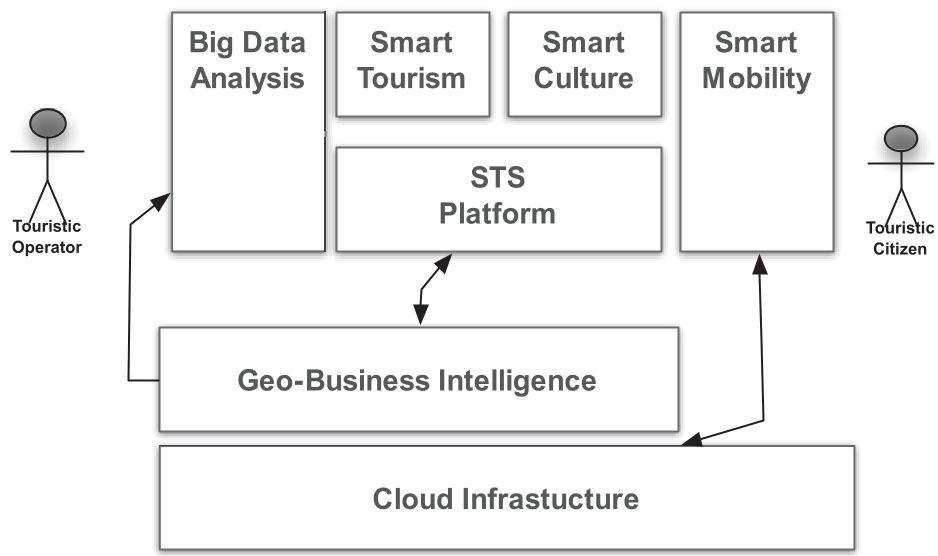 Figure 1: The integration of spatial queries and data warehouse information to form a Geo-referenced Decision Support System.
Case Study: ArtBook and the "Angels"
The paper validates this architecture through ArtBook, a dedicated STS platform for cultural heritage. A key feature is the social integration where travelers can match with "Angels" based on specific interests (e.g., wine and food, architecture, or shopping).
The system moves beyond simple rating algorithms (like TripAdvisor) by fostering human-to-human interaction before the trip begins. This creates a "Tourist 2.0" environment where the knowledge of citizens is directly monetized or shared to improve city-wide hospitality.
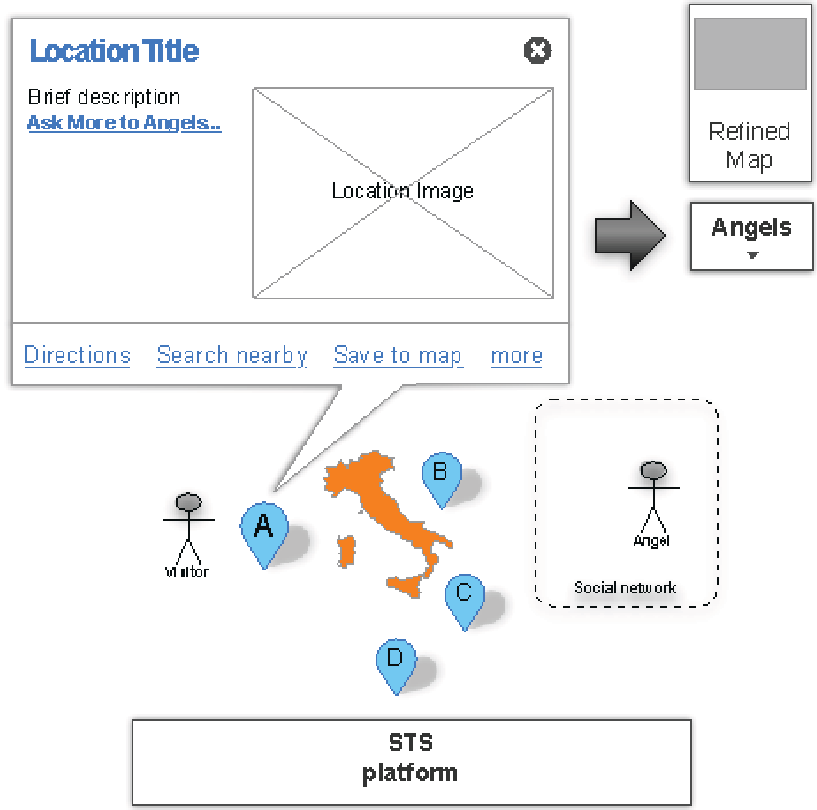 Figure 2: The user interface where travelers can select local experts based on interest categories and geographical proximity.
Critical Analysis & Results
The STS approach offers a significant Inductive Bias towards localization. It assumes that the value of travel data is exponentially increased when visualized geographically. The results suggested:
- Economic Impact: Potential to contribute to Italy's tourism GDP growth and create significant employment by 2020.
- Resource Conservation: Better data insights allow for targeted investment in the rehabilitation of historic buildings.
- Personalization: The shift from mass tourism to "tailor-made" products allows for higher efficiency in the service environment.
Limitations: While the paper focuses on the architecture and social benefits, it doesn't dive deep into the technical challenges of Big Data latency when processing real-time social feeds on a global scale. Additionally, the reliance on human "Angels" introduces a variable of quality control that requires strict moderation (as hinted at by the registration process).
Conclusion
This work serves as a blueprint for the "Smart Tourism" era. By moving from purely informational websites to Geo-BI platforms, the tourism sector can finally treat cultural heritage as a dynamic, interactive asset. The future of the "tourist gaze" is not just seeing a monument; it is seeing it through the lens of local expertise and intelligent data.