
GeoDrinking: Bridging the Gap Between Social Sips and Producer Insights
GeoDrinking: How to Extract Value from an Extended Social Wine Drinking Experience
GeoDrinking is a service prototype leveraging Image Recognition and the Internet of Things (IoT) to digitize the wine-drinking experience. It allows consumers to share consumption patterns via social networks while providing wine producers with real-time geospatial analytics and marketing tools.
TL;DR
GeoDrinking is an innovative IoT-driven platform that digitizes wine consumption. By using mobile image recognition, consumers can instantly share their wine experiences on social media, while producers gain a "God-eye view" of their global market footprint through real-time geospatial maps and consumption analytics.
Background & Motivation: The Social Fabric of Wine
Wine has never been just a drink; it is a medium for social identity and communication. However, in the digital age, a disconnect exists. While consumers want to express their tastes on networks like Facebook and Twitter, producers—particularly those in historic regions like Piedmont—often lose sight of their bottles once they leave the cellar.
The authors identified two major gaps:
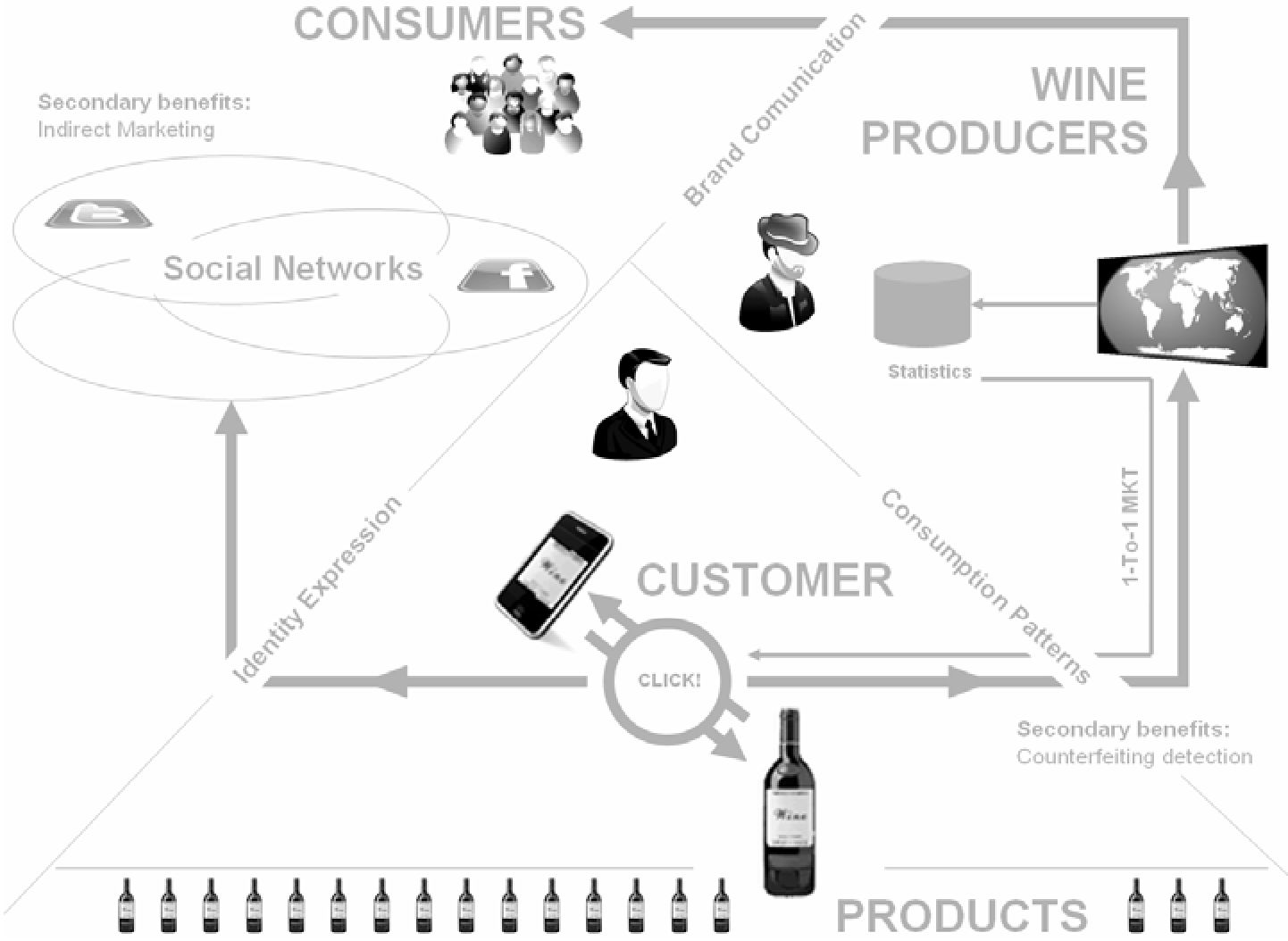
- Consumer Friction: Manual entry of wine details (year, vineyard, grapes) is tedious and discourages sharing.
- Producer Blindness: Large-scale distributors provide sales figures but no "human" data on who is drinking or where the social "word of mouth" is happening.
Methodology: High-Tech in a Low-Tech Bottle
The core of GeoDrinking is its seamless interaction model. Instead of scanning complex barcodes or typing names, it uses Image Recognition to match bottle labels against a centralized database.
System Architecture
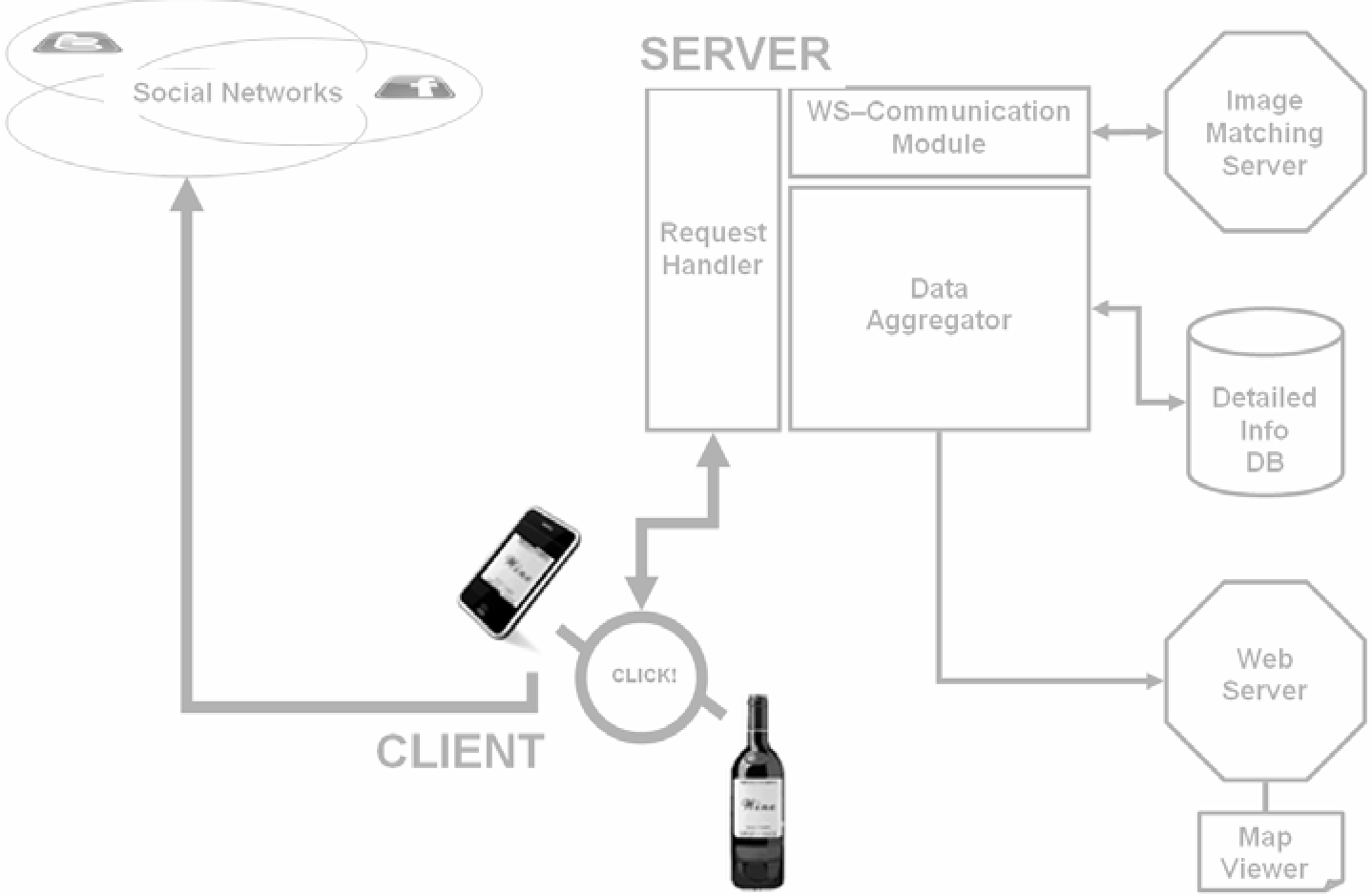
The service operates on a client-server model:
- Mobile Client: Captures the label, handles authentication, and pushes to social APIs.
- Image Matching Server: Processes the visual query and returns specific metadata (vintage, tasting notes).
- Map Viewer (Producer Dashboard): Aggregates these "check-ins" onto a global map, allowing producers to see consumption trends in real-time.
Deep Dive: The Producer Perspective
Through semi-structured interviews with wineries in the Langhe and Astigiano regions, the researchers found that even prestigious brands rely heavily on "word of mouth." GeoDrinking digitizes this phenomenon.
For a producer, the platform serves multiple roles:
- Market Intelligence: Knowing that a specific Barolo is trending in a London wine bar allows for targeted local marketing.
- Counterfeit Detection: If a label appears in two distant locations simultaneously or in a region where no distribution exists, it triggers a red flag for potential fraud.
- Direct Engagement: Moving from mass marketing to 1-to-1 relationships with loyal consumers.
Business Potential: The "Freemium" Vineyard
The paper proposes a hybrid business model to ensure sustainability:
- Freemium Model: Producers list a few labels for free but pay a subscription for advanced analytics and higher visibility.
- Crowdsourcing Value: The users act as "probes," providing data that would traditionally cost thousands in market research fees.
Critical Insight & Conclusion
GeoDrinking is more than a social app; it's a Participatory Architecture for the physical world. While the paper focuses on wine, the logic is highly extensible to any luxury or niche good where "identity" is part of the consumption (e.g., craft spirits, high-end fashion).
Limitations: The success of the platform relies heavily on the comprehensiveness of the label database and the willingness of "traditional" producers to adopt digital dashboards.
Future Work: The authors envision "WikiWine"—a global, crowdsourced wine catalog—and enhanced direct producer-to-consumer communication channels for rewards and educational content.