
Precise Deanonymization: Breaking the Shield of Anonymous Location-Based Networks
Geographic Localization of an Anonymous Social Network Message Data Set
This paper introduces a systematic deanonymization attack to pinpoint the precise geographic origin of messages on Jodel, an anonymous location-based social network. By leveraging "traveling agents" and a binary search algorithm, the authors successfully reconstruct sender locations with 10-meter accuracy using only 20 API requests.
TL;DR
Researchers from the University of Passau have demonstrated that "anonymous" messaging isn't as private as users might think. By exploiting the logic of location-based content delivery in the Jodel app, they developed a method to locate a sender within 10 meters using just a handful of automated requests. This attack bypasses the app's lack of precise ground truth and highlights a fundamental flaw in proximity-centered privacy models.
The Illusion of Proximity Privacy
Anonymous social networks (ASNs) like Jodel rely on a simple promise: you can see what people around you are saying without anyone knowing exactly where you are. Jodel provides a live feed of messages within a 10km radius but hides the exact coordinates of the authors.
The Problem: The very mechanism that determines visibility—the 10km boundary—acts as a geometric leak. If a message is visible at point A but invisible at point B (where B is slightly further from the source than A), then the source must lie exactly on the 10km perimeter centered at point A.
Methodology: The Binary Search Attack
The authors moved beyond simple trial-and-error by implementing a highly efficient Binary Search approach using "Virtual Agents."
1. The Strategy
To locate a single message, the system uses two "Traveling Agents":
- Agent 1 moves North-to-South.
- Agent 2 moves West-to-East.
- Both start outside the visibility range and move toward the "Virtual Agent" (the initial discovery point) until the specific message appears in their feed.
2. Algorithmic Efficiency
Instead of moving in 10-meter increments (linear search), the authors used a binary search. By bisecting the distance in each step, they reduced the work from hundreds of requests to roughly 11 requests per dimension.
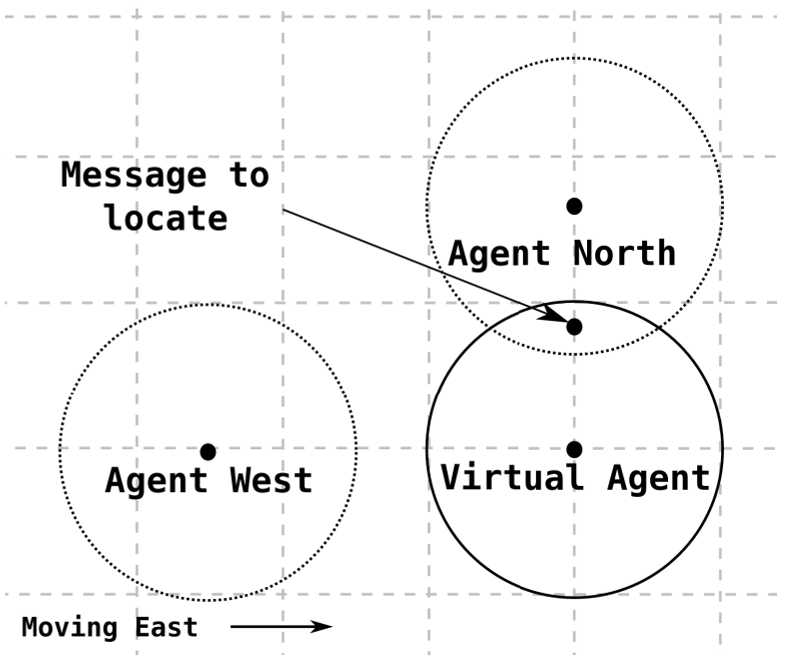 Figure 1: The geometric intersection of message horizons. By finding where the 10km circles of two agents intersect, the sender's exact location is revealed.
Text Mining: Beyond Geography
While the spatial attack is the "hard" breach, the authors also applied Natural Language Processing (NLP). By using TF-IDF vectorization and K-Means clustering, they analyzed the content of 38,000 messages. They found that while topics (university life, gossip, TV) are similar across cities, the combination of precise location data and unique linguistic fingerprints (writing style) could potentially lead to full user identification.
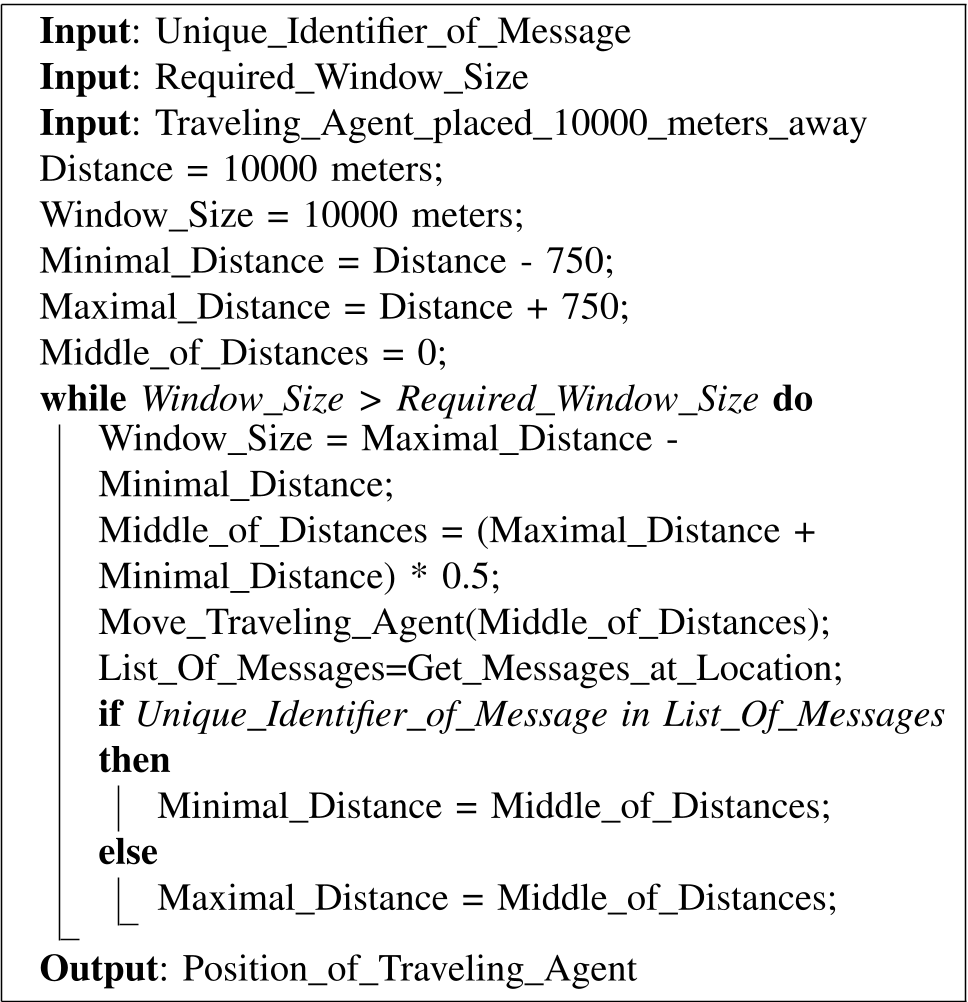 Figure 2: The pipeline from raw message extraction to thematic clustering.
Experimental Validation
The results were startlingly consistent across various German university towns. Whether in Munich (high traffic) or Passau (low traffic), the success rate for locating messages hovered above 96%.
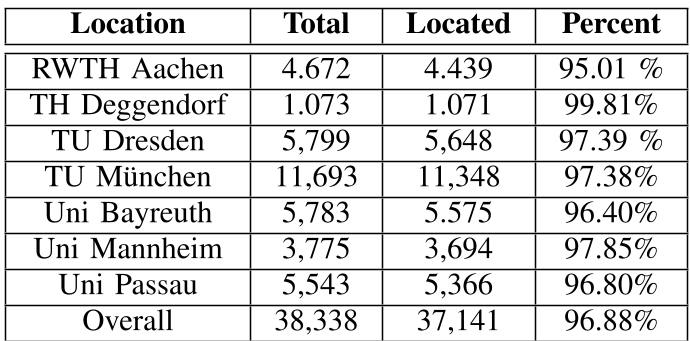 Table 1: Localization success rates across different university hubs.
Critical Analysis: Can We Fix This?
The authors suggest that simple IP blocking is ineffective because attackers can use proxies or simulate "jittery" human-like movement.
Key Mitigation Strategies:
- Coordinate Jitter: Adding random noise (e.g., 50m) to the coordinates used by the server would break the precision of the binary search.
- Grid Systems: Instead of radius-based circles, servers could deliver content based on fixed geographic clusters (tiles).
- User Vigilance: Users can use "Fake GPS" apps to post from public landmarks rather than their private homes, though this is a burden on the end-user.
Conclusion
This research serves as a wake-up call for developers of location-based services. In the world of cybersecurity, vague coordinates are not anonymous coordinates. As long as a service has a deterministic "cut-off" point for data visibility, an attacker with a compass and a script can find you.