
Superuser Routing: Leveraging Social Geography for Hyper-Efficient Data Dissemination
Geography-aware active data dissemination in mobile social networks
This paper introduces a geography-aware active data dissemination framework for Mobile Social Networks (MSNets). It proposes two novel algorithms, SODA and GADA, which utilize a semi-Markov mobility model and "geo-centrality" metrics to design optimal routes for a "superuser" to maximize data delivery across intermittently connected nodes.
TL;DR
In the world of Mobile Social Networks (MSNets), connectivity is often a game of chance. This paper shifts the paradigm from passive waiting to Active Data Dissemination. By modeling human movement through a semi-Markov lens and identifying "geo-communities," the authors propose algorithms that allow a single "superuser" to cover a network with 95% less travel distance than traditional random-walk or fixed-route methods.
The Core Problem: The Chaos of Human Mobility
Traditional routing in intermittently connected networks follows a "store-carry-and-forward" approach. Most prior work assumes two extremes:
- Passive: You wait for users to bump into each other. (Slow and unreliable).
- Rigid Active: A "ferry" moves in a fixed loop or treats users as stationary targets. (Inaccurate for real people).
The reality is that human mobility is neither random nor stationary. We move between "hubs"—offices, cafeterias, and gyms. The gap in research was a lack of a model that combined social relationships with geographic locations to optimize a mover's path.
Methodology: The Science of Geo-Centrality
The authors suggest that if you know where people hang out and for how long, you don't need to chase them. You just need to wait at the right spot at the right time.
1. Semi-Markov Mobility Modeling
Unlike standard Markov chains, the semi-Markov process used here doesn't assume dwell times follow a memoryless distribution. It captures the "heavy tail" of human behavior—the fact that we spend 70% of our time in a few specific locations (home, work) and the rest in transition.
2. Geo-Community & Geo-Centrality
Instead of node-to-node centrality, the paper defines:
- Geo-Community: A physical location (like an AP neighborhood) where users with similar social roles congregate.
- Geo-Centrality: A metric calculating the probability that a randomly chosen user will visit a specific community within a certain timeframe.
3. The Algorithms: SODA vs. GADA
- SODA (Static Optimal Disseminating Algorithm): Uses Convex Optimization (specifically the Barrier Method) to determine how long to stay at each site to hit a target delivery ratio, then solves a Traveling Salesman Problem (TSP) to find the shortest path between them.
- GADA (Greedy Adaptive Disseminating Algorithm): An improvement that accounts for "user overlap." If a superuser already gave data to a student in the library, they don't count that student again when they visit the cafeteria. GADA dynamically updates the utility of each site.
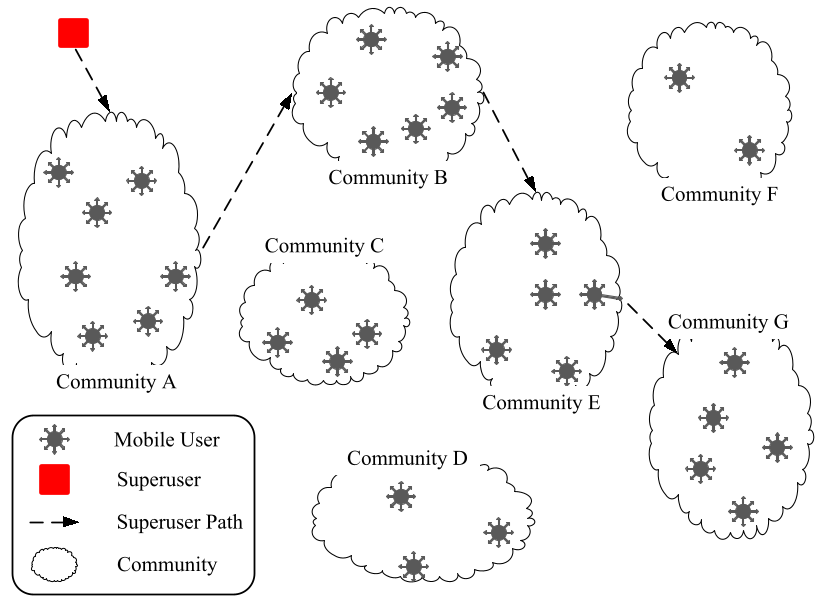 Fig 1: The Active Data Dissemination Framework in MSNets.
Experimental Results: Efficiency Reimagined
The researchers tested their models against real-world traces from MIT and Infocom. The results were stark:
- Surgical Precision: To achieve the same delivery ratio, the MF-ORWP (a standard ferry) traveled 207.5 km, while the proposed GADA traveled only 8.5 km.
- Delivery Performance: GADA consistently maintained a higher delivery ratio across various superuser speeds because it prioritizes "high-yield" social hubs over exhaustive geographic coverage.
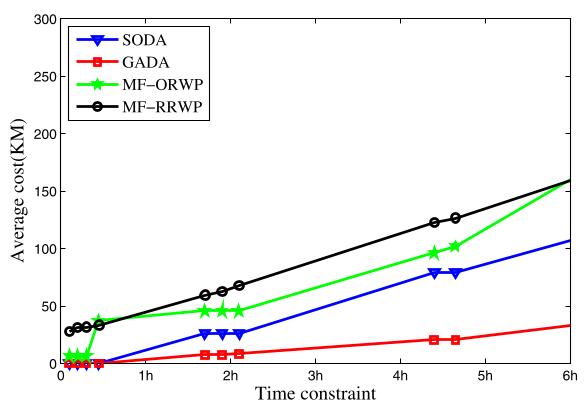 Fig 2: Delivery ratio comparison showing GADA's superiority over standard Message FerryING (MF) methods.
Critical Insight & Future Outlook
The genius of this paper lies in the spatial-temporal trade-off. It proves that in a social network, waiting is often more efficient than moving. By characterizing "Geo-Centrality," the authors provided a mathematical framework for "being in the right place at the right time."
Limitations: The model assumes users belong to only one community at a time and requires historical mobility data to build the Markov model.
Future Direction: This logic is a precursor to modern UAV-aided 5G/6G networks, where drones act as temporary base stations. Integrating real-time social media data to update geo-communities "on the fly" could be the next major leap in this field.
Takeaway for the Industry
If you are building an ad-hoc network for a campus or a battlefield, stop trying to cover the whole map. Map the social hubs and the transition probabilities; your network efficiency will increase by orders of magnitude.