
The Geopolitical Web: Decoding State Fragility through Social Discourse
The Geopolitical Web Assessing Societal Risk in an Uncertain Wodd
The "Geopolitical Web" project introduces a data-driven framework for assessing societal and country risk by mining multi-lingual social media (forums, blogs, Twitter) and news. It specifically targets fragile states like Somalia, Yemen, and Afghanistan, using automated topic modeling (MALLET) to correlate digital public discourse with traditional geopolitical risk indicators.
TL;DR
Predicting when a country will weaken or fail is a monumental challenge for the international community. The Geopolitical Web project shifts the focus from stale economic spreadsheets to the vibrant, often angry, conversations happening on local web forums and blogs. By utilizing automated topic modeling across multiple languages, this research provides a real-time window into the societal risks of countries like Yemen and Somalia.
Problem & Motivation: The Blind Spots of Traditional Risk
For decades, "Country Risk" has been the domain of economists. They look at GDP, GNI, and debt-to-export ratios. While useful, these metrics are lagging indicators. By the time the GDP drops, the revolution is often already in the streets.
The authors argue that the missing piece is "Soft Power" and public sentiment. The problem? Monitoring thousands of threads in Arabic, Dari, or Pashto is humanly impossible. Current expert-based systems (like the PRS Group) rely on subjective surveys which lack granularity and real-time responsiveness. We need a way to quantify the "cyber-pulse" of a nation.
Methodology: The System Architecture
The researchers built a comprehensive framework to bridge the gap between "hard" economic data and "soft" social signals.
1. Data Collection & Spidering
The team targeted high-risk regions: Somalia, the Maghreb, Afghanistan, Iraq, Yemen, and Indonesia. They didn't just scrape public news; they used a semi-automated spidering approach to enter password-protected forums, capturing over 265 million posts in some regions (Indonesia).
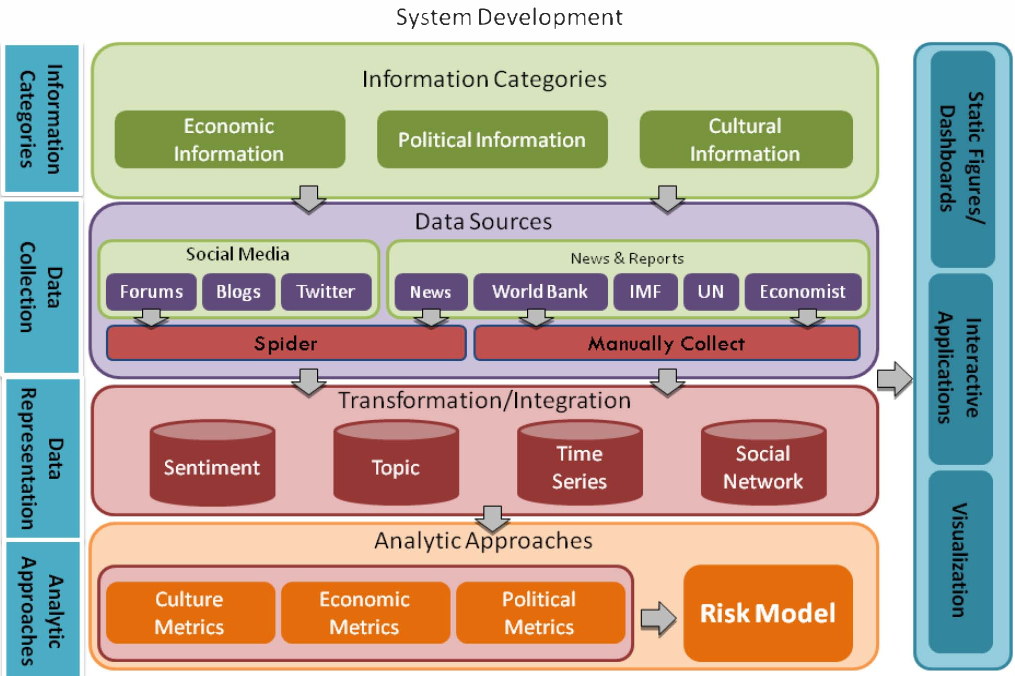 Figure 1: The Conceptual Model of the Geopolitical Web framework.
2. Overcoming Sparse Data: Message vs. Thread Clustering
A major technical hurdle in social media mining is the "Short Text" problem. Individual posts are often too brief for algorithms to find meaningful patterns. The authors tested two approaches:
- Message-based: Treating every post as a document (Failed to yield usable topics).
- Thread-based: Aggregating all replies in a thread into a single document (Successfully identified 8 clear thematic clusters).
Experiments: What the Data Revealed
Using the MALLET toolkit for statistical NLP, the team analyzed the Yemen news and forum collections. In the news, they identified five critical pillars of risk, including "Internal Security/Foreigner Kidnappings" and "US-Yemen Relations."
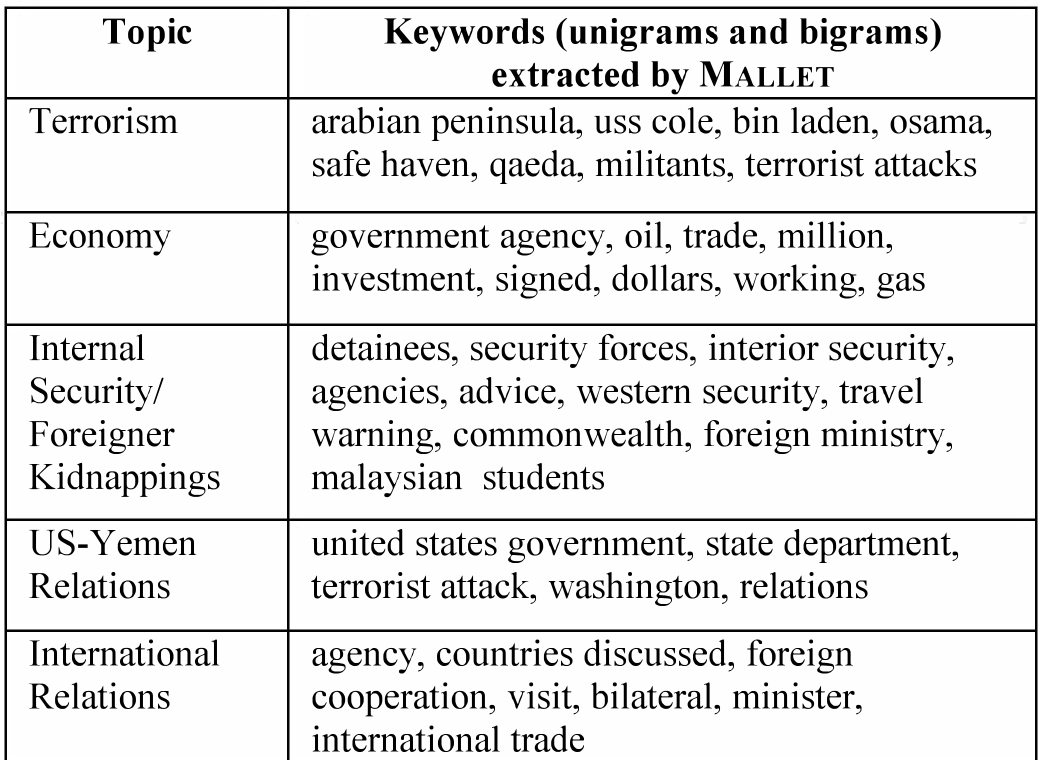 Table III: Extracted keywords showing the focus on security and international friction.
In the forums, the results were more nuanced, revealing the daily life of citizens—from discussions on Ramadan and marriage to the "Yemeni Union." This "bottom-up" view provides a baseline of societal stability that top-down economic reports miss entirely.
Critical Insight: The "Seismograph" Effect
The most striking evidence of the methodology's value is seen in the raw data from Yemeni forums (Figure 2 in the paper), which depicted the President with handguns to his head and captions about "the blood of our children." These are the leading indicators of unrest.
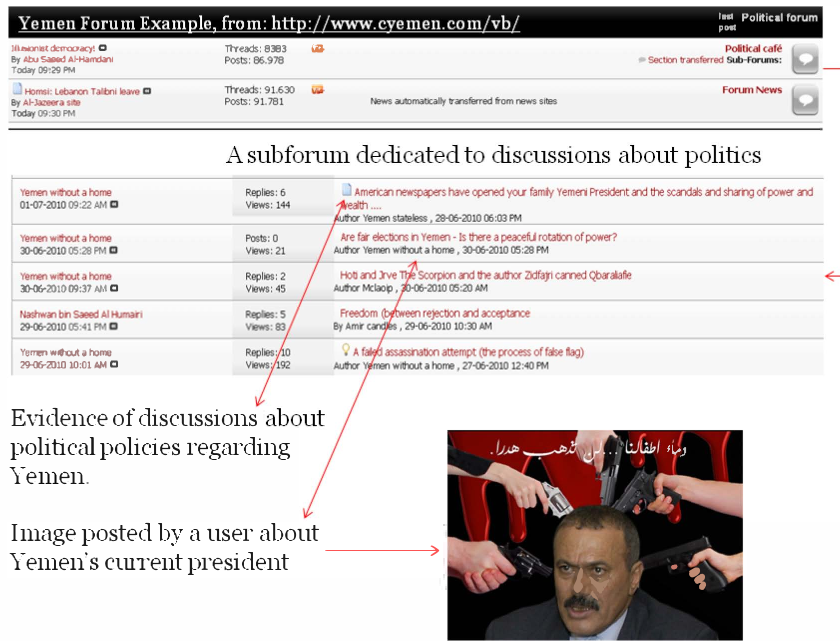 Figure 2: Visual evidence of political tension captured by the spidering system.
Conclusion & Future Outlook
The Geopolitical Web project demonstrates that computational linguistics can transform "noise" into "intelligence." By correlating sentiment scores with the Failed States Index, the authors aim to build a real-time monitoring portal.
Limitations: The research currently faces the "Machine Translation Bottleneck." Translating nuanced Arabic or Somali slang into English for sentiment analysis can lose critical cultural context. Future iterations involving native-language training corpuses will be essential to improve accuracy.
The Takeaway: For policy makers and investors, the "Web 2.0" is no longer just a platform for socializing; it is a critical infrastructure for early warning systems in an increasingly volatile world.