
Beyond Coordinates: Discovering Socio-Spatial Knowledge through Ontology Design Patterns
From Georeferenced Data to Socio-Spatial Knowledge. Ontology Design Patterns to Discover Domain-Specific Knowledge from Crowdsourced Data
The paper introduces a set of three reusable Ontology Design Patterns (ODPs)—Urban Artefact, Social Practice, and Urban Artefact Roles—to extract socio-spatial knowledge from crowdsourced georeferenced data. By bridging the gap between physical urban forms and human social behavior, the authors provide a machine-understandable framework for interpreting why and how specific city spaces are used.
TL;DR
Current GIS systems are great at mapping "where" things are, but poor at understanding "what" they mean to people. This paper proposes a bridge: a set of Ontology Design Patterns (ODPs) that link the physical built environment with crowdsourced human behavior. By modeling city spaces as entities that "play roles" in social practices, the authors transform raw TripAdvisor data into a rich, machine-understandable social knowledge base for the city of Turin.
The Problem: The Gap Between "Space" and "Place"
In the world of Geographic Information Science (GIS), we have mastered Space—the geometric, physical, and technical attributes of buildings and roads. However, we are failing to capture Place—the human-centric, social, and experiential meaning of our environment.
Crowdsourced platforms like TripAdvisor and Foursquare are goldmines of this "Place" information. Yet, this data is often treated as "noise" or siloed in stand-alone case studies. We lack a standardized, documented way to integrate this social data into a formal knowledge base. Why does a public square become a "skate park" for teenagers but a "market" for vendors? Traditional ontologies don't have the vocabulary to explain this dynamic mismatch.
The Core Methodology: Bridging Physical and Social Facets
The authors identify three building blocks for representing the urban domain:
- The Built Environment (Urban Artefacts): Physical objects created via intentional design plans (e.g., a building intended to be a restaurant).
- Social Behavior (Social Practices): Collective habits (e.g., "dining out") performed by specific social collectives (e.g., "Turin locals").
- The Interplay (Roles): The bridge. An urban artefact (the physical restaurant) plays a social role (a meeting spot) based on the social practice it hosts.
1. Urban Artefact ODP
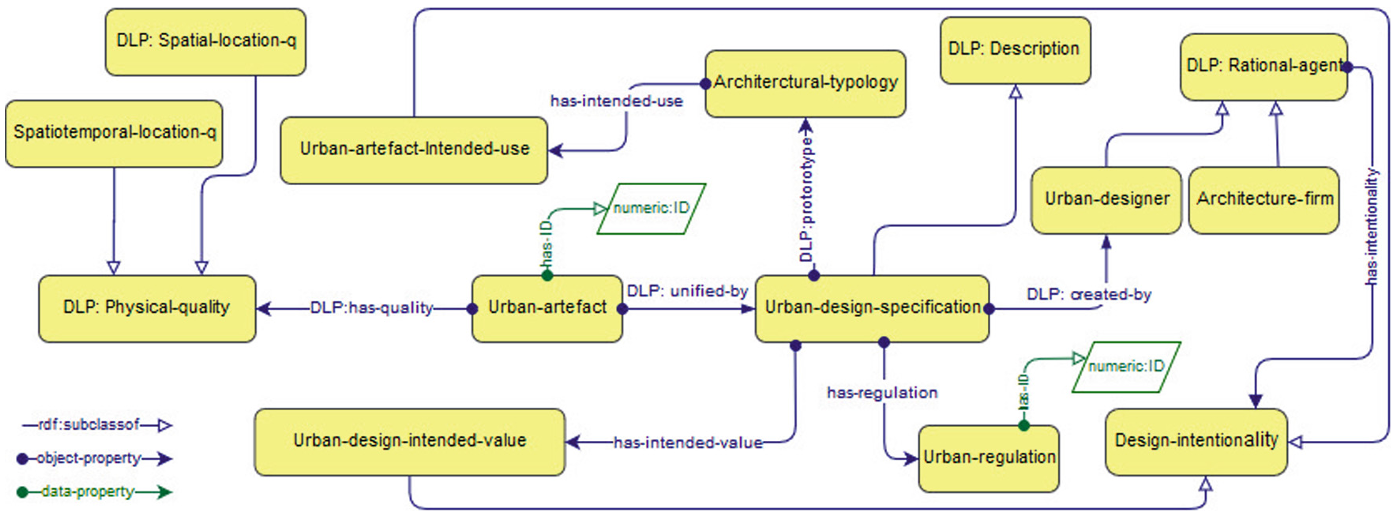
This pattern focuses on the intentionality of the designer. It captures the architectural typology, intended uses, and urban regulations.
2. Social Practice ODP
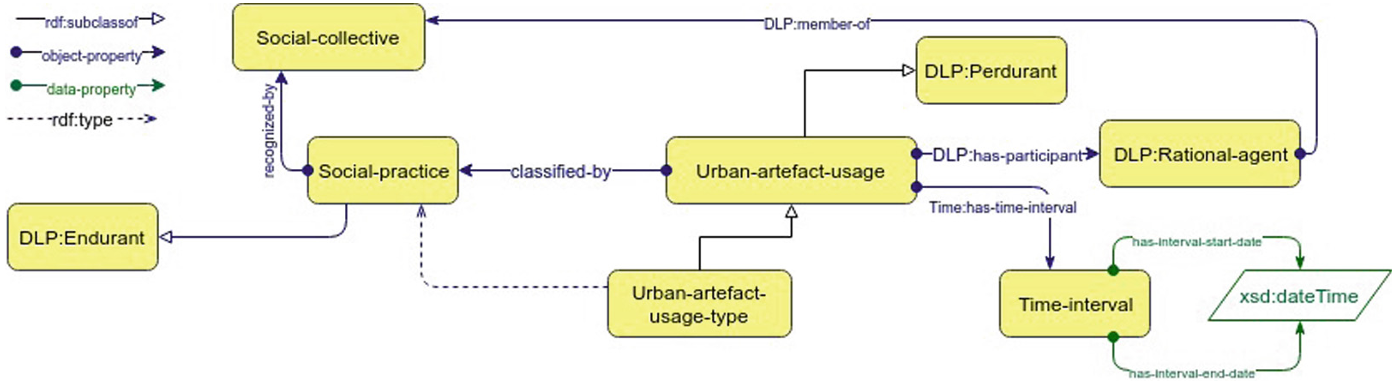
This models how individual actions aggregate into a collective behavior. By defining social practice as a powertype, the ontology recognizes that while an individual "eats," the collective performs a "dining practice" that dictates when, where, and how that eating happens.
3. Urban Artefact Roles ODP
This is the most critical component. It allows for a mismatch between a designer's intent and actual use. A square designed for transit might play the "social role" of a religious gathering place. This "role-playing" is anti-rigid and dynamic, shifting as the city’s users change.
Experiment: Analyzing Turin via TripAdvisor
The authors crawled TripAdvisor data for restaurants in Turin to test their theory.
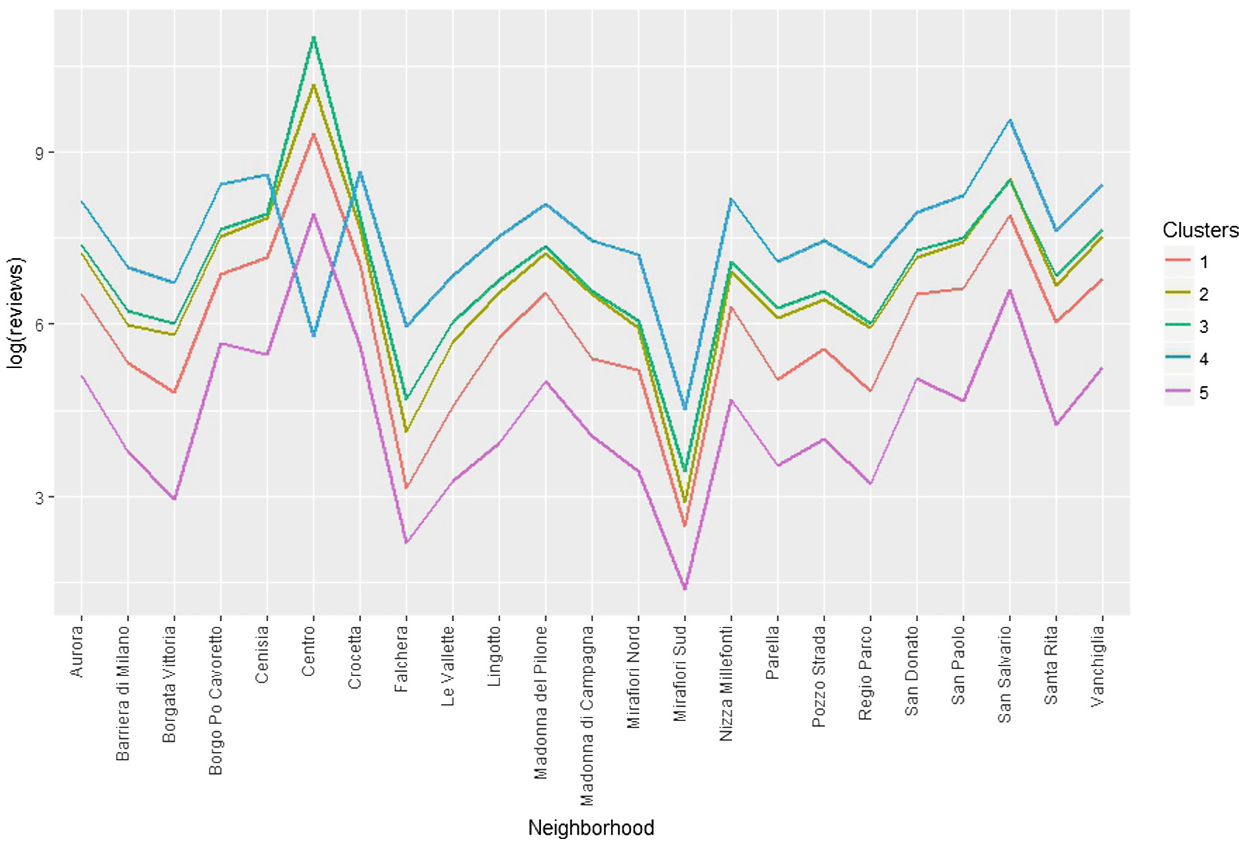
- Data Mining: Using K-means clustering on user reviews across different neighborhoods, they identified distinct "Social Collectives." For example, they found a specific cluster of users—the "San Salvario users"—who ignored the city center in favor of the San Salvario neighborhood.
- Ontology Mapping: Using the Ontop framework, they mapped their SQL database to the ODPs. This transformed the data into a Knowledge Base.
- Querying the City: Instead of just asking "Where are the restaurants?", researchers could now query the ontology for social meanings: "Which restaurants in Turin play the social role of 'local favorites' versus 'tourist traps'?"
Critical Analysis & Conclusion
The value of this work lies in its interdisciplinary depth. By borrowing from Human Geography (notions of space vs. place) and Sociology (Social Practice Theory), the authors provide a rigorous foundation for what is often a "fuzzy" concept.
Key Takeaway: To build truly "Smart" cities, we must stop treating buildings as static objects. We need to treat them as dynamic entities whose identities are constantly rewritten by the people who use them.
Limitations: The study currently relies on static review data. To truly capture the "pulse" of a city, these ODPs would need to be tested with real-time, high-velocity data (like mobile GPS traces) to account for how social roles change by the hour (e.g., a street that is a "commute path" at 8 AM and a "nightlife hub" at 10 PM).
Future Outlook: These patterns provide a roadmap for "Humanistic Data Science," where big data analysis is guided by grounded social theory, leading to urban planning that actually reflects the lived experience of citizens.