
e-Viographima: Painting with Emotions and Gestures in Virtual Space
Gestures - Emotions Interaction: e-Viographima application for visual artistic synthesis
The paper presents "e-Viographima," a real-time interactive art application that synthesizes visual content using multimodal inputs. By integrating hand gestures via Leap Motion and emotional states through Emotiv Epoc EEG sensors, the system crafts a dynamic "interactive line" as a form of digital artistic expression.
TL;DR
"e-Viographima" is a pioneering interactive application that transforms raw human biological data—hand movements and brainwaves—into a living, digital line. By combining Leap Motion sensors with EEG headsets, it allows users to engage in "Action Painting" within a virtual environment, where their emotional state directly dictates the physics and aesthetics of the digital canvas.
Background: From Point to Plane
The project draws inspiration from Kandinsky and Paul Klee, who viewed the "line" as a trace of a moving point imbued with life. In the digital age, this work moves beyond the mouse-click, positioning the user as a neural and physical "conductor" of a virtual orchestra of lines. It sits at the intersection of Brain-Computer Interaction (BCI) and Generative Art.
Problem: The Emotional Gap in Digital Art
Most digital art software is transactional: you click a button, and a color changes. The author argues that this lacks the "sensible dynamism" of physical art. The challenge lies in creating a system that not only responds to physical commands but also perceives the user's Internal Affective State, turning latent emotions like frustration or meditation into visual variables.
Methodology: The Multimodal Feedback Loop
The heart of e-Viographima is a continuous loop between the human and the machine:
- Motion Capture: The Leap Motion Controller tracks the position of fingers and palms, translating them into "virtual hands" that collide with and vibrate a digital string.
- Affective Input: The Emotiv Epoc EEG headset detects brain activity. Using the Affectiv Suite, the system identifies four key states: Excitement, Boredom, Frustration, and Meditation.
- Visual Synthesis: These inputs are mapped to a physics-based line in Unity3D. For instance, frustration might increase the "magnetic force" of the virtual fingers, while excitement triggers the appearance of animated figurative designs.
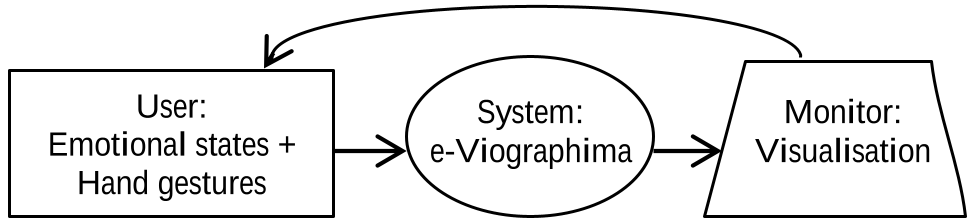 Figure 1: The proposed affective interaction layout showing the cycle of visual stimulus and emotional response.
Mapping Emotions to Mechanics
The paper utilizes a specific mapping table to turn neural data into visual actions:
- Excitement: Triggers animated elements around the fingertips.
- Frustration: Alters the line's displacement and magnetic intensity.
- Meditation: Controls the radius of influence the hands have over the line.
- Blinking: Resets the canvas to its neutral, straight-line state.
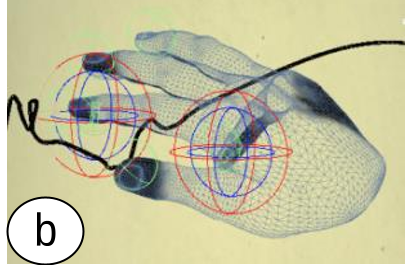 Figure 2: Comparison between the real hand position and its virtual counterpart interacting with the line.
Experimental Insight: The Unforeseen Challenge
While the system succeeded in creating a responsive environment, the author observed a unique phenomenon: The Implicit Feedback Conflict. Because the visual output is so dynamic, it often triggers new emotions in the user. If the visual output becomes too rapid or chaotic, the user's frustration rises, which in turn makes the visuals even more chaotic—a feedback loop that requires careful calibration to keep the experience "artistic" rather than overwhelming.
Critical Analysis & Conclusion
e-Viographima is a compelling proof-of-concept for Affective Computing in the arts. While it faces technical hurdles like sensor latency and the "noisy" nature of low-cost EEG data, its value lies in its philosophical approach: treating the computer not as a tool, but as an extension of the nervous system.
Takeaways:
- Beyond Entertainment: These tools have massive potential in mental health, allowing patients to visual and "externalize" their internal emotional states.
- The Future of HCI: We are moving toward "Zero-Interface" experiences where our physiological presence is the input.
- Limitation: The reliance on low-cost dry-electrode EEG means accuracy can vary; future iterations would benefit from more robust signal-processing algorithms to filter out physical movement artifacts from neural data.
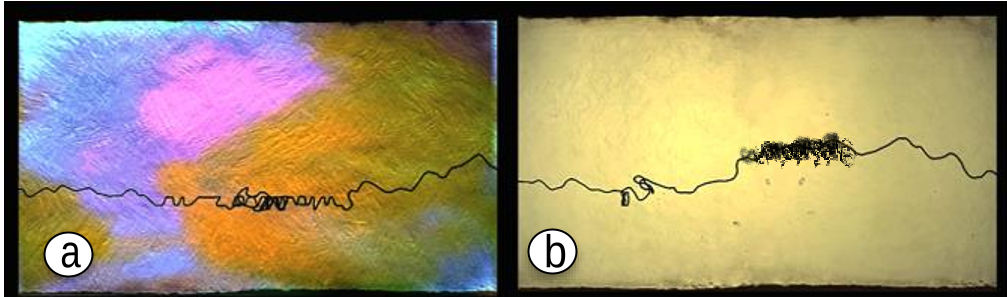 Figure 3: Final visual synthesis resulting from the interplay of gestures and neural engagement.