
Decoding the Gibberellin Network: New Frontiers in Plant Growth Regulation
Gibberellin Metabolism in Flowering Plants: An Update and Perspectives
This paper provides a comprehensive update on the gibberellin (GA) metabolic network in flowering plants, identifying key species-specific modifications. It highlights the discovery of CYP72A9 as a significant GA 13-hydroxylase and discusses the role of GA deactivation in plant development and synthetic biology applications.
TL;DR
Gibberellins (GAs) are the "engines" of plant growth, but not all GAs are created equal. This review navigates the complex metabolic web of GAs, revealing how plants use specialized enzymes like the CYP72A and CYP714 families to fine-tune growth by "deactivating" potent hormones. The discovery of these molecular switches explains why some plants grow tall while others remain dwarf, providing a roadmap for the next generation of precision agriculture.
The "Green Revolution" Context and Modern Motive
The mid-20th century "Green Revolution" was built on GAs—specifically, the selection of rice and wheat varieties with defects in GA biosynthesis. However, these traditional methods often relied on "broken" genes that affected the entire plant. Modern research seeks a more surgical approach: How can we manipulate specific metabolic branches to control plant height or seed dormancy without sacrificing overall vigor?
The central challenge has been the 13-hydroxylation pathway. While we knew chemicals like GA1 (13-OH) and GA4 (13-H) existed, the enzymes managing the balance between them remained elusive until very recently.
Methodology: Mapping the Metabolic Crossroads
The metabolic journey begins with GGPP and proceeds through a series of oxidations. The paper highlights a critical divergence at GA12, leading to two parallel tracks: the 13-H pathway (producing the highly active GA4) and the 13-OH pathway (producing the 1000-fold less active GA1).
The Discovery of the CYP72A "Sinks"
The authors detail the recent breakthrough identifying CYP72A9 in Arabidopsis. Unlike the localized enzymes of the past, CYP72A9 acts as a metabolic sink, converting the growth-promoting GA4 into the less active GA1. This discovery shifted the paradigm: 13-OH GAs aren't just a parallel track; they are a secondary modification used by the plant to dampen GA signaling.
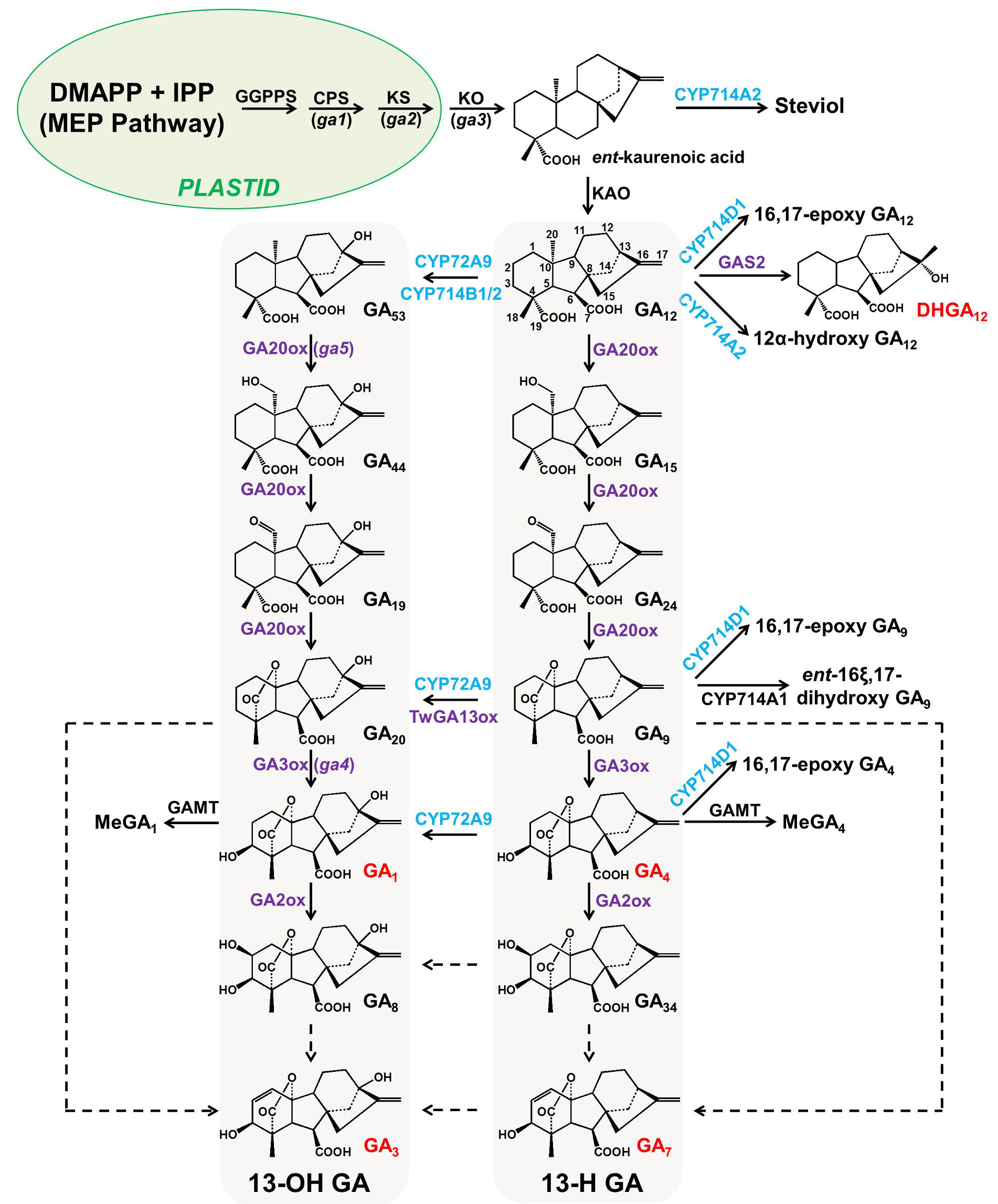 Figure 1: The dual-track GA metabolic pathway showing P450s (blue) and 2-ODDs (purple) as key regulatory nodes.
Key Results: Growth Control via Deactivation
Experimental evidence shows that metabolic control is highly species-specific:
- In Rice: The CYP714 family dominates. Knocking out CYP714B1/B2 causes an accumulation of 13-H GAs, leading to "bolt" growth in internodes.
- In Arabidopsis: The CYP72A family is the primary actor. Mutants lacking CYP72A9 show increased GA4 in seeds, leading to reduced dormancy.
- Synthetic Bio Potential: Overexpressing fungal versions of GA4-desaturase in plants can increase total bioactivity by 20-fold, demonstrating that we can "supercharge" plant growth by diverting flows within this network.
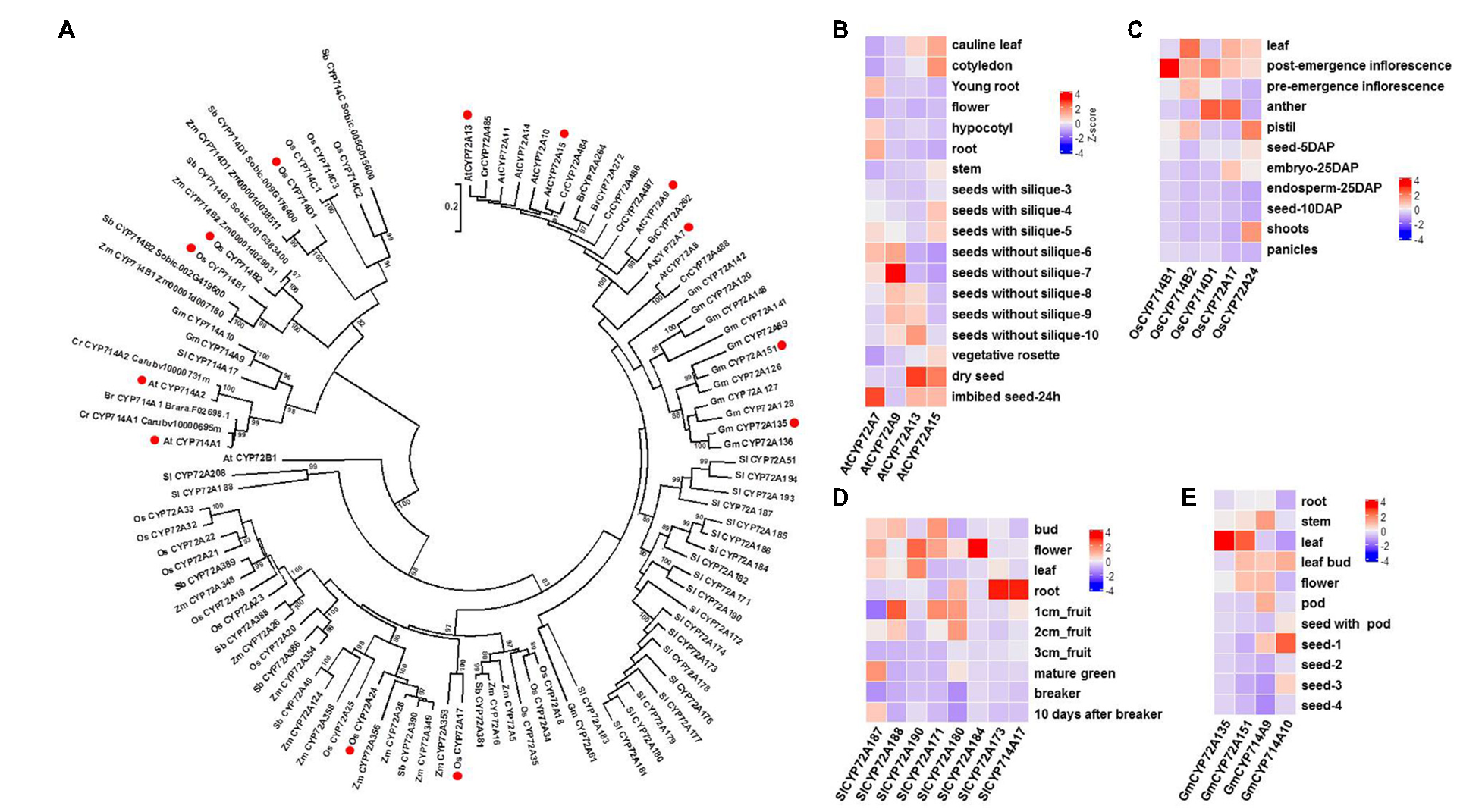 Figure 2: Evolutionary distribution of CYP714 and CYP72A subfamilies across different plant species.
Critical Insight & Future Outlook
The most striking takeaway is the functional divergence of these enzymes. While the GA core pathway is ancient, the "decorating" enzymes (hydroxylation, methylation) have evolved independently in different plant families (Brassicaceae vs. Poaceae).
The Limitation: We still don't fully understand how plants produce GA3 and GA7—the naturally occurring high-potency GAs. The "missing" plant GA4-desaturase remains a holy grail for plant biochemists.
Future Outlook: We are moving away from simple "knock-outs" toward tunable synthetic circuits. By utilizing CRISPR to edit promoters of deactivation genes like CYP72A9, breeders can create crops that are short in the field (to resist wind) but have high GA activity during germination (for strong establishment). This is not just editing growth; it is programming it.