
Gibberellin Research: Decoding the Molecular Tale of the Dwarf and the Slender
Highlights in gibberellin research: A tale of the dwarf and the slender
This review provides a comprehensive historical and technical overview of Gibberellin (GA) research, covering the elucidation of metabolic pathways, the discovery of GA-GID1-DELLA signaling modules, and the identification of NPF-family transporters. It highlights how the evolution of GA research transitioned from phenotypic observations of "dwarf" and "slender" mutants to the molecular characterization of DELLAs as master growth regulators.
TL;DR
Gibberellins (GAs) are vital plant hormones that regulate everything from seed germination to stem elongation. This review traces a century of progress—from the "Bakanae" (foolish seedling) disease in rice to the discovery of DELLA proteins, the master repressors that act as global integrators of plant growth and environmental adaptation.
Problem & Motivation: The Mystery of the "Foolish" Growth
The journey began with a paradox: rice infected with the fungus Gibberella fujikuroi grew tall and spindly (the "slender" phenotype) but remained sterile. Conversely, "dwarf" mutants lacked the ability to grow even under ideal conditions. For years, the challenge was twofold:
- Metabolic Complexity: Mapping a multi-step biosynthetic pathway involving plastids, the endoplasmic reticulum, and the cytosol.
- The Signaling "Black Box": Identifying the receptor and explaining how GA "releases" growth.
The authors argue that the "Green Revolution" of the 1960s succeeded by exploiting these mutations (like wheat's Rht), yet we only recently understood the molecular "Why" behind their success—and their hidden costs in nitrogen efficiency.
Methodology: The GA-GID1-DELLA Axis
The core of GA signaling is an "inhibitor of an inhibitor" mechanism. Use the following logic to understand the flow:
1. Perception and Destruction
Bioactive GA acts as a molecular "glue." It binds to the GID1 receptor, inducing a conformational change in GID1's N-terminal "lid." This lid then facilitates the binding of DELLA proteins. Once "trapped" in this complex, DELLAs are targeted by SCF-type E3 ubiquitin ligases (SLY1/GID2) for degradation by the 26S proteasome.
2. The Master Hub: DELLA
DELLAs are unique because they don't bind DNA directly. Instead, they interact with hundreds of Transcription Factors (TFs) using three main modes:
- Sequestration: Blocking TFs (like PIF3/4) from binding to their target promoters.
- Co-activation: Recruiting TFs to activate defense or stress genes.
- Competition: Competing with other repressors to balance growth and defense.
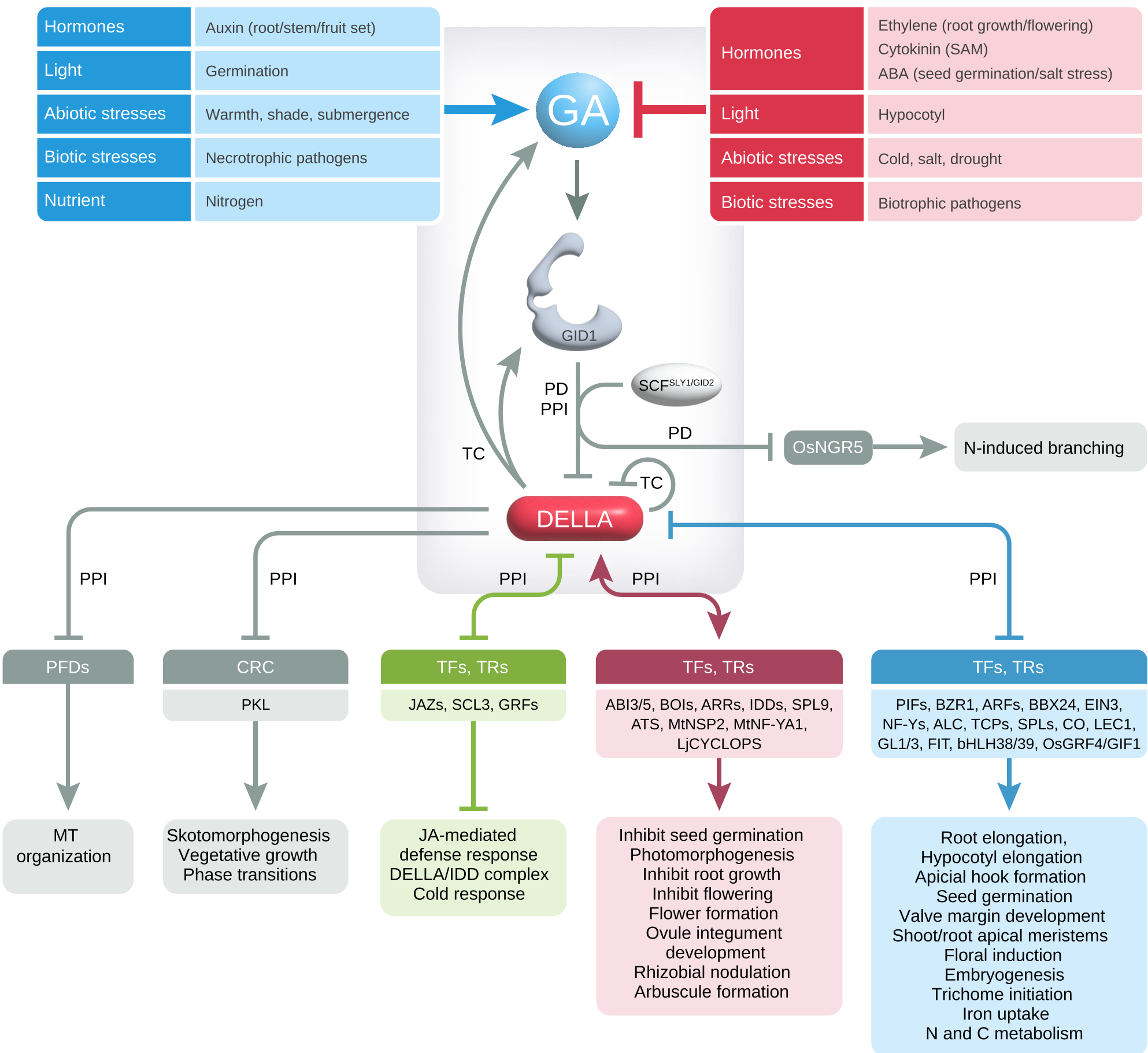 Figure 1: The GA signaling module, showing the GID1-GA-DELLA interaction and subsequent proteasomal degradation.
Experiments & Results: Transport and Integration
A major highlight of recent research is the role of GA transport. It was previously thought that GA acted primarily where it was synthesized. However, grafting and biosensor experiments (like GPS1) have shown:
- Long-Distance Signal: GA12 (a precursor) is the major mobile form moving through the phloem and xylem.
- Tissue Specificity: The NPF2.12/2.13 transporters are crucial for shoot-to-root translocation of GA, which regulates root suberization (the formation of protective barriers).
In the context of the Green Revolution, the paper discusses how elevated DELLA levels in semi-dwarf rice interfere with OsGRF4, a factor that promotes nitrogen uptake. This explains why high-yield semi-dwarf crops often require heavy fertilization.
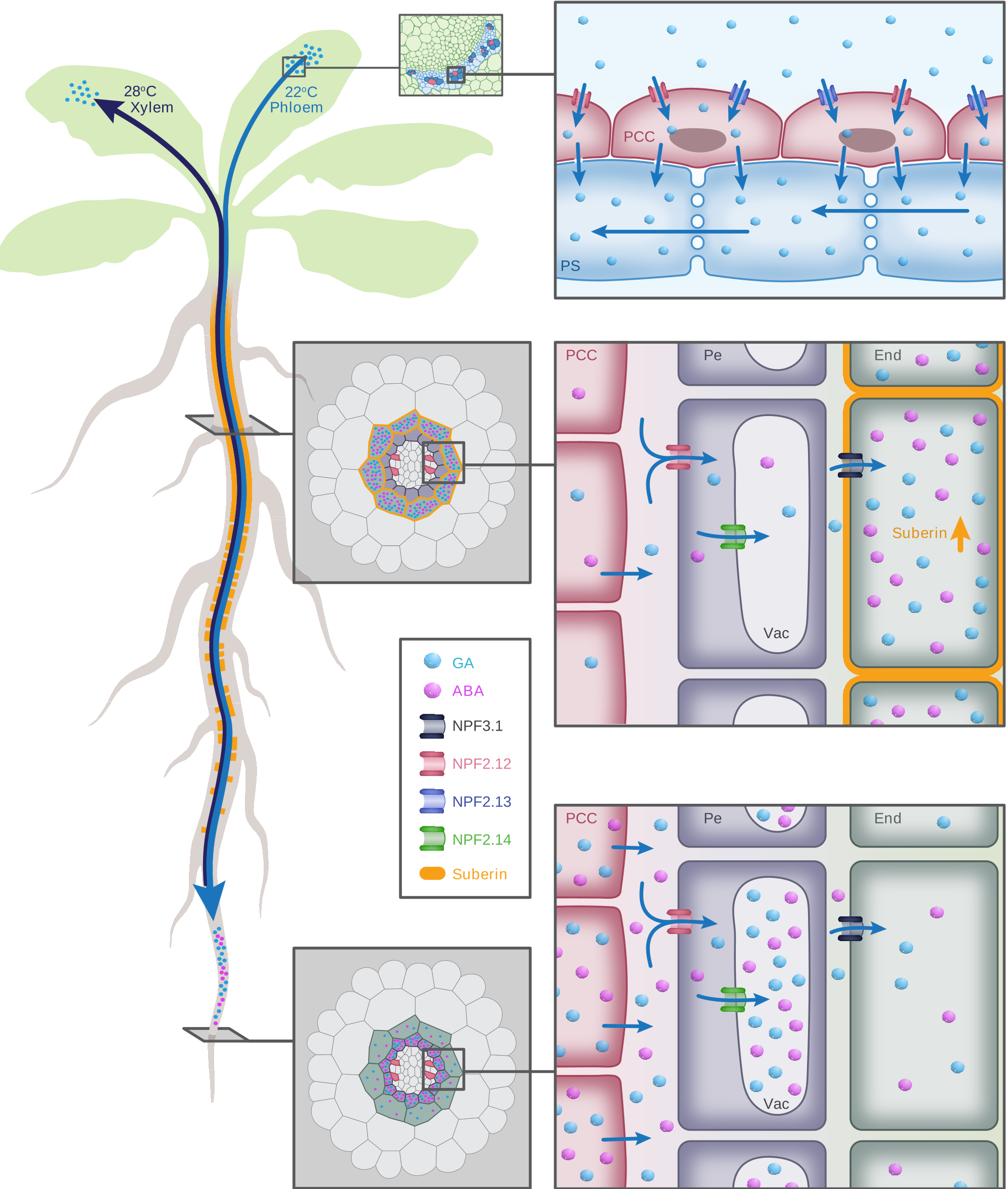 Figure 2: Model of NPF2-mediated transport and its role in coordinating hormone accumulation in specific root zones.
Critical Analysis & Conclusion
Takeaways
The transition of GA research from "isolated chemistry" to "systems biology" reveals that DELLAs are not just growth brakes; they are environment-sensing hubs. They integrate light (via PIFs), temperature (via COP1), and nutrients (via NGR5 and SL signaling) to ensure the plant only grows when the context is safe.
Limitations & Future Work
Despite the progress, the authors point out several "Missing Links":
- The Exporters: While we have found GA importers (NPFs), the exporters that move GA into the apoplast remain unknown.
- Post-Transcriptional Control: Most research focuses on gene expression, but the post-transcriptional regulation of metabolic enzymes is a dark territory.
Future Outlook
The next "Green Revolution" will likely focus on Precision GA Engineering—using tissue-specific promoters and biosensors to decouple height control from nutrient uptake, creating crops that are both short and "green" (environmentally sustainable).