
DELLAs: The Conductors of the Plant Growth Orchestra
Gibberellins and DELLAs: central nodes in growth regulatory networks
This review synthesized the molecular basis of Gibberellins (GAs) as central nodes in plant growth regulation, focusing on the DELLA protein signaling hub. It presents a comprehensive model of light-regulated hypocotyl elongation and a meta-analysis of GA transcriptomes to map the hormone's role across different tissues.
TL;DR
Gibberellins (GAs) are not just "growth hormones"; they are the central processing units of environmental signals. This paper decodes how DELLA proteins act as the core inhibitors that GAs must degrade to trigger growth, detailing a complex web of interactions that govern cell division and expansion across different tissues.
Background: Beyond the Green Revolution
The 1960s Green Revolution relied on "Green Revolution Genes" (like sd1 in rice and Rht in wheat) which reduced GA levels or sensitivity, creating shorter plants that allocated more energy to grain. However, to meet 2026's agricultural challenges, we must understand the "How" and "Why" of GA-mediated growth.
The Problem: The Complexity of Context
Why does GA make a leaf cell divide in one species but expand in another? The authors point out a major hurdle in plant science: Transcriptome Noise. Most studies analyze whole seedlings, which masks the specific signals occurring in the microscopic "growth zones" of roots and shoots.
Methodology: The GA-DELLA Signaling Hub
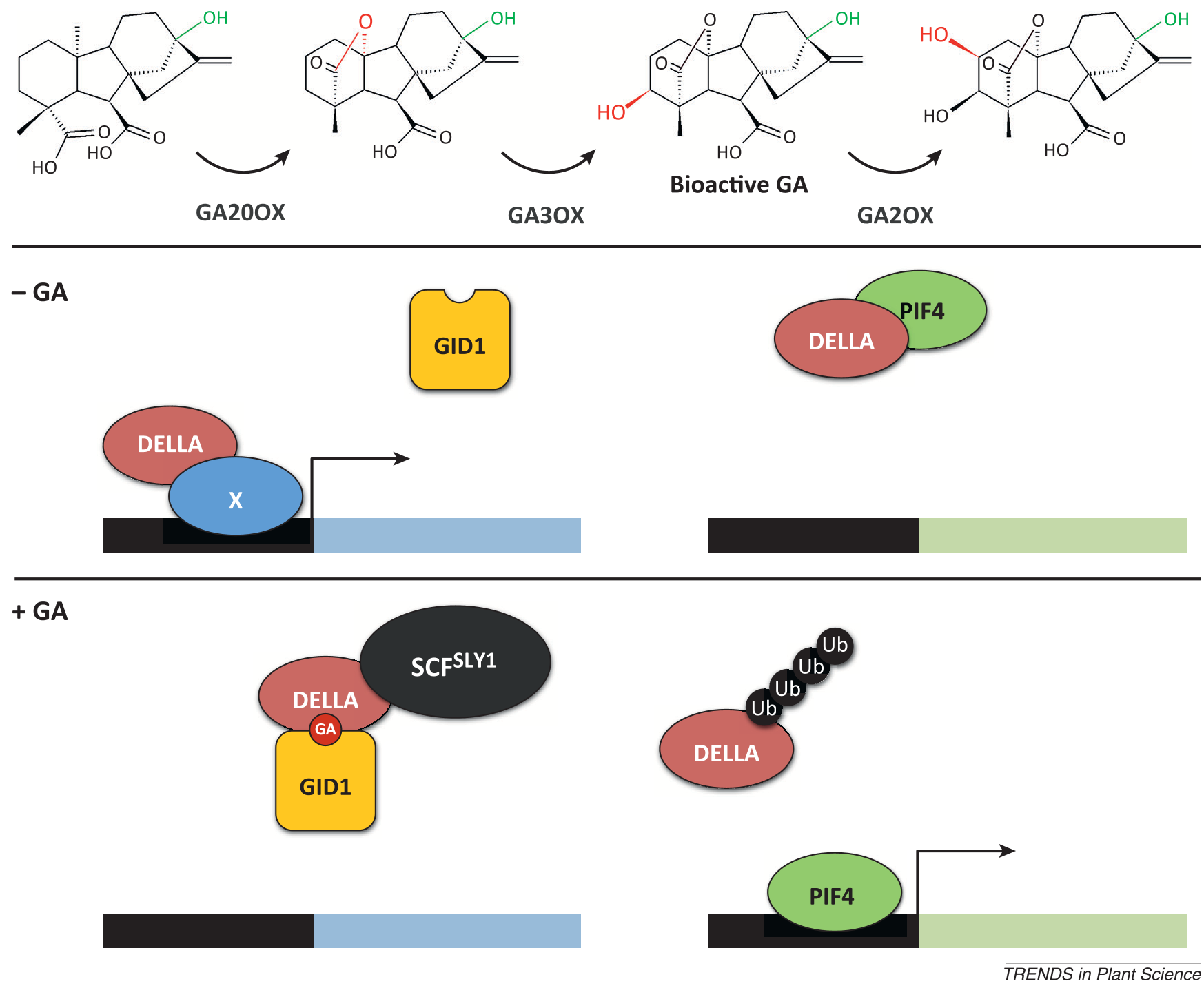
The core mechanism is an "Inhibition of the Inhibitor" logic:
- Absence of GA: DELLA proteins (like RGA or GAI) accumulate and lock down growth-promoting Transcription Factors (TFs) like PIFs.
- Presence of GA: GA binds to the GID1 receptor, which then grabs DELLAs and sends them to the "cellular trash can" (the SCF-SLY1 proteasome complex).
- Release: Once DELLAs are gone, growth effectors are free to activate genes for cell wall loosening (Expansins, XTHs) and cell cycle progression.
Deep Dive: The Hypocotyl Case Study
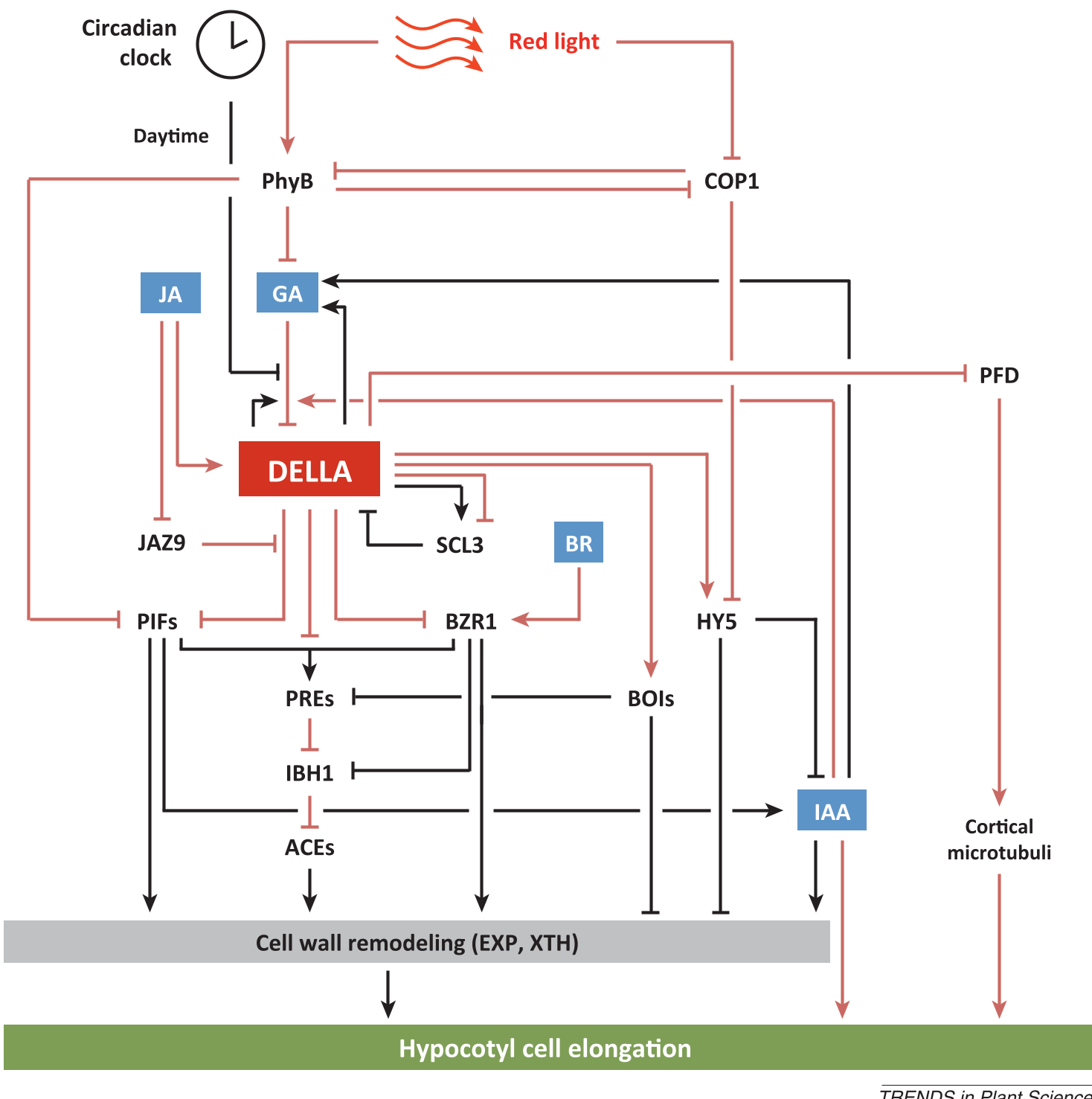
The researchers use the Arabidopsis hypocotyl (the baby stem) as a model to show how light and GAs talk to each other.
- In the Dark: GA levels are high, DELLAs are low, and the plant stretches rapidly.
- In the Light: Light stabilizes DELLAs and degrades PIFs, slamming on the brakes.
This regulation isn't just about genes; it's about Protein Interactomics. DELLAs physically "sequester" TFs, preventing them from docking onto DNA. They also interact with the cytoskeleton (microtubules) to determine the direction of growth.
Experimental Insights: The Meta-Transcriptome
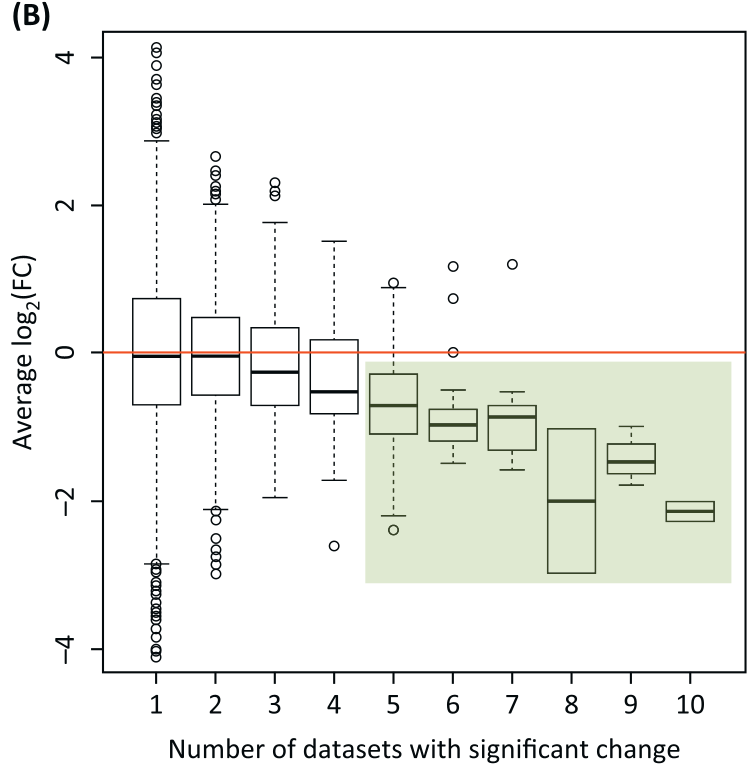
The authors re-analyzed 12 major datasets. The result? Extreme Tissue Specificity.
- Only a tiny fraction of genes were "shared" across all GA experiments.
- The most consistent genes (like SCL3 and GA3ox1) are involved in feedback loops—the plant constantly tries to maintain GA homeostasis.
- In growing tissues, GAs rapidly regulate cell cycle inhibitors (like KRP2 and SIM) and cell wall effectors, often within 30 minutes.
Critical Analysis & Future Outlook
The Takeaway: We are moving from "General Dwarfing" to "Precision Engineering." By targeting specific DELLA-TF interactions, we can potentially decouple growth from stress responses.
Limitations:
- Spatial Resolution: We still need better tools (like Laser Capture Microdissection) to see what happens in a single cell layer.
- Climate Change: Some GA-lowering traits fail at higher CO2 levels, meaning our current "Green Revolution" crops might underperform in a future climate.
Future Work: The integration of Mathematical Modeling with high-resolution Interactomics will be the backbone of the next generation of resilient crops.