
GAs & DELLAs: Decoding the Regulatory Hubs of the Green Revolution
Gibberellins and DELLAs: central nodes in growth regulatory networks
This review synthesized the molecular regulatory networks of Gibberellins (GAs) and DELLA proteins, identifying them as central hubs connecting environmental signals to plant growth. By integrating a meta-analysis of Arabidopsis transcriptomes, the study highlights how GAs achieve SOTA-level growth coordination through tissue-specific protein interactions and rapid transcriptional reprogramming.
TL;DR
Gibberellins (GAs) and their downstream repressors, DELLA proteins, are the molecular "engines" behind the semi-dwarf crops of the 1960s. This review redefines GAs not just as simple growth-promoting hormones, but as central nodes in a highly dynamic, tissue-specific network. By integrating transcriptomic meta-analysis with phenotypic case studies, the authors reveal that plant growth is governed by rapid protein-level shifts and complex hormonal crosstalk rather than static genetic blueprints.
Background: The Hub of Plant Plasticity
In the academic coordinate system, this work serves as a critical bridge between classical plant physiology and modern systems biology. While the first Green Revolution relied on the "What" (reducing height via GA manipulation), this paper investigates the "How"—the intricate logic of how DELLAs sequester transcription factors to balance survival and expansion.
Problem & Motivation: Beyond Linear Signaling
Traditional views of GA signaling were often too reductionist. The authors argue that previous studies suffered from "dilution bias," where profiling whole seedlings obscured the rapid, localized responses in proliferating or expanding cells. Understanding the Why behind GA efficacy requires looking at the protein interactome, where DELLAs act as molecular "brakes" that are released through ubiquitin-mediated degradation.
Methodology: The Systems Biology Lens
The core insight lies in the meta-analysis of "micro-shifts." By re-analyzing raw data from 12 separate experiments, the researchers identified a core GA-homeostasis module versus a highly variable growth-effector module.
The Hypocotyl Case Study
The paper uses the Arabidopsis hypocotyl to illustrate a tri-antagonistic bHLH system. In this model, DELLAs don't just "stop" growth; they physically block TFs like PIF4 and BZR1 from binding to DNA.
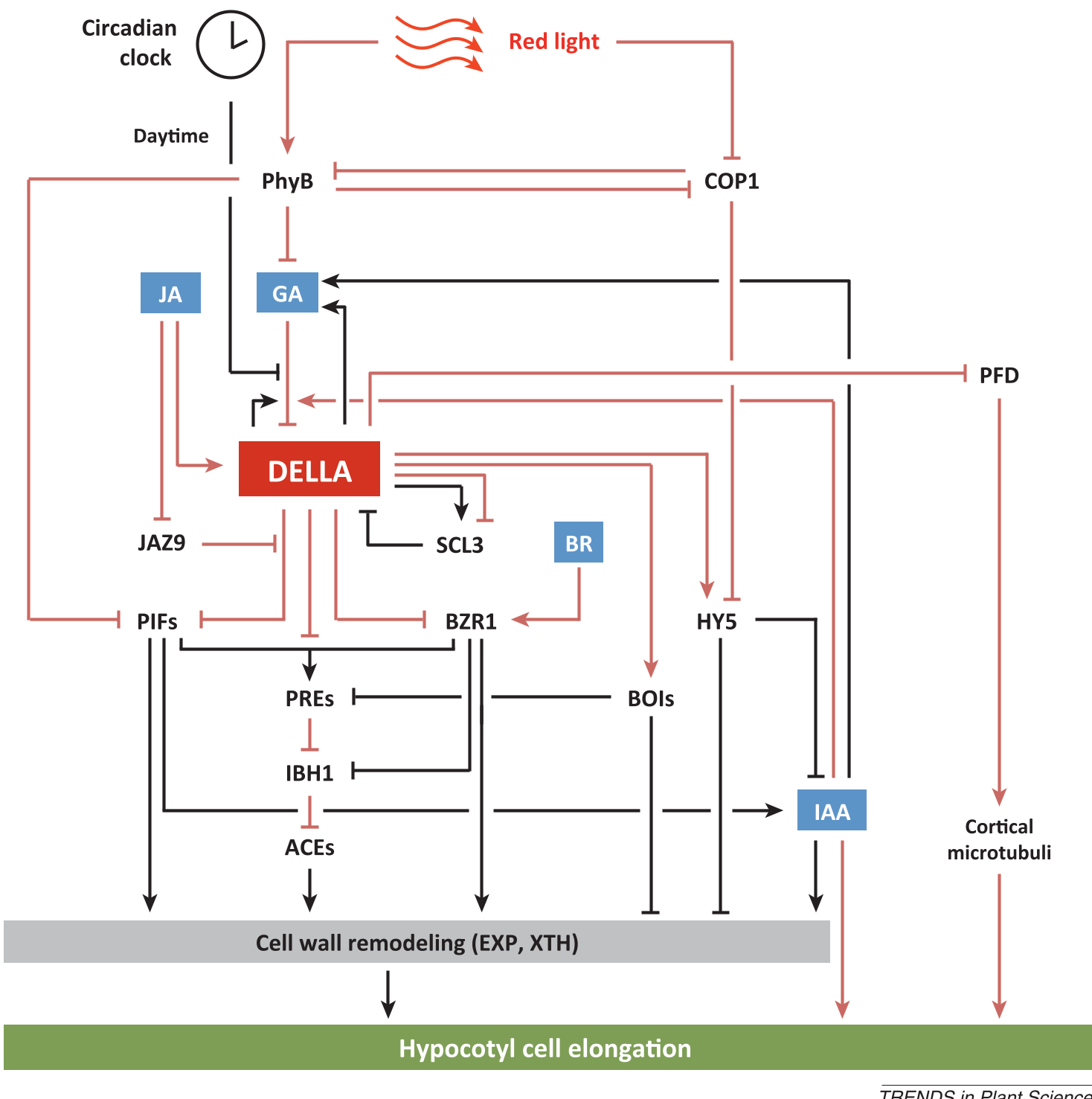 Figure 1: The growth-regulating network where GA, Light, and other hormones converge on the DELLA-PIF module.
Experiments & Results: The Meta-Transcriptome Reality
The results confirm a surprising lack of overlap between different GA datasets. Out of thousands of genes, only a handful (like SCL3 and GA20OX2) showed consistent changes across multiple experiments. This suggests that the GA "signature" is extremely context-dependent.
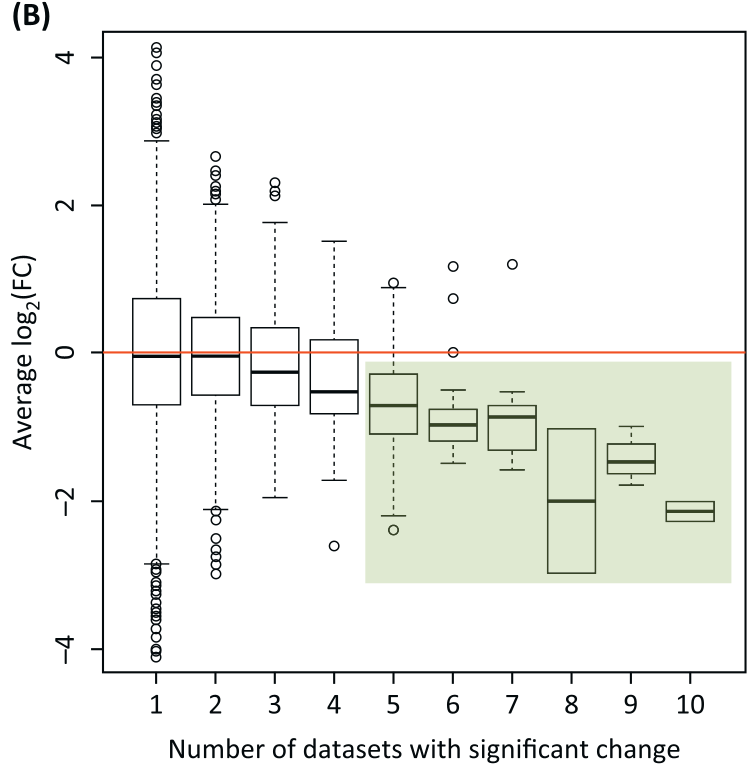 Figure 2: Statistical breakdown showing that only a few genes are universal GA responders, primarily those involved in negative feedback loops.
Key findings include:
- Rapid Kinetics: Transcriptional outputs occur within 30 minutes, powered by pre-existing protein complexes.
- Hormonal Crosstalk: GAs regulate auxin transport and brassinosteroid signaling components, positioning them as "master integrators."
- Cell Cycle Control: DELLAs inhibit cell division by upregulating inhibitors like KRP2 and SIM.
Critical Analysis & Conclusion
Takeaway
The paper successfully argues that the future of agricultural improvement lies in Interactomics. If we want a Second Green Revolution, we shouldn't just target hormone levels; we should target the specific protein-protein interfaces that allow plants to distinguish between "shade" and "stress."
Limitations
A major hurdle identified is the "Proteomic Gap." The authors admit that identifying DELLA interactors via Affinity Purification (AP-MS) in planta remains notoriously difficult, likely due to the transient nature of these complexes.
Future Outlook
The next frontier is 4D modeling—integrating spatial hormone dilution (as cells expand, GA concentrations drop) with subcellular molecular logic. As CO2 levels rise, the "old" Green Revolution genes may fail, making this systems-level understanding essential for climate-resilient engineering.