
SmartCityZen: Unlocking Global Soft Biometrics from the Social Media Lens
Understand Me if You Can! Global Soft Biometrics Recognition from Social Visual Data
The paper introduces SmartCityZen, a novel framework designed to collect and integrate multi-modal social data (textual and visual) from Facebook and Google+. It leverages the Face++ system to extract global soft biometrics—specifically age, gender, race, and smile intensity—from user profile pictures to create the Sm@rtCityZenDB dataset.
Executive Summary
TL;DR: This paper presents SmartCityZen, an end-to-end pipeline that automates the extraction of "soft biometrics"—demographic traits like age, gender, race, and emotional state—directly from Facebook and Google+ profile data. By combining automated data scraping with the high-precision Face++ recognition engine, the researchers demonstrate that social visual data can be converted into structured demographic insights with accuracies exceeding 94%.
Context: Within the biometrics landscape, this work bridges the gap between traditional identity verification and social media analytics, positioning soft biometrics as a key driver for personalizing the future of "Smart City" digital services.
The "Invisible" Profile: Problem & Motivation
Most social media analysis has historically focused on what users say (textual sentiment analysis) or what they like. However, the researchers argue that the most valuable information lies in the profile picture—a visual anchor that remains underutilized.
Existing methods often suffer from:
- Data Fragmentation: Analyzing Twitter (text-heavy) while ignoring the visual richness of Facebook.
- Single-Trait Focus: Prior works might predict gender or age, but rarely a global suite of behavioral and physical traits.
The motivation here is clear: If we can "understand" the user behind the profile automatically, we can build more empathetic and efficient digital ecosystems.
Methodology: The SmartCityZen Architecture
The proposed framework is structured into a logical flow from raw data to actionable insights.
1. The Sm@rtCityZen Pipeline
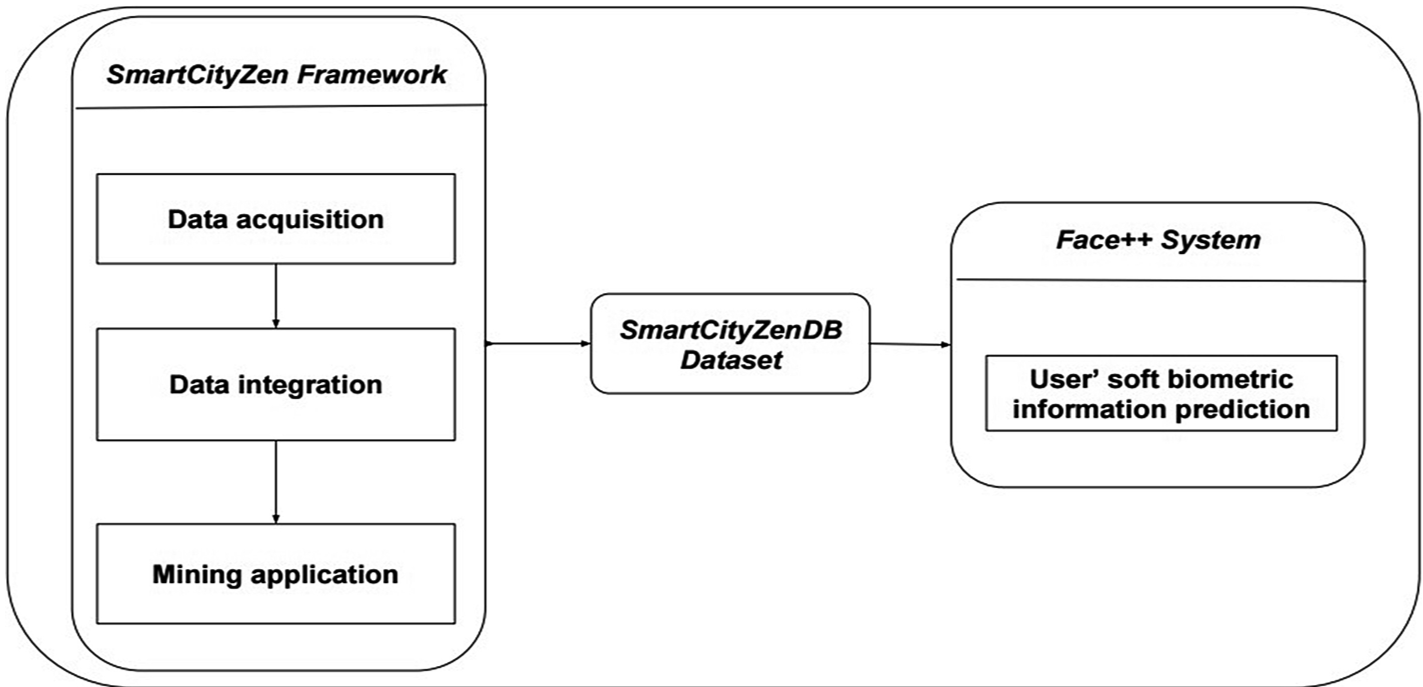
The system operates via three distinct modules:
- Data Acquisition: A scraper that interfaces with social APIs to pull basic info (Music, Books, Sports) and profile images.
- Data Integration (Sm@rtCityZenDB): A relational database (PHPMYadmin) that merges textual preferences with visual assets.
- Mining Application: The "brain" of the system.
2. Deep Visual Recognition (Face++)
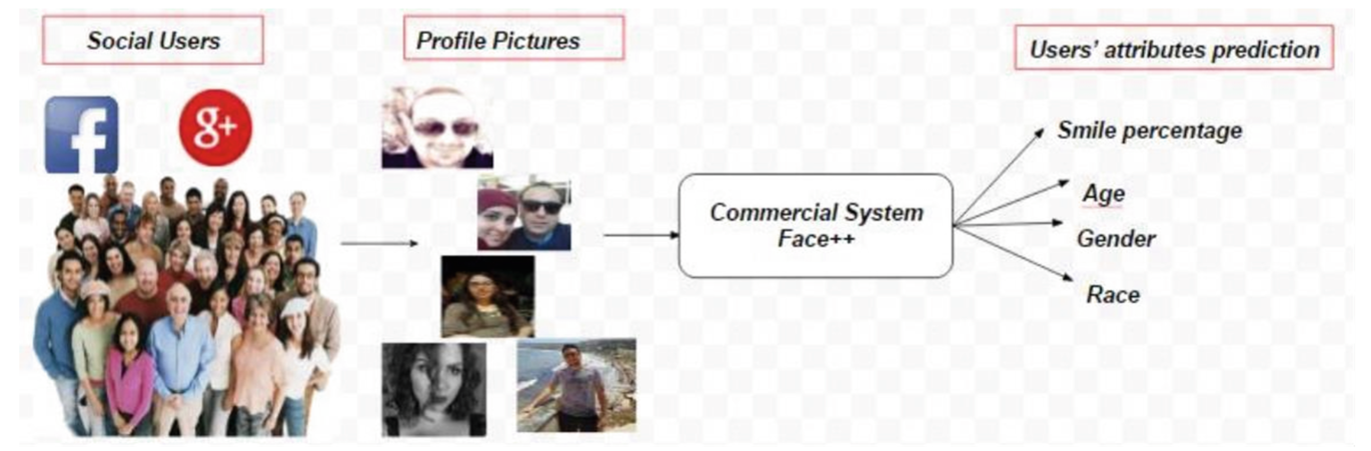
Instead of building a classifier from scratch, the authors utilize the Face++ engine. The technical intuition lies in Facial Landmark Localization. The system identifies 83 specific facial points (mapping the eyes, eyebrows, nose, and jawline). This high-dimensional feature vector is then fed into pre-trained deep neural networks to categorize the user.
Experiments & Results: Quantifying the Visual Signal
The authors tested their system on their newly created Sm@rtCityzenDB, which includes diverse subjects across varying demographics.
Performance Metrics
The results show that soft biometrics are surprisingly robust even with "in-the-wild" social media photos:
| Soft Biometric | Accuracy |
|---|---|
| Smile Detection | 100% |
| Gender | 98% |
| Age | 96% |
| Race | 94% |
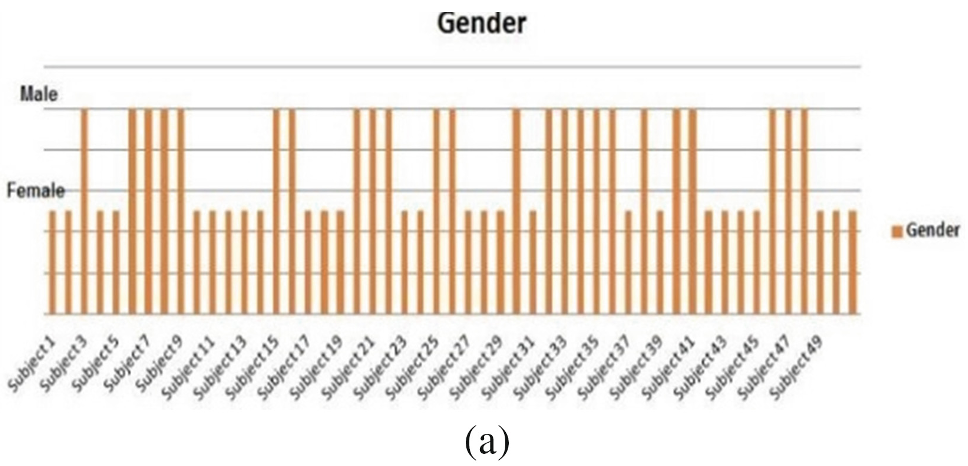
Beyond simple classification, the system can quantify "Smile Intensity," providing a continuous variable for emotional analysis. The experiments showed a nearly balanced gender split (48% M / 52% F) and a concentration of users in the 20-30 age range (38%).
Critical Insight & Future Outlook
The primary value of this research is its integration of textual preferences with physical traits. By knowing a user is a "25-year-old female who likes Jazz and Sports," a search engine can move beyond generic results to hyper-personalized delivery.
Limitations: The current sample size () is small for a global social media study. Furthermore, the paper relies heavily on a third-party API (Face++), which acts as a black box for the underlying feature extraction logic.
Next Steps: The authors intend to integrate this framework into a Personalized Search Engine. For the broader field, this work signals a shift where our social media "avatars" become the primary data source for understanding human demographics at scale.