
Globalization and the Time Divide: Why Time is the New Currency in AI-Driven Marketing
Globalization - Understanding the Correlations Between Attitudes Towards Globalization, Time, Resources and Financial Resources
This conceptual paper introduces a dual-segmentation framework categorized into "Time-Rich" and "Time-Poor" consumers to analyze behavior in the age of globalization and AI. It bridges classical economic theories with modern e-commerce realities, identifying how time resources dictate whether a consumer aims to "save time" (goal-oriented) or "kill time" (experiential).
TL;DR
In an era of hyper-globalization, the scarcest resource is no longer money, but time. This paper redefines market segmentation by splitting consumers into Time-Rich and Time-Poor categories. It argues that while AI has the potential to optimize our lives, current e-marketing often contributes to "time-sickness." The success of future e-commerce lies in shifting from a "push" model to a "time-saving" model.
The Paradox of Prosperity: Motivation and Pain Points
We live in what economists call "affluent societies." According to Maslow’s hierarchy, most physical needs in developed nations are satisfied. However, we are witnessing a new crisis: the Time Divide.
The author points out a historical paradox: historically, wealth was associated with leisure. Today, the opposite is true. High-income professionals are frequently "Time-Poor," while those with lower financial resources (the retired, the unemployed) are "Time-Rich."
The Problem with Current AI Marketing:
- Information Overload: Globalization has exploded the variety of products, but searching for them is a "consumption of time."
- Ad Friction: AI currently powers intrusive e-marketing that forces users to wait through videos or close pop-ups, further depleting the time resources of the "Time-Poor."
Methodology: Mapping the Time-Rich and Time-Poor
The paper utilizes a tiered segmentation approach to understand how different groups interact with the market.
1. Macro-Segmentation (Demographics)
- Time-Rich: Retired individuals, students, and the unemployed. Their behavior is focused on "killing time" or social engagement.
- Time-Poor: Professionals and parents. Their behavior is focused on "saving time" and efficiency.
2. Situational Matrix (Buying vs. Consumption)
The author introduces a 2x2 matrix to classify consumer situations:
(Note: This represents the Author's classification of Routine/Non-Routine vs. Buying/Consumption)
- Routine Buying (Time-Poor): Needs to be "done as fast as possible" (e.g., Grocery apps, automated banking).
- Non-Routine Consumption (Time-Rich): Focuses on "the experience" (e.g., Gaming, social shopping, long-form entertainment).
The Role of AI and E-Commerce
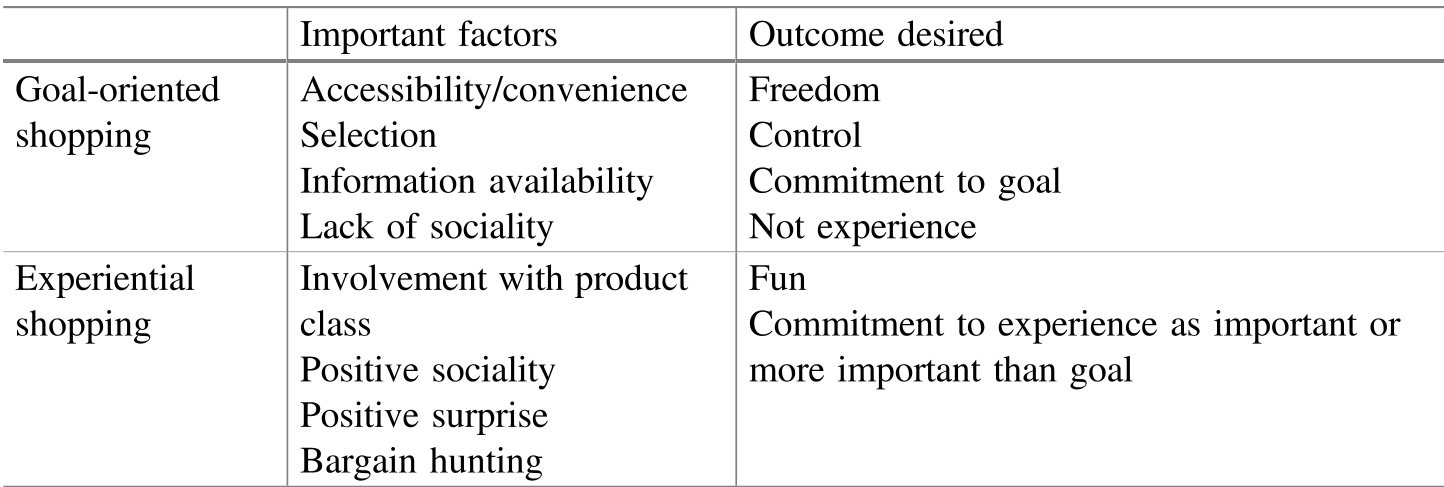
The paper cites research by Hoffman and Wolfinbarger to highlight that Goal-Oriented shoppers (Time-Poor) desire control and freedom from social interaction. Conversely, Experiential shoppers (Time-Rich) thrive on "the hunt"—auctions, surprise, and community.
The "Human Agent" Evolution
A fascinating insight from the paper is the concept of Mixed Households. In a family where some members are Time-Poor and others are Time-Rich (like a grandparent and a busy parent), the Time-Rich individual acts as a "human agent," doing the research and bargain hunting for the others. The author suggests that AI must eventually fulfill this "Grandparent Role"—filtering the noise and presenting only the decision-ready options to the Time-Poor user.
Deep Insight: Beyond "Push" Marketing
The core critique of the paper is directed at how AI is currently deployed in e-commerce. Currently, AI is used for "Big Data mining" to push products. However, the author argues that the next leap in AI must be Knowledge Management.
Instead of making a user scroll through categories, an intelligent e-commerce agent should:
- Immediately confirm availability/non-availability.
- Combine comparison and logistics into a single "relief of problem."
- Respect the "Time-Poverty" of the user by reducing clicks rather than increasing engagement time.
Critical Analysis & Conclusion
Takeaway
The paper serves as a wake-up call for technical architects of e-commerce platforms. If your AI model is optimized for "Time on Page" (Engagement), you might be alienating your most valuable segment—the Time-Poor high-earners.
Limitations
As a conceptual paper, it lacks large-scale quantitative validation of how Time-Poverty specifically affects AI conversion rates across different geographic regions. The distinction between "Time-Rich" and "Time-Poor" is also fluid; a single consumer can switch roles depending on the day of the week (Workday vs. Weekend).
Future Outlook
The next generation of SOTA e-commerce will likely feature "Time-Aware AI." These systems will detect user urgency through navigation patterns and eye-tracking, switching between "Discovery Mode" (for the Time-Rich) and "Precision Mode" (for the Time-Poor).