
Beyond Waning Immunity: How Glycan Adjuvants are Rewiring mRNA Vaccines for Global Variants
A glycan-based adjuvant expands the breadth and duration of protection of mRNA-based vaccines.
This study introduces Mannadjuvant (MA), a glycan-based formulation of fungal mannan and aluminum hydroxide targeting the dectin-2 receptor, specifically designed to enhance mRNA-based vaccines. When combined with the SARS-CoV-2 BNT162b2 (WA1) mRNA vaccine, MA significantly increases the magnitude, duration, and breadth of the immune response, providing SOTA protection against highly divergent variants like Omicron BA.5 and XBB.1.5 in both mice and non-human primates.
TL;DR
Researchers have developed a "Mannadjuvant" (MA) that, when added to standard mRNA vaccines, creates a massive leap in both how long protection lasts (over 500 days in animal models) and how well it handles variants like Omicron. By triggering a specific inflammatory "crosstalk" between Interferon and IL-1, this method forces the immune system to produce a more diverse array of antibodies, effectively overcoming the "antigenic imprinting" that makes boosters less effective over time.
The Problem: The "Memory" Trap
The success of mRNA vaccines during the COVID-19 pandemic is undeniable, but two cracks have appeared in the armor: waning durability and variant escape.
Our immune systems are prone to a phenomenon called antigenic imprinting. When we are exposed to a new variant (like XBB.1.5) after being vaccinated against the original strain (WA1), our B cells "lazy-load" memory from the first encounter rather than learning the new features of the variant. This results in a narrow immune response that misses the mutations defining the new threat.
The Breakthrough: Fungal Intelligence
The authors of this study looked to nature—specifically how our bodies recognize fungi. They combined mannan (a fungal sugar) with aluminum hydroxide to create Mannadjuvant (MA). This adjuvant targets the dectin-2 receptor on innate immune cells.
The Core Mechanism: The IFN/IL-1 Feedback Loop
The "magic" isn't just in the stimulation; it’s in the wiring. The study found that MA creates a sustained environment in the draining lymph nodes.
- IL-1 Signaling: MA triggers the inflammasome, producing IL-1.
- IFN Feedback: IL-1 initiates the production of Type I Interferons.
- The Loop: These two signals reinforce each other, keeping the "instructional" environment of the lymph node active for much longer than a standard mRNA dose.
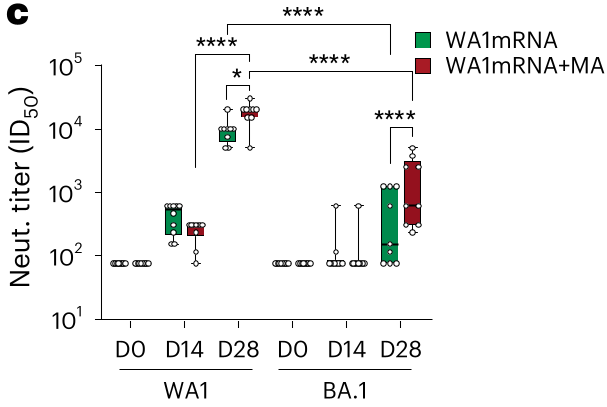 Figure 1: Comparison of immune responses. MA significantly extends the duration of IgG levels and neutralizing activity.
Methodology: Expanding the B-Cell Repertoire
The researchers used Single-cell RNA sequencing (scRNA-seq) and BCR sequencing to see exactly what was happening inside the Germinal Centers (the "training camps" for B cells).
They discovered that MA:
- Promotes Clonal Diversity: Instead of a few "dominating" B-cell clones, the repertoire was "flatter" and more balanced.
- Boosts Somatic Hypermutation (SHM): It forces B cells to undergo more "mutational practice," leading to antibodies that can grab onto even heavily mutated spike proteins.
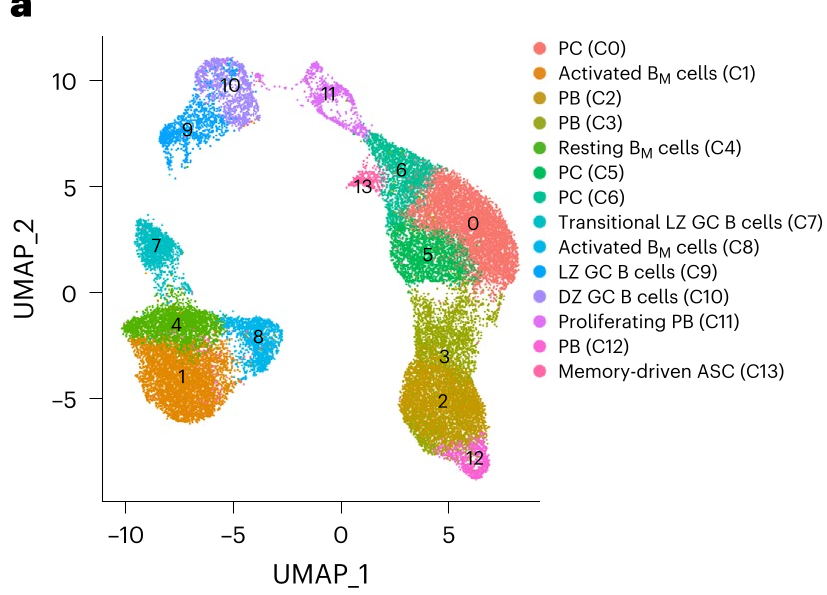 Figure 3: scRNA-seq reveals that MA expands mature plasma cell lineages and increases clonal evenness compared to standard mRNA.
Results: Crushing the Challenge
The real-world test came with the BA.5 challenge in humanized mice. While mice with the standard mRNA vaccine showed reduced viral loads, they still had significant lung damage. The MA-adjuvanted group, however, had zero detectable virus in their lungs.
In Non-human Primates (NHPs), the results were equally striking. The monkeys showed a significant increase in nAbs against XBB.1.5, proving that the glycan-based strategy translates from rodents to higher primates without increasing harmful side effects (reactogenicity).
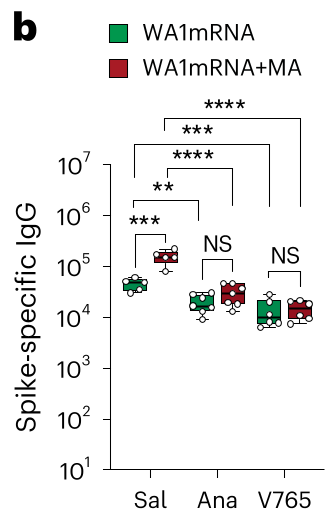 Figure 7: MA provides superior protection in K18-hACE2 mice (lung viral titers at zero) and NHPs.
Critical Insight: Breaking the Imprinting
Perhaps the most significant finding is that MA can bypass prior immunity. Even when mice were already "imprinted" with the original WA1 strain, a boost with XBB mRNA + MA successfully redirected the immune system to recognize the new variant as effectively as if it were seeing it for the first time.
Conclusion & Future Outlook
This paper shifts the narrative from "mRNA doesn't need adjuvants" to "Adjuvants make mRNA better." By precisely tuning the inflammatory program through fungal glycans, we can potentially move toward a "once-every-few-years" vaccine schedule rather than constant seasonal boosters.
Limitations: While the results in NHPs are promising, human clinical trials will need to monitor long-term safety and the potential for auto-immune interference, although this study found no evidence of broken self-tolerance in animal models.