
Beyond the Boost: How Fungal Glycans Breakthrough mRNA Vaccine Limits
A glycan-based adjuvant expands the breadth and duration of protection of mRNA-based vaccines.
This study introduces mannadjuvant (MA), a glycan-based adjuvant combining fungal mannan and aluminum hydroxide targeting the dectin-2 receptor, to enhance mRNA vaccines. When combined with the SARS-CoV-2 ancestral (WA1) mRNA vaccine, MA significantly increases the magnitude, duration, and breadth of the immune response, providing SOTA protection against multiple variants of concern (VOCs) like Omicron.
TL;DR
Researchers have developed mannadjuvant (MA), a unique formulation of fungal mannan and alum that, when added to standard mRNA vaccines, shatters the traditional limits of duration and variant protection. By activating the dectin-2 receptor, this adjuvant rewires the body’s inflammatory response to create "smarter" and longer-lasting immune memory, effectively neutralizing variants like Omicron even when using an outdated vaccine strain.
The "Original Sin" of mRNA Vaccines
Since the rollout of COVID-19 vaccines, two persistent problems have plagued global health:
- Immune Waning: Neutralizing antibody titers drop significantly within months.
- Antigenic Imprinting: The immune system becomes "stuck" on the first version of the virus it sees (the WA1 strain), making it less efficient at responding to new variants (VOCs).
Existing mRNA-LNP platforms provide their own innate signals, but they are often transient. The authors of this paper hypothesized that by "tuning" the early inflammatory burst using specific Pattern Recognition Receptors (PRRs), they could force the immune system to produce a more diverse and resilient B-cell repertoire.
Methodology: The Dectin-2 Strategy
The core innovation is Mannadjuvant (MA). While aluminum hydroxide (alum) is a classic adjuvant, it is often insufficient for mRNA platforms. By complexing it with mannan (derived from Candida albicans), the authors targeted dectin-2, an antifungal PRR.
The Inflammatory Feedback Loop
Through bulk RNA-seq and functional assays, the team discovered that MA creates a "sweet spot" of inflammation. Unlike standard mRNA vaccines that cause a quick spike in cytokines that disappears by day 3, MA sustains Type I Interferon (IFN) and IL-1 signaling. This isn't just "more" inflammation; it's a re-wired logic gate where IL-1 and IFN feed into each other, maintaining the activity of the draining lymph node for weeks.
 Figure 1: Comparison of standard mRNA vs. MA-enhanced mRNA delivery and the resulting dLN response.
Breaking the Variant Barrier
One of the most striking findings was the effect on Somatic Hypermutation (SHM). Single-cell BCR sequencing revealed that MA increased the diversity of B-cell receptors. Instead of just making more of the same antibodies, the immune system produced better antibodies that could recognize "hidden" or mutated parts of the viral Spike protein.
Results in Primates and Humanized Mice
- Longevity: In mice, the neutralizing response lasted 500 days.
- Broad Protection: Neutralizing titers against XBB.1.5 and BA.5 were effectively "rescued" in animals given the ancestral WA1 vaccine plus MA.
- Real-world Challenge: K18-hACE2 mice (humanized) challenged with the BA.5 variant showed no detectable virus in the lungs when treated with the MA-boosted vaccine.
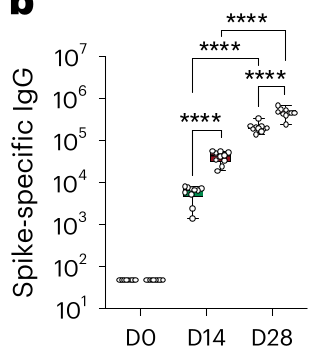 Figure 2: Potentiation of neutralizing antibody titers across various SARS-CoV-2 strains over time.
Critical Insight: Why Does This Work?
The secret lies in the Germinal Center (GC). MA causes the GCs—the "training camps" for B-cells—to become significantly more active and stay open longer. By expanding the Light Zone and Dark Zone populations of the GC, the body has more time to "iterate" on antibody designs, eventually stumbling upon versions that work against mutated variants.
Crucially, this was achieved without increasing reactogenicity. In Non-Human Primates (NHPs), there were no adverse spikes in body temperature or systemic inflammation compared to standard mRNA vaccines, proving that local "tuning" is safer than global immune stimulation.
Conclusion and Future Outlook
This work represents a major shift in vaccinology. It suggests that we don't necessarily need to update the mRNA sequence every time a new variant appears. Instead, by adding a glycan-based "booster" like MA, we can empower the immune system to broaden its own horizons.
Limitations: While the results in NHPs are promising, human clinical trials are essential to confirm if the dectin-2 pathway in human lymph nodes behaves identically to the mouse and primate models. Additionally, the industrial scaling of high-purity mannan extraction requires robust quality control.
The Takeaway: Fungal glycans are no longer just pathogen markers—they are the key to unlocking the full potential of mRNA technology.