
Go-myLife: Bridging the Generational Digital Divide through Context-Aware Networking
Go-myLife: a context-aware social networking platform adapted to the needs of elderly users
Go-myLife is a context-aware social networking platform specifically designed for the elderly (50+), acting as a unified gateway to mainstream social networks like Facebook. It integrates mobile location-based services and participatory design to reduce social isolation and bridge the digital divide for older adults.
TL;DR
Go-myLife is not just another social network; it is a bespoke gateway designed to bring the benefits of Web 2.0 to the elderly. By integrating with mainstream platforms (like Facebook) and adding location-aware features, it helps users aged 50+ combat isolation and stay connected with family through an interface tailored to their specific cognitive and physical needs.
Problem & Motivation: The "Digital Gray Gap"
Despite the explosion of social media, a massive demographic has been left behind. In 2013, only 7% of adults over 65 in the US used social networks compared to 75% of young adults. The barriers aren't just lack of interest; they are structural:
- Incompatibility: Managing multiple logins (OpenID, OAuth) and varying APIs is a massive hurdle for non-digital natives.
- Safety & Trust: Older users often feel exposed on mainstream platforms.
- Physical Limitations: Standard mobile UIs are often too small and complex for users with declining motor skills or eyesight.
The authors' insight was simple: Don't build a new silo. Instead, build a "wrapper" that makes the existing social world accessible and safe for seniors.
Methodology: The Core Architecture
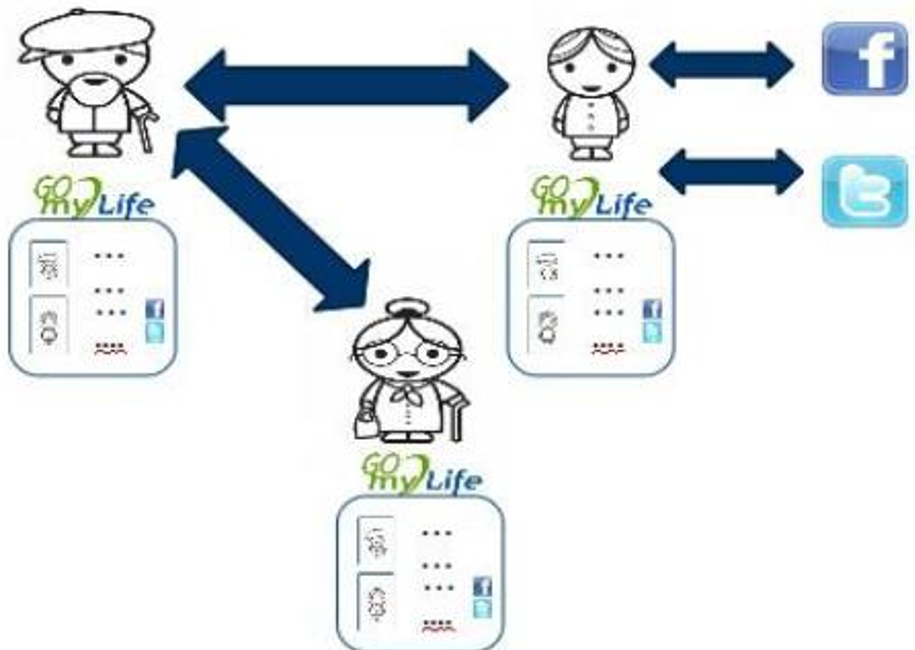
The Go-myLife system is built on a modular "Social Engine" that manages relationships and privacy. Its most distinctive feature is the External Social Networks API, which allows users to view and comment on family updates from mainstream sites without needing to navigate those sites' native (and often confusing) interfaces.
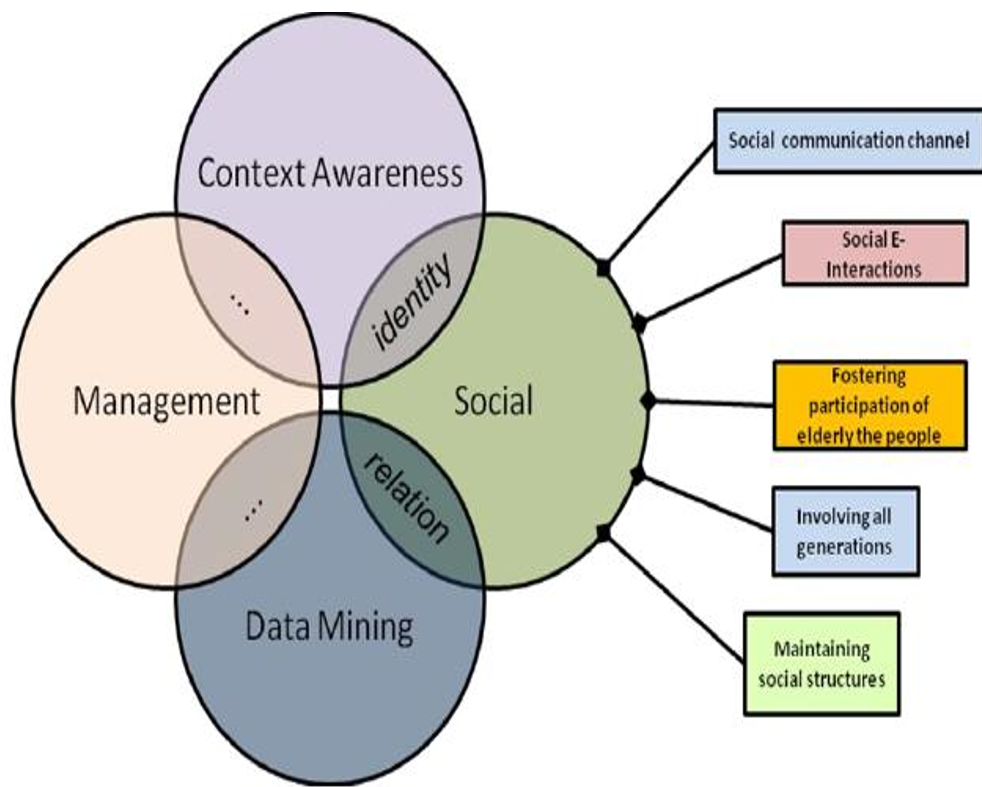
The platform also incorporates context-awareness. By leveraging smartphone sensors, the system can alert users to nearby friends or local community events, facilitating "serendipitous meetings" and increasing the user's confidence when leaving the home.
Experiments & Results: Real-World Lessons
The platform underwent pilot testing with 36 users across the UK and Poland. The results revealed a fascinating dichotomy:
- Social Success: Users felt much safer posting and organizing local events on Go-myLife than on Facebook. It effectively strengthened "local bonding."
- Physical Friction: While the software worked, the hardware struggled. Users faced significant difficulty using maps on small smartphone screens—a phenomenon the authors label as a "senso-motoric" barrier.
Critical Analysis & Conclusion
Takeaway
Go-myLife proves that interoperability is the key to social inclusion. Older adults don't necessarily want "niche" communities; they want to be part of the mainstream conversation without the complexity that usually accompanies it.
Limitations & Future Work
The most glaring limitation found was the screen-size bottleneck. Future research must move beyond standard responsive design and explore "assistive visualization"—perhaps using voice-augmented navigation or high-contrast, simplified spatial representations—to make mobility features truly useful for the elderly.
Ultimately, Go-myLife serves as a blueprint for "AAL" (Ambient Assisted Living) technologies, showing that the social health of our aging population is as dependent on software architecture as it is on community outreach.