
GO!Caronas: Bridging Social Networks and Real-Time Urban Mobility
GO!Caronas: Fostering ridesharing with online social network, candidates clustering and ride matching
This paper introduces GO!Caronas, a ridesharing social network extension that integrates a real-time ridematching algorithm and a clustering-based group formation mechanism. By leveraging the OPTICS clustering algorithm and trajectory discretization, the system successfully matches drivers and passengers with similar spatial-temporal patterns to optimize vehicle occupancy in urban environments.
TL;DR
The paper presents GO!Caronas, an extension of a social network designed to solve the "empty seat" problem in urban traffic. By combining a new ridematching algorithm—which uses trajectory clustering—with a group formation feature, the authors aim to transition carpooling from a manual search process to an automated, real-time social experience.
Positioning: This work bridges the gap between traditional carpooling (scheduled/manual) and modern TNCs (Uber/Lyft), focusing on maximizing the utility of private commutes within a social context.
The Problem: The Loneliness of the Commuter
Despite the rise of megacities, vehicle occupancy rates remain stubbornly low, hovering around 1.4-1.5 persons per vehicle for "house-work" trajectories. The authors identify two main barriers:
- The Matching Paradox: Manually searching for a ride is tedious and often results in mismatching schedules or routes.
- The Trust Gap: Commuters are hesitant to share rides with total strangers without a social or organizational tether.
Methodology: The Science of Similarity
The core innovation of GO!Caronas lies in its three-step ridematching approach designed to identify "Trajectory Soulmates."
1. Trajectory Discretization
Raw GPS data is noisy and dense. The system computes a subset of representative points (POIs) around a trajectory to create a discrete version of the path, making the data manageable for real-time processing.
2. Temporal & Spatial Filtering
To avoid "processing waste," a temporal filter discards users whose schedules don't align. The survivors are then processed through an adapted OPTICS (Ordering Points To Identify the Clustering Structure) algorithm.
3. The Similarity Function
Unlike simple Euclidean distance, the similarity function compares the passenger's start and end points against the entirety of the driver's trajectory. If both points fall within a specific buffer of the driver's path, a match is recognized.
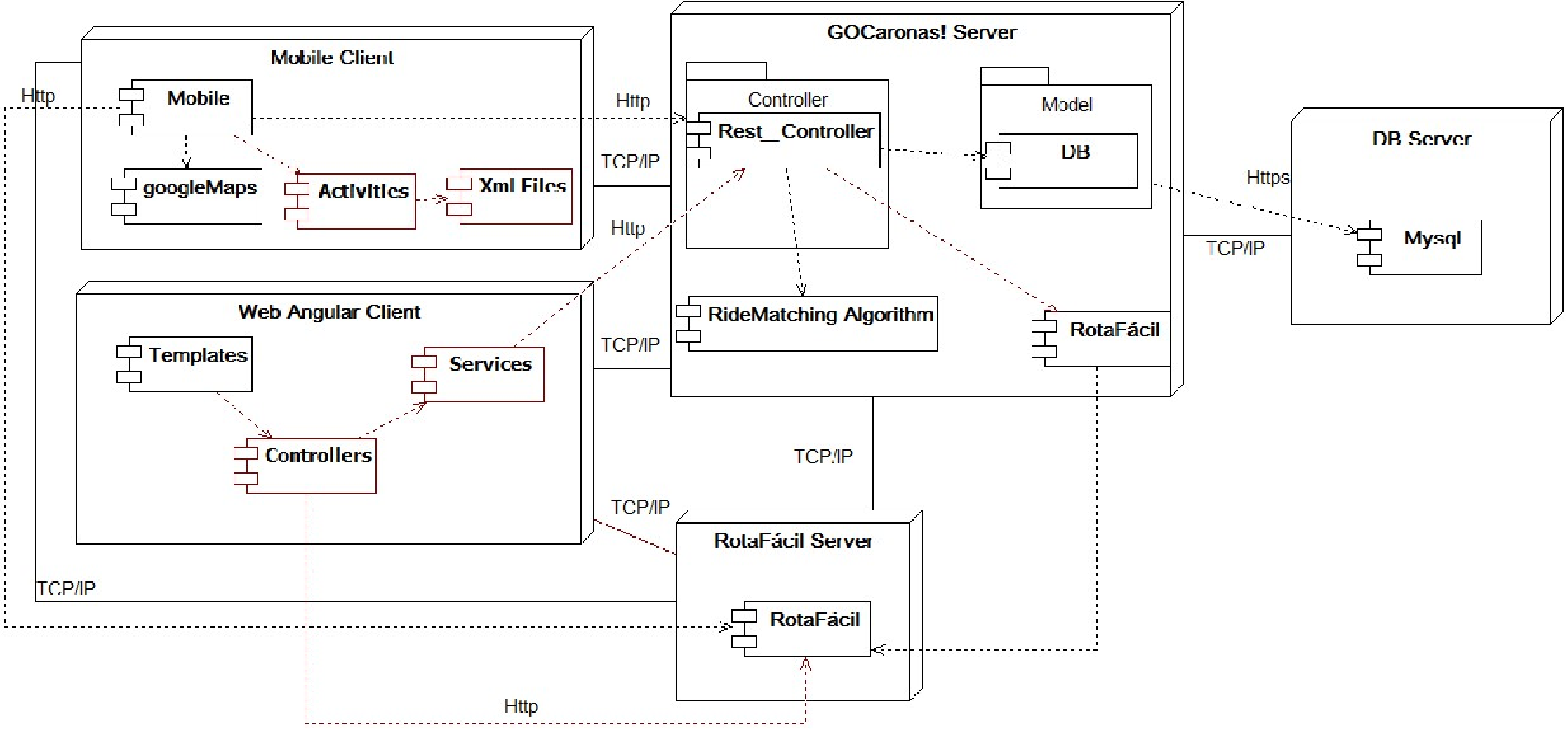 Figure: The MVC Architecture of GO!Caronas, separating the complex clustering logic from the mobile/web interfaces.
Experimental Insights
The authors conducted two types of evaluations: a social prospect study and a technical software profile.
- Social Acceptance: Comparing 2013 to 2015 data, the study found that nearly 60% of users are "Very Much" or "Perfectly" willing to offer rides if they can organize through groups. This validates the "Groups" feature as a psychological incentive for carpooling.
- Technical Performance: Using
cProfile, the team identified that calculating spatial distances is the most expensive operation.
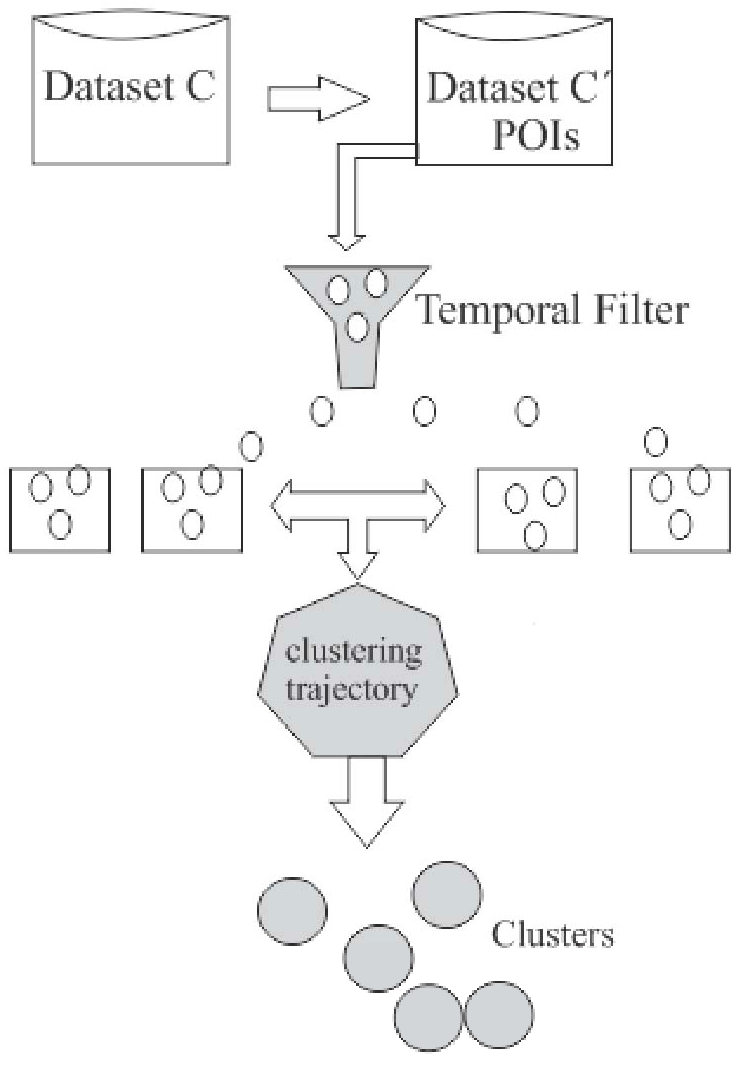 Figure: A real-world visualization showing two distinct users' trajectories successfully grouped into a single cluster by the algorithm.
Critical Analysis & Takeaways
Key Strength: The integration of a social network with automated clustering addresses the "Why" (Trust) and the "How" (Efficiency) simultaneously.
Limitations:
- Scalability: While 25 seconds for 500 trajectories is acceptable for small communities, it may struggle in mega-cities like São Paulo or Beijing without further optimization of the
neighborsfunction using spatial indexing (like R-trees). - Profile Matching: The current version relies heavily on geography; future iterations need to incorporate "Profile Matching" (interests, music taste, etc.) to further lower the friction of sharing a confined space.
Conclusion
GO!Caronas demonstrates that the future of urban mobility isn't just about more roads or better buses, but about smarter utilization of existing assets. By turning the commute into a clustered social activity, we can significantly reduce the number of single-occupancy vehicles on the road.