
Going Online to Meet Offline: The Logistics of Digital Social Coalescing
Going Online to Meet Offline: Organizational Practices of Social Activities through Meetup
This paper presents a mixed-method empirical study on Meetup, the leading Event-Based Social Network (EBSN), investigating how organizers coordinate online groups for offline social activities. Through a survey of 100 fledgling groups and 13 in-depth interviews, the research identifies critical success factors and motivations for digital-to-physical group coalescing.
TL;DR
Why do some local meetups thrive while others vanish within weeks? This research explores the "organizer's journey" on Meetup.com, revealing that the success of offline social groups depends less on who you knew beforehand and more on the subjective quality of the very first meeting. To scale social capital, technology must move beyond simple event listing and start empowering "reluctant leaders."
The "Group Coalescing" Problem
Most social media platforms are "retrospective"—they help you keep up with people you already know. However, Event-Based Social Networks (EBSNs) like Meetup solve a much harder problem: Group Coalescing. This is the process of finding a critical mass of strangers who share a niche interest (like Doberman owners or sketch artists) and moving them into a physical space.
The researchers identified that while finding an event is easy for a user, starting one is a high-friction task. Current systems often place the entire burden of advertising, scouting locations, and managing RSVPs on a single "Initiator."
Methodology: High-Stakes Social Tracking
The study combined three distinct datasets to map the lifecycle of a Meetup group:
- Observational: Tracking 763 new groups in real-time.
- Quantitative: Surveying 100 organizers to test links between attendance and group survival.
- Qualitative: Interviews with 13 veterans to understand the "hidden work" of community building.
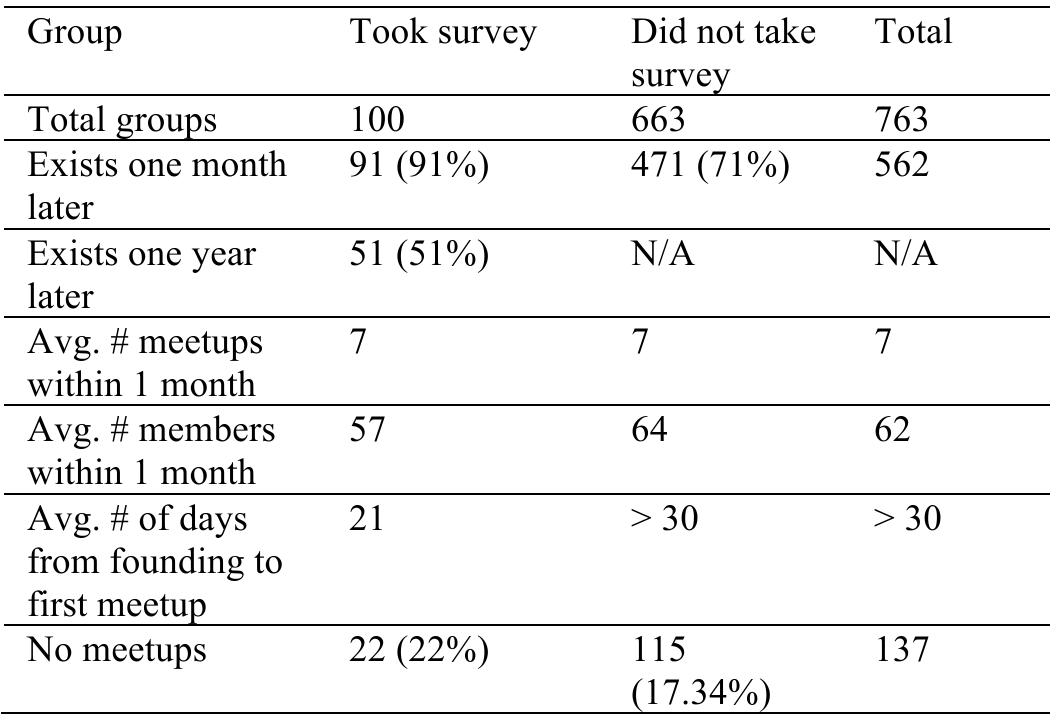 Table 2: Data shows a stark difference in survival rates between those who actively engaged in the study (proxy for high-intent organizers) and the general population.
Key Insights: What Makes a Group Survive?
1. The Power of the First Meetup
The data debunked a common myth: knowing people before starting a group (Hypothesis 1) did not statistically guarantee a successful group. instead, the "Vibe Check" of the first event was the true predictor.
- Ideal Attendance: If the organizer felt the right number of people showed up (not too many, not too few), the group was significantly more likely to exist a year later.
- Active Participation: Quality of interaction beat quantity of members.
2. The Four Archetypes of Organizers
Why do people take on the 80 USD/year cost and the logistical headache? The study found four motivations:
- The Niche Seeker: "I have this weird interest and don't know anyone."
- The Migrator: Moving an existing group from an inferior tool (like Yahoo Groups).
- The Refugee: Starting a new group because they were "kicked out" or disagreed with a previous organizer.
- The Newcomer: Someone in a new city using the group as a "social bridge."
3. The "Invisible" Labor
Organizing is a "second job." From scouting trails for dog hiking to managing waitlists for popular sketch sessions, the logistical load is heavy. Interestingly, successful organizers (like "Jack" the sketch group leader) often view this as "fun" rather than "work," indicating a specific leadership trait.
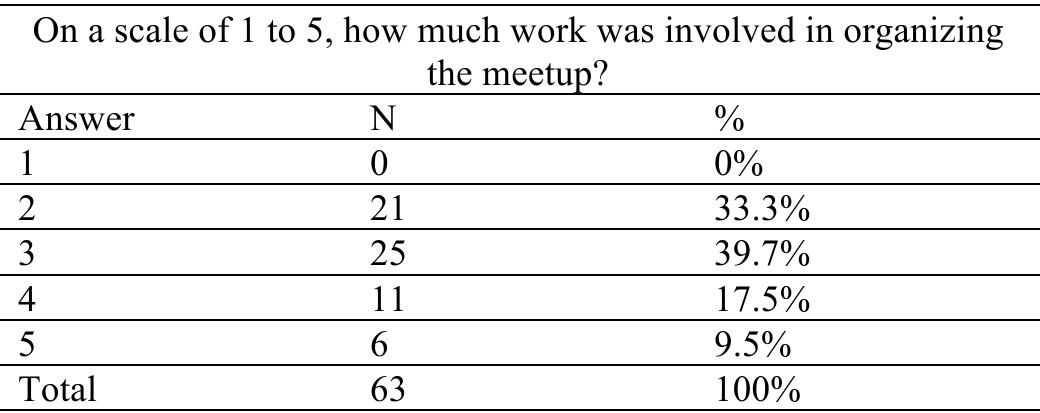 Table 5: Most organizers rated the work at a 3/5, but those who failed often cited "too much promotion" as a barrier.
Future-Proofing Social Tech: From "Leader" to "Community"
The paper concludes with a brilliant design provocation: we need to disperse the leadership role. If a group depends solely on one person, it dies when that person burns out (e.g., the convertible car club). The authors suggest three features for future EBSNs:
- Interest Transparency: Show organizers how many people are searching for a topic before they even create the group.
- Structured Brainstorming: Instead of one leader picking a time/place, allow the community to "co-plan" the event location via lightweight tools.
- In-Search Chat: Let people talk about a niche interest before a group is officially formed to build confidence.
Critical Perspective
This work highlights a fundamental truth about the "Lonely Century": technology can facilitate the meeting, but it cannot yet manufacture the Leadership required to sustain human connection. The future of social platforms lies not in more addictive feeds, but in tools that make "stepping up" less of a burden for the average person.