
Achieving a ‘Good AI Society’: A Transatlantic Tug-of-War Between Regulation and Innovation
Achieving a ‘Good AI Society’: Comparing the Aims and Progress of the EU and the US
This research presents a comparative analysis of the AI strategies released by the European Union (EU) and the United States (US). It investigates their competing visions for a "Good AI Society," evaluating how the EU prioritizes a rights-based regulatory framework while the US emphasizes a laissez-faire, innovation-centric model.
TL;DR
As Artificial Intelligence reshapes the global landscape, the EU and the US have moved from vague ethical guidelines to distinct political visions. This paper by Roberts et al. reveals a fundamental divide: the EU is building a "regulatory fortress" centered on human rights, while the US maintains a "frontier spirit" focused on R&D and market leadership. The authors argue that while the EU's model is more ethically robust, it lacks the industrial muscle to lead, whereas the US approach risks sacrificing civil liberties for the sake of technological speed.
Problem & Motivation: Beyond the AI "Arms Race"
Most tech commentary focuses on who is "winning" the AI race in terms of FLOPS and funding. However, Roberts et al. argue that this ignores the more critical question: What kind of society are we building with this technology?
The authors identify a gap in scholarly work: previous analyses failed to provide a long-term political vision for a "Good AI Society." They contend that "good" is not a universal constant but a culturally dependent goal. The challenge lies in navigating Ethical Pluralism—respecting cultural differences without falling into the trap of moral relativism.
Methodology: The EU’s Rights-First vs. the US’s Innovation-First
The researchers deconstruct the governance strategies of both superpowers by analyzing recent landmark documents like the EU's AI Act and the US’s National AI Initiative Act.
1. The EU Approach: Trustworthy AI
The EU has pivoted from viewing AI as a sub-field of robotics to a pervasive, unembodied risk factor. Their vision rests on three pillars:
- Trustworthy AI: Systems must be lawful, ethical, and robust.
- Risk-Based Regulation: Prohibiting "unacceptable" risks (like social scoring) while strictly regulating "high-risk" applications.
- Digital Sovereignty: Reducing dependence on US and Chinese tech giants to ensure European values are not bypassed.
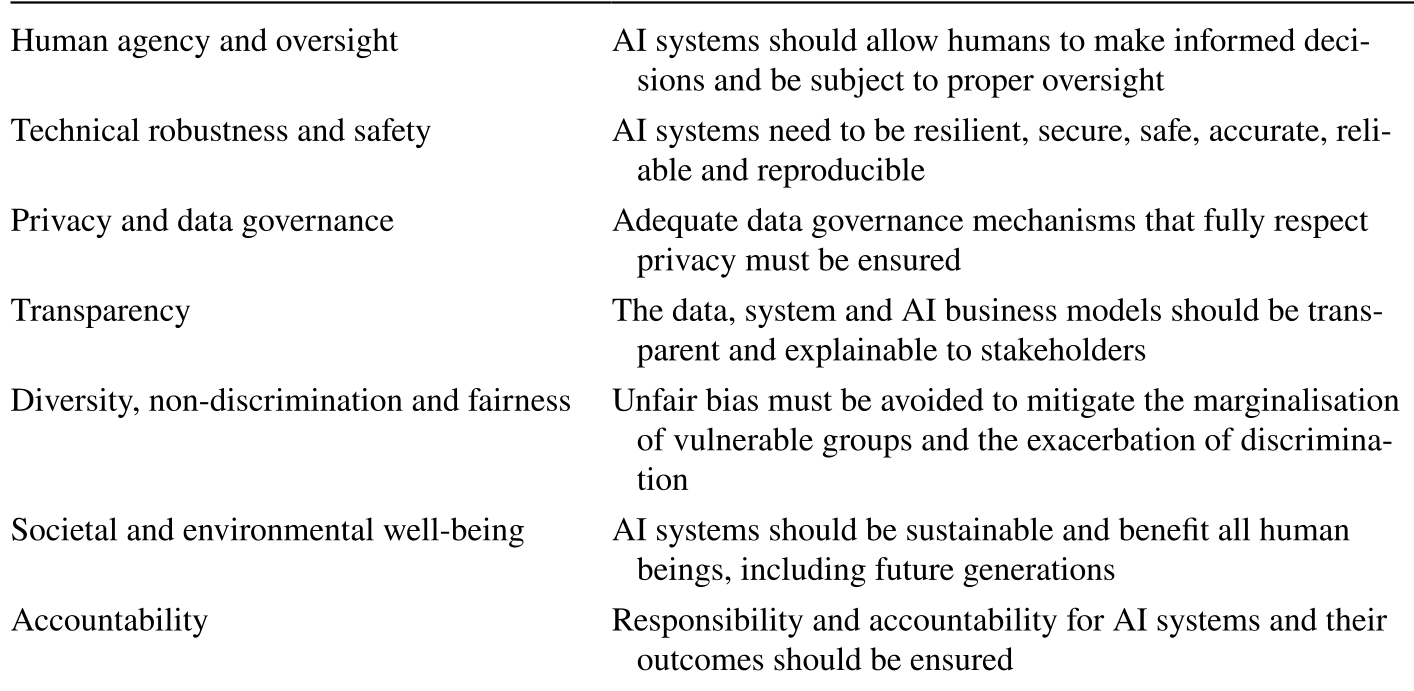 Table 1: The EU’s seven key requirements for Trustworthy AI.
2. The US Approach: Laissez-Faire Leadership
The US vision, largely consistent across the Trump and early Biden administrations, focuses on American Leadership. Its core tenets include:
- Minimalist Regulation: Avoiding "regulatory overreach" that could stifle breakthroughs.
- Private Sector Reliance: Trusting industry self-regulation and voluntary standards.
- Unilateral Internationalism: Exporting "American values" to counter strategic competitors like China.
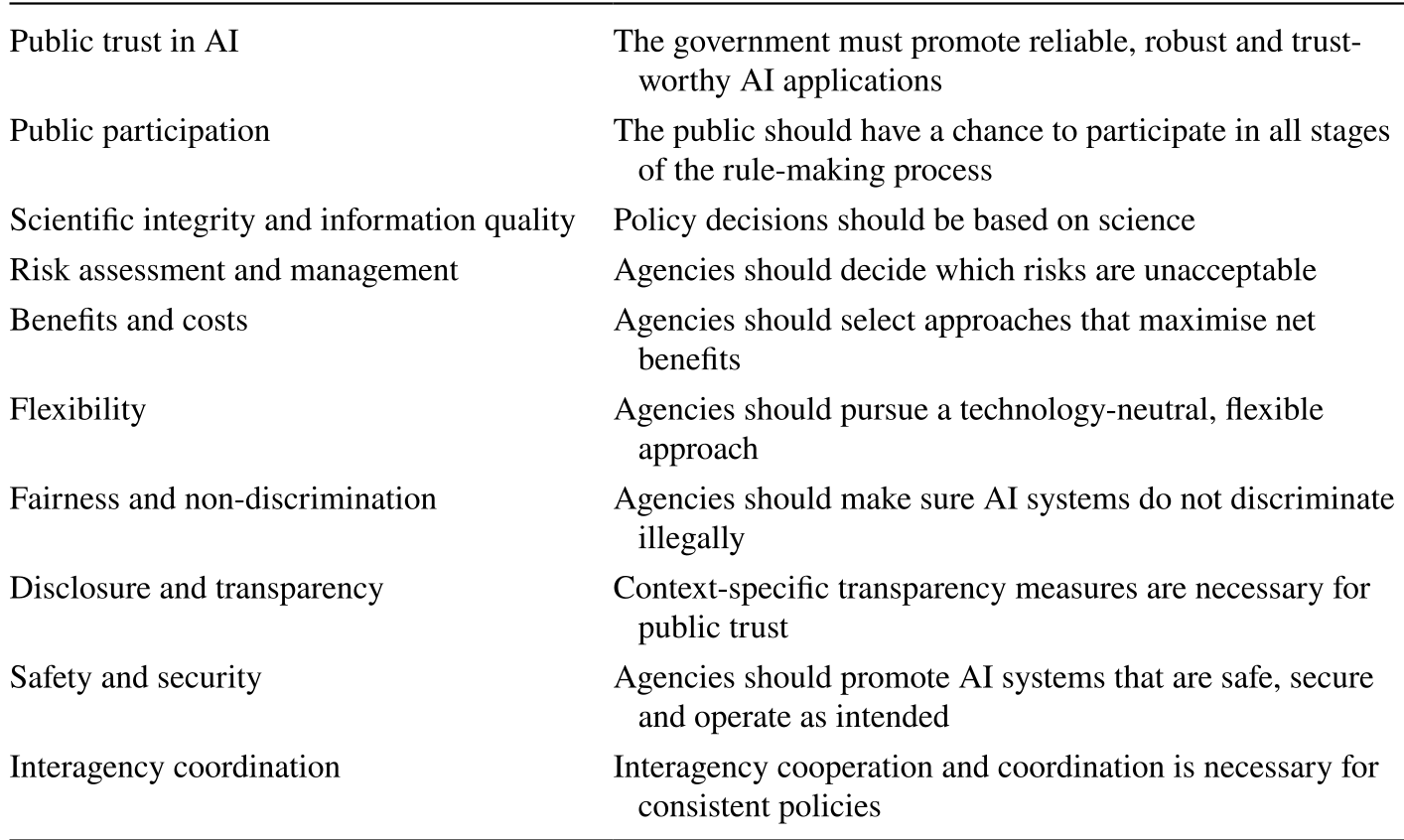 Table 2: US principles for AI stewardship, highlighting flexibility and cost-benefit analysis.
Experiments & Results: Assessing Progress
The study evaluates these visions against actual progress, finding significant "implementation gaps" in both regions.
- EU Progress & Friction: The EU is the "world’s regulator," but its funding ecosystem lags. While the AI Act provides clarity, there are concerns that it may "overregulate" beneficial systems like recommender algorithms or "underregulate" by allowing exceptions for biometric surveillance in national security.
- US Progress & Fragmentation: The US leads in private investment but suffers from "internal fragmentation." Because federal policy is so hands-off, individual cities like San Francisco and Portland have implemented their own bans on facial recognition, creating a "fractious" landscape for companies to navigate.
- Transatlantic Tensions: Despite shared democratic values, the EU’s push for digital sovereignty directly conflicts with the US’s "digital free trade" agenda. The authors suggest that the "Brussels Effect" (global adoption of EU standards) might be the only force truly aligning the two.
Critical Analysis & Conclusion
The authors conclude that the EU’s approach is ethically superior because it creates enforceable mechanisms to protect individuals. However, the EU risks becoming a "museum of ethics" if it cannot build its own AI industry.
The US, meanwhile, is at a crossroads. The authors warn that relying on the private sector leads to "ethics washing"—where companies claim to be ethical while firing the very researchers (like Timnit Gebru) who point out systemic biases.
Takeaways for the Future:
- Enforcement is Key: Ethical principles are useless without the "teeth" of regulation (as seen in the EU’s proposed fines of up to 6% of global turnover).
- Sovereignty Matters: A society cannot be "Good" if it lacks the technical capacity to enforce its own rules on foreign-owned platforms.
- Transatlantic Hope: Cooperation is most likely in the defense sector, driven by a mutual "threat" from China, but alignment on consumer privacy remains a distant goal.
Ultimately, a "Good AI Society" requires more than just better algorithms; it requires a robust social contract that addresses systemic risks, environmental impacts (AI's carbon footprint), and the protection of marginalized groups.