
The Good, the Bad, and the Ugly: Navigating the Social Frontier of Health Apps
The Good, The Bad and the Ugly about Social Networks for Health Apps
This paper explores the integration of social networking functionalities into mobile health (mHealth) applications, categorizing the impacts into "The Good" (benefits), "The Bad" (limitations), and "The Ugly" (severe risks). It presents the developers' experience with the MyFitnessCompanion app to illustrate practical implementation and risk mitigation.
TL;DR
Mobile health is undergoing a revolution by merging with social networks. While this synergy enhances motivation and data sharing (The Good), it introduces significant challenges regarding data accountability (The Bad) and severe risks like medical misinformation and permanent privacy leaks (The Ugly). This post deciphers the framework proposed by Gay and Leijdekkers for building responsible mHealth ecosystems.
Background: Beyond the Isolated Silo
Historically, health apps were digital islands—data went in, but it rarely collaborated. In the modern era of "Medicine 2.0," social networks act as the connective tissue, transforming individual tracking into community-based wellness. However, as the authors note, moving from a "silo solution" to a "connected solution" is fraught with ethical and technical landmines.
1. The Good: The Power of the Crowd
The integration of social features provides three major pillars of value:
- Affective Data Sharing: Linking physiological data with social context leads to more personalized care and motivates patients through peer support.
- Breaking the Silos: By using platforms like Microsoft HealthVault, users can control their records while making them accessible to multiple professionals, fostering an ecosystem of trust.
- Peer-to-Peer Motivation: Social "buddies" increase compliance in rehabilitation and medication adherence through "Health Games" and collaborative tracking.
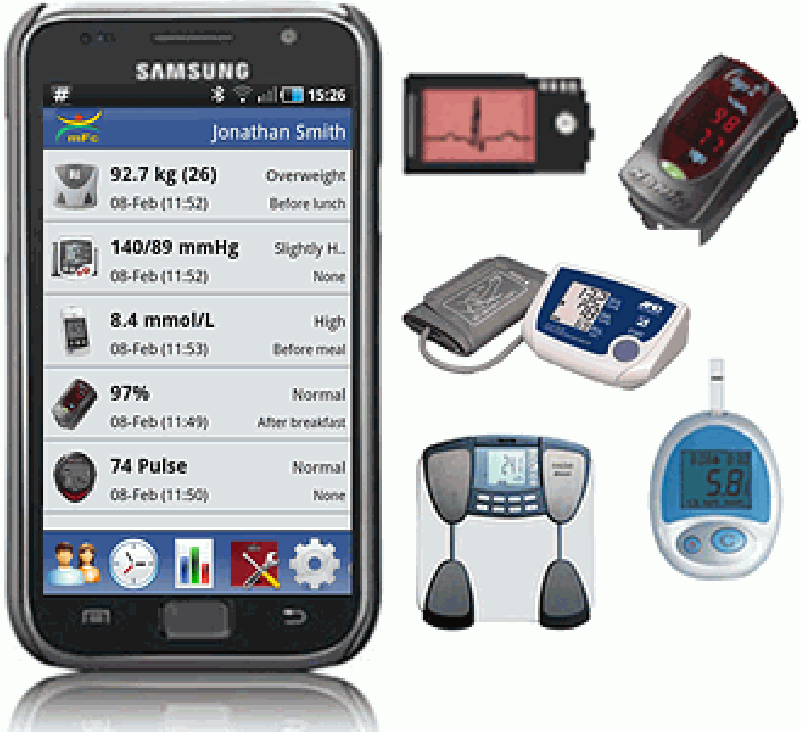 Figure 1: The MyFitnessCompanion ecosystem, demonstrating the link between wireless sensors and the mobile social interface.
2. The Bad: Limitations and Accountability
The transition to social health isn't seamless. The authors highlight several "friction points":
- The Promotional Trap: A qualitative evaluation of diabetes-related Facebook groups found that 27% of posts were actually promotional activities, often lacking authenticity.
- Liability Gaps: If a GP is "friended" on a social platform, does the duty of care extend to 24/7 monitoring? The legal frameworks for SMS/Email communication remain a "hot topic" with no easy resolution.
3. The Ugly: The Risks You Can't Take Back
The "Ugly" side represents systemic risks that can have life-altering consequences:
- Health Hazard (The Misinformation Pandemic): The paper cites a study where a tweet incorrectly promoting antibiotics for the common cold reached 850,000 users. In healthcare, "viral" misinformation can be fatal.
- The "Pastbuster" Problem: Once health data is leaked or inappropriately shared, it is nearly impossible to erase. This can lead to permanent damage to employability or insurance premiums.
- Defamation: Professional reputations can be destroyed by unverified rumors or "half-truths" spreading through social channels within hours.
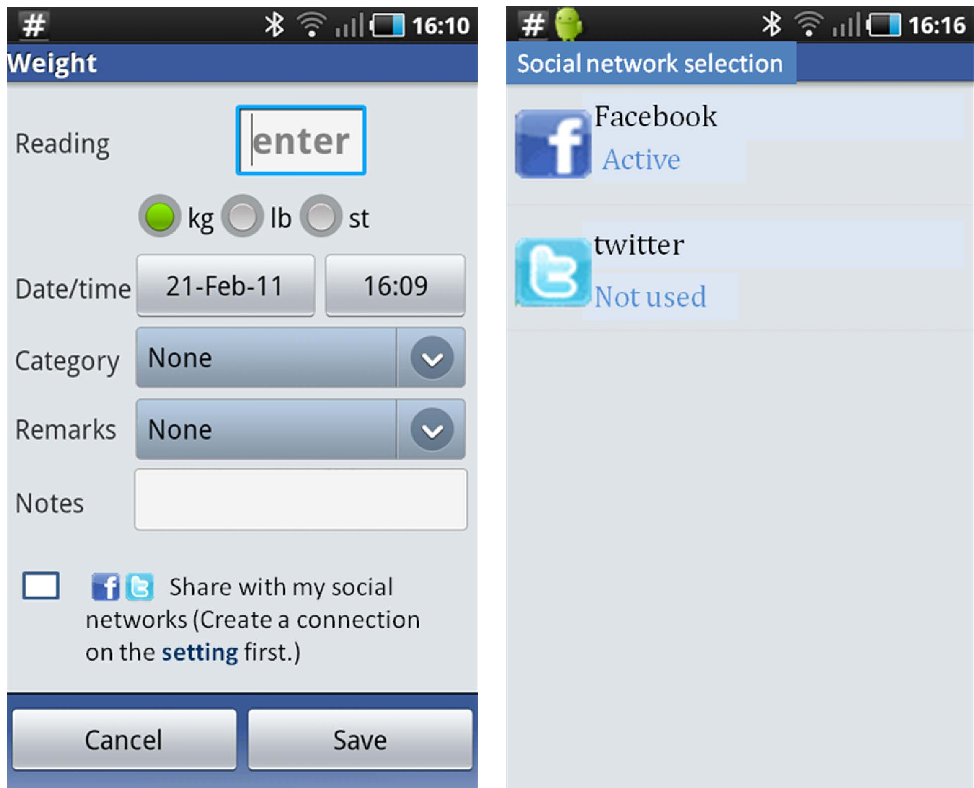 Figure 2: Practical implementation of social sharing in MyFitnessCompanion – balancing user motivation with optional privacy controls.
Methodology: Privacy-by-Design in MyFitnessCompanion
The authors didn't just theorize; they applied these lessons to their own app, MyFitnessCompanion. Their strategy serves as a blueprint for mHealth developers:
- Optionality: Social sharing (Facebook/Twitter) and cloud storage (HealthVault) are strictly opt-in.
- Local Control: Users can export data via Excel or print it, ensuring they don't have to rely on vulnerable third-party servers.
- Community Curation: Instead of building a generic social network, the app redirects users to moderated, age-appropriate, and condition-specific communities (e.g., "Asthma Mums").
Critical Analysis & Conclusion
The core contribution of this paper is the acknowledgment that technology outpaces regulation. While the idea of a "Healthbook" (a social network for health) is enticing, the authors rightfully warn that we lack a "TripAdvisor for Healthcare"—a reliable, secure, and moderated platform for health info.
Future Outlook: The industry needs professional "moderators" to rectify medical errors in real-time and potentially a "Pastbuster" service to help users manage their digital health footprint. Digital health is no longer just about sensors; it's about the social integrity of the data those sensors produce.
Key Takeaway: Don't just build a social feature because you can. Build it with a "kill switch" for data privacy and a "filter" for medical truth.